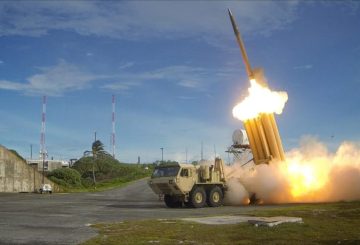
The escalating conflict in the Middle East, marked by missile exchanges and aerial strikes, is prompting a reassessment of defense capabilities in the region. As Iran has conducted retaliatory attacks against several Gulf states, the United States and its allies are focused on maintaining a consistent flow of air and missile defense systems. Recent reports suggest a potential repositioning of U.S. Forces stationed in South Korea, specifically Patriot missile batteries, to bolster defenses in the Middle East.
According to reports from March 6, 2026, the United States Forces Korea (USFK) has been observed moving Patriot launchers and interceptors from various bases within South Korea to Osan Air Base in Pyeongtaek, Gyeonggi Province. This movement, which included the deployment of additional equipment on March 5th, significantly increased the number of launchers at the base. Simultaneously, U.S. Military transport aircraft, including C-17 and C-5 cargo planes, were spotted at the facility, fueling speculation about a potential deployment to the Middle East. This isn’t the first time USFK Patriots have been moved to the region; C-17s transported two Patriot batteries between March and April of last year, prior to U.S. Airstrikes against Iran as part of Operation Midnight Hammer, with those units returning to Korea in October.
Potential Deployment and Regional Implications
The possibility of redeploying Patriot missile defense systems from South Korea to the Middle East raises complex strategic considerations. While the U.S. Military has not officially confirmed the movement, a USFK official, as reported by the Korea Times, stated that “for operational security reasons, we do not comment on the movement, transfer, or potential repositioning of specific capabilities or assets.” The official affirmed that USFK remains focused on maintaining a “strong, ready, and credible force posture” on the Korean Peninsula and reiterated the U.S.’s firm commitment to the defense of South Korea. Korea Times
South Korean Foreign Minister Cho Hyun acknowledged that discussions regarding the matter are ongoing between military authorities in both countries. “In general, the military authorities of both countries maintain close consultations regarding the deployment of strategic assets,” Cho stated during a parliamentary session, while refraining from directly commenting on the potential transfer of Patriot systems. This consultation is standard practice, though U.S. Military sources indicate that USFK typically does not provide Seoul with detailed advance notice of specific asset transfers, as such decisions are made in Washington D.C.
The stationing of approximately 28,500 U.S. Troops in South Korea is governed by bilateral agreements, but the redeployment of weapon systems and unit rotations are considered operational matters under U.S. Jurisdiction. Beyond the Patriot system, other U.S. Assets stationed in South Korea, including the Army Tactical Missile System (ATACMS) and the Terminal High Altitude Area Defense (THAAD) system, could potentially be deployed to support operations in the Middle East, according to military sources.
Concerns for Korean Peninsula Defense
Though, the redeployment of key USFK assets could raise concerns in Seoul, potentially creating gaps in South Korea’s air defense capabilities. The Patriot system plays a crucial role in defending against North Korea’s nuclear and missile threats. Park Won-gon, a professor of North Korean studies at Ewha Womans University, suggests that this issue reflects broader discussions between the allies regarding the “modernization of the alliance.” This concept aims to expand USFK’s role beyond deterring North Korea to address potential military contingencies in the wider region. “it is likely that the United States will further consolidate its strategy of deploying USFK assets beyond the Korean Peninsula, wherever necessary,” Park stated.
The possibility of a shift in U.S. Military resources from South Korea to the Middle East has reportedly caused some unease in Seoul, raising fears that a crisis in another region could weaken deterrence on the Korean Peninsula. This concern is particularly relevant given North Korea’s continued development of ballistic missiles and nuclear weapons. The U.S. Maintains a significant military presence in South Korea as a key component of its security commitments in Northeast Asia.

South Korean Defense Industry Opportunities
Amidst these strategic shifts, South Korea’s domestic defense industry may see increased opportunities. The Cheongung-II (M-SAM) air defense system, developed indigenously by South Korea, recently demonstrated its capabilities by intercepting several Iranian missiles in the United Arab Emirates. South China Morning Post This successful deployment could open fresh markets for South Korean defense companies in the region and attract new customers seeking advanced air defense solutions. The Cheongung-II system represents a significant advancement in South Korea’s defense capabilities and its growing role as a defense exporter.

Key Takeaways
- Potential USFK Redeployment: Reports suggest the U.S. May be moving Patriot missile batteries from South Korea to the Middle East to bolster regional defenses.
- Korean Peninsula Concerns: Seoul has expressed concerns that a reduction in USFK air defense assets could weaken deterrence against North Korea.
- Alliance Consultations: Discussions are ongoing between U.S. And South Korean military authorities regarding the potential redeployment.
- South Korean Defense Industry: The successful deployment of the Cheongung-II system in the UAE could lead to increased export opportunities for South Korean defense companies.
The situation remains fluid, and further developments are expected as the U.S. Assesses the evolving security landscape in the Middle East. The next key checkpoint will be official statements from both the U.S. Department of Defense and the South Korean Ministry of National Defense regarding any confirmed asset movements. Readers are encouraged to share their perspectives and engage in constructive discussion in the comments section below.
Keep reading