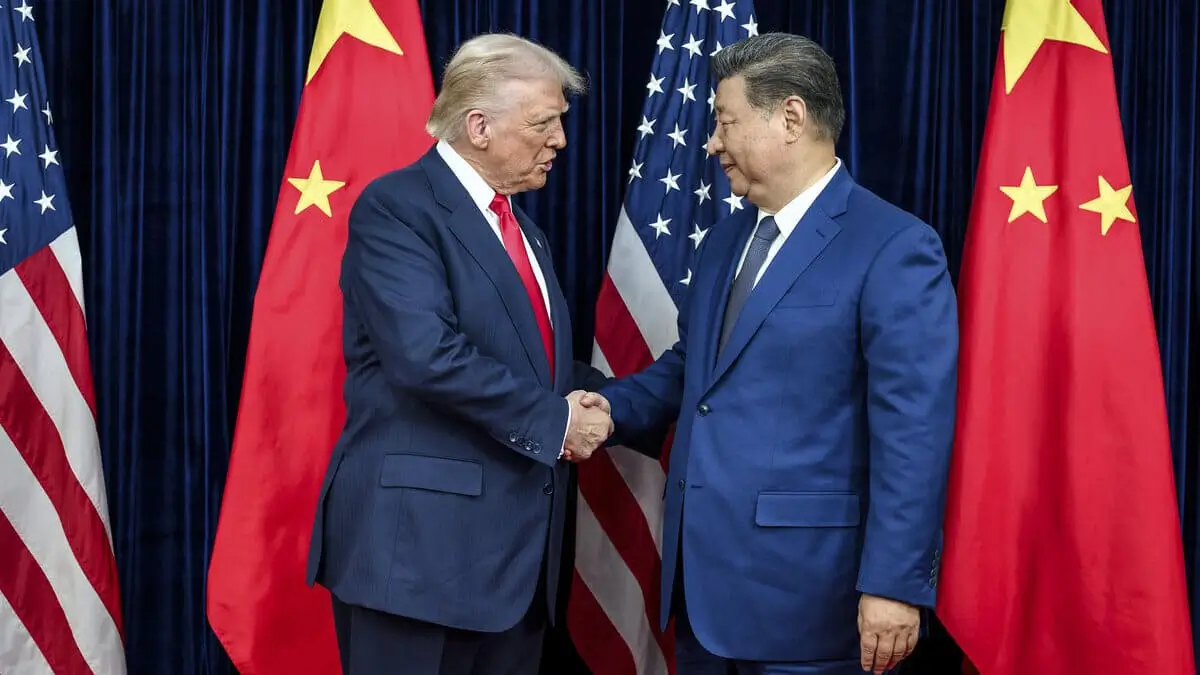
As the geopolitical spotlight sharpens on Asia, the highly anticipated summit between U.S. President Donald Trump and Chinese President Xi Jinping looms large—set to take place in Beijing on Wednesday, May 13, 2026. This meeting, the first face-to-face engagement between the two leaders since 2024, arrives against a backdrop of escalating tensions across trade, technology, and regional security. Analysts describe the stakes as unusually high, with no clear consensus on whether the talks will yield concrete breakthroughs or merely serve as a symbolic gesture to stabilize relations amid deepening divisions.
The summit’s agenda spans a broad spectrum of issues, from economic cooperation and technological competition to the future of Taiwan and the evolving dynamics in the Middle East—particularly the U.S. Stance on Iran’s nuclear program. With artificial intelligence (AI) governance emerging as a critical flashpoint, observers warn that the meeting may expose more fissures than it bridges. The absence of a formal joint statement ahead of the talks has fueled speculation that both sides are bracing for a prolonged negotiation, where even incremental progress could be framed as a diplomatic victory.
Yet, as the world watches, the tone of the discussions remains shrouded in uncertainty. While the White House has emphasized the importance of “direct dialogue” to address mutual concerns, Chinese state media has framed the meeting as an opportunity to “deeply enhance” bilateral ties—a phrasing that contrasts sharply with the U.S. Government’s more cautious rhetoric. The contrast in messaging underscores the challenges ahead: Can Trump and Xi transcend their divergent priorities, or will this summit become another chapter in a story of unfulfilled expectations?
The Stakes on the Table: Economy, Tech, and Taiwan
Economic relations between the world’s two largest economies remain a central focus. The U.S. Has maintained tariffs on Chinese goods worth over $360 billion annually—a policy that Beijing has vowed to counter with retaliatory measures targeting American exports, including agricultural products and high-tech components. According to a May 10 Reuters analysis, both sides are reportedly exploring limited concessions, such as easing restrictions on semiconductor exports, but no formal agreements have been confirmed. The sticking point remains the U.S. Demand for structural reforms in China’s state-led economy, a request Beijing has repeatedly dismissed as interference.

Technology, particularly the race to dominate AI development, is another battleground. The U.S. Has accelerated restrictions on Chinese access to advanced chips and AI training tools, citing national security concerns. In response, China has accelerated its own AI initiatives, including a state-backed “AI sovereignty” program aimed at reducing reliance on Western technology. Analysts suggest that the summit may see discussions on establishing a “risk management framework” for AI collaboration, though skepticism persists about whether such agreements can prevent further decoupling.
Taiwan, the self-ruled island Beijing claims as its territory, stands as the most volatile issue. The U.S. Has reaffirmed its commitment to Taiwan’s defense under the Taiwan Relations Act, including potential arms sales worth billions. China has responded with military drills near Taiwan’s coast and warnings against “outside interference.” While neither side is expected to make major concessions on Taiwan’s status, the summit could see subtle signals on whether both leaders are willing to de-escalate rhetoric—or if the status quo will persist.
The Iran Factor and Middle East Tensions
The U.S.-China dynamic in the Middle East has grown increasingly complex, particularly regarding Iran. The U.S. Has imposed sanctions on Iranian entities linked to drone attacks in the region, while China—one of Iran’s largest trade partners—has maintained a neutral stance, arguing that economic ties should not be politicized. At the summit, the U.S. Is likely to press China to reduce its support for Iran’s military and nuclear programs, though Beijing has historically resisted such demands, framing them as violations of sovereignty.
Adding to the complexity is the recent surge in Houthi attacks in the Red Sea, which have disrupted global shipping and strained U.S.-led coalition efforts. While China has not publicly aligned with the Houthis, its refusal to condemn Iran’s regional activities has drawn criticism from Washington. The summit may see indirect discussions on whether China could play a mediating role—or if its silence emboldens further instability.
The AI Deadlock and Global Implications
Artificial intelligence is emerging as the defining issue of the 21st century, and the U.S.-China rivalry in this space is reshaping global tech governance. The U.S. Has led efforts to restrict China’s access to advanced AI chips, while China has accelerated its own AI development, including investments in quantum computing and facial recognition technology. At the summit, both sides are expected to discuss potential cooperation on AI safety standards, but deep distrust lingers over whether such agreements can prevent a new Cold War-style tech divide.
According to a Brookings Institution report, the U.S. And China are locked in a “paradoxical dynamic”: they need each other’s technology to advance, yet both fear the strategic risks of collaboration. The summit may see proposals for a “dual-use” AI framework, where certain technologies are shared for civilian purposes while military applications remain off-limits. However, without a clear enforcement mechanism, such agreements risk becoming symbolic.
What Happens Next?
The immediate outcome of the summit remains uncertain. While both sides have signaled a willingness to engage, past meetings between Trump and Xi have often resulted in vague commitments followed by little action. The next critical checkpoint will be the release of any joint statements or follow-up working groups in the coming weeks. Officials from both governments are expected to hold press briefings on Thursday, May 14, 2026, though details remain scarce.
For now, the world watches as two superpowers navigate a relationship defined by both interdependence and rivalry. The question is no longer whether Trump and Xi can find common ground—but whether they can agree on the terms of their competition before it spirals further out of control.
Key Takeaways
- Economic tensions persist: Tariffs and tech restrictions remain unresolved, with no signs of major concessions.
- Taiwan remains a red line: No major shifts expected, but both sides may signal willingness to avoid military escalation.
- AI competition intensifies: Cooperation on safety standards is unlikely without enforceable agreements.
- Middle East dynamics: China’s neutral stance on Iran could further strain U.S.-China relations.
- Next steps: Press briefings on May 14, 2026, will provide clarity on any joint outcomes.
As the summit unfolds, readers are encouraged to follow official updates from the White House and the Chinese Foreign Ministry. Share your thoughts in the comments below—will this meeting mark a turning point, or another chapter in the U.S.-China stalemate?