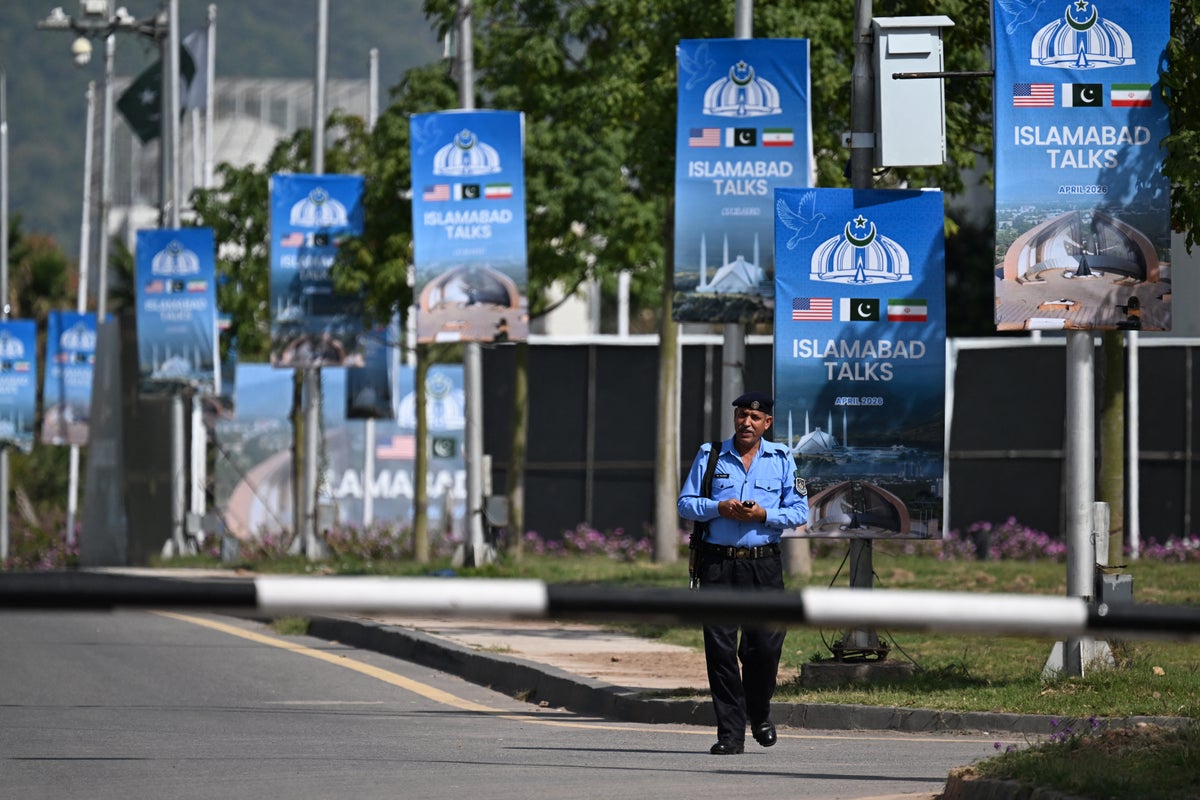
President Donald Trump has announced the extension of the ceasefire between the United States and Iran, hours before it was due to expire, following stalled peace talks in Pakistan. The decision comes after Iranian officials refused to send negotiators to Islamabad unless the U.S. Lifted its blockade of the Strait of Hormuz, creating a diplomatic impasse that threatened to reignite hostilities in the seventh week of the conflict.
Trump framed the extension as a response to a request from Pakistani officials to delay military action, although maintaining that the U.S. Naval blockade of Iranian ports would continue to be “enforced impartially against vessels of all nations.” The blockade, announced by U.S. Central Command, began Monday at 10 a.m. EDT (5:30 p.m. Iran time) and targets all Iranian ports, though ships traveling between non-Iranian ports are still permitted to transit the Strait of Hormuz.
The ceasefire talks in Islamabad, led by U.S. Vice President JD Vance, concluded after 21 hours of face-to-face negotiations without reaching an agreement. During the discussions, Iran reportedly reiterated its pursuit of nuclear capabilities, a claim Trump emphasized when stating, “They still want it, and they made that clear the other night. Iran will not have a nuclear weapon.” He added that he does not care whether Iranian officials return to the negotiating table, saying, “If they don’t come back, I’m fine.”
Despite earlier indications that he did not want to extend the truce—warning that “lots of bombs” would “start going off” if no deal was reached—Trump reversed course after the Pakistan talks failed. He announced on social media that he had ordered the U.S. Military to continue blocking Iranian ports until Tehran’s leaders presented “a unified proposal.” The shift was described by some analysts as a dramatic climbdown from his previous stance favoring immediate military escalation.
The ongoing conflict has disrupted global markets and raised concerns about regional stability, particularly regarding energy supplies from the Middle East. An Iranian aerospace commander from the Islamic Revolutionary Guard Corps warned that Iran would destroy the region’s oil industry if the war with the U.S. And Israel resumes, underscoring the high stakes involved in the diplomatic standoff.
U.S. Forces have already begun enforcing the blockade, including the boarding of the Iran-linked tanker M/T Tifani in the Strait of Hormuz. Military footage released by Central Command shows helicopter crews intercepting vessels as part of the enforcement effort, which the Pentagon says aims to pressure Iran into negotiations without targeting civilian shipping unnecessarily.
With the ceasefire now extended, the next diplomatic checkpoint remains uncertain. Iranian officials have not rescheduled talks in Pakistan, and U.S. Officials have indicated that Vance’s delegation remains on standby. For ongoing updates on the Iran-U.S. Ceasefire and regional developments, readers can follow official statements from the U.S. Department of Defense and the Ministry of Foreign Affairs of the Islamic Republic of Iran.
Share your thoughts on this developing story in the comments below, and facilitate spread awareness by sharing this article with your network.
Worth a look