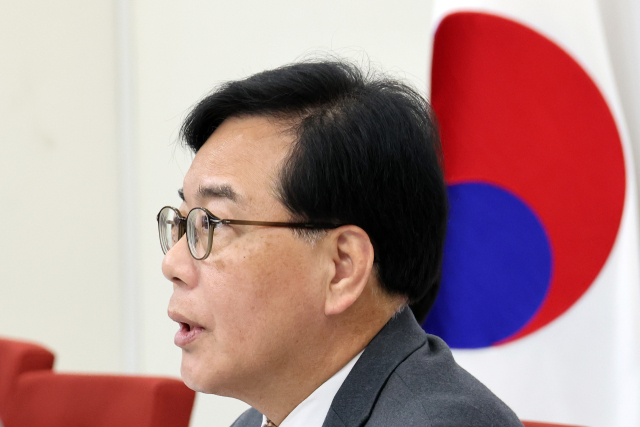
South Korean opposition lawmakers have intensified calls for the immediate dismissal of Minister of Unification Jeong Dong-young following his recent remarks in a parliamentary committee hearing, where he reportedly identified a specific North Korean city as a potential nuclear facility site. The comments, made during a session of the National Assembly’s Foreign Affairs and Unification Committee, have drawn sharp criticism from both ruling and opposition parties, who argue that such disclosures risk compromising national security and undermining delicate diplomatic efforts with Pyongyang, and Washington.
The controversy centers on Jeong’s alleged reference to Kusong, a city in North Pyongan Province, as a location associated with North Korea’s uranium enrichment activities. According to multiple South Korean media reports citing committee proceedings, the minister’s statement prompted an immediate and strong reaction from U.S. Officials, who reportedly conveyed concerns through diplomatic channels about the premature public disclosure of sensitive intelligence. While the exact nature of the U.S. Response remains unconfirmed by official sources, analysts note that any discussion of specific nuclear sites—particularly those linked to covert programs—can complicate intelligence-sharing agreements and alert adversaries to surveillance capabilities.
Jeong Dong-young, a former presidential candidate and longtime figure in South Korean progressive politics, assumed the role of Minister of Unification in 2023 under President Yoon Suk Yeol’s administration. His appointment was seen as an effort to bridge ideological divides on inter-Korean policy, though his tenure has been marked by periodic friction with more conservative elements within the government over engagement strategies with the North. The current backlash against his remarks reflects broader tensions regarding the balance between transparency in parliamentary oversight and the protection of classified information related to national security.
Critics from the ruling People Power Party have accused Jeong of violating security protocols and acting irresponsibly by naming a specific locality in a public forum. Representative Kim Gi-hyeon, a senior committee member, stated during a press briefing that “no minister should ever disclose unverified or sensitive details about foreign nuclear installations without proper authorization,” adding that such actions could “jeopardize ongoing intelligence operations and strain alliances.” The party has formally requested a parliamentary ethics investigation into whether Jeong breached the State Secrets Protection Act or related regulations governing the handling of classified information.
Meanwhile, some members of Jeong’s own Democratic Party have urged caution, acknowledging the demand for rigorous scrutiny of North Korea’s nuclear ambitions while emphasizing that parliamentary oversight must not come at the expense of operational security. Representative Park Joo-min, who serves on the Intelligence Committee, noted in a televised interview that “lawmakers have a duty to seek truth, but not at the cost of revealing sources or methods that could endanger national interests.” She called for a closed-door session to allow ministers to provide necessary context without risking public exposure of sensitive data.
Independent security analysts have echoed these concerns, pointing out that Kusong has long been suspected of hosting facilities tied to North Korea’s nuclear weapons program, including uranium conversion and enrichment sites. However, they stress that public confirmation by foreign officials—especially without corroborating evidence from multiple intelligence sources—can be premature and potentially misleading. Dr. Lee Sang-hyun, a researcher at the Korea Institute for National Unification, explained in a recent interview that “while open-source satellite imagery has shown activity at Kusong consistent with industrial-scale uranium processing, definitive conclusions about weaponization require layered intelligence that is rarely appropriate for public debate.” He added that premature disclosures could prompt North Korea to deepen concealment efforts or alter operational patterns.
The incident also underscores the ongoing challenges faced by democracies in managing the tension between legislative accountability and national security secrecy. In South Korea, the National Assembly Intelligence Committee operates under strict confidentiality rules, with members legally barred from disclosing classified information received in closed sessions. However, the Foreign Affairs and Unification Committee, where Jeong spoke, handles broader policy matters and may not always involve the same level of classified briefings, creating potential gray areas in what constitutes permissible disclosure.
To date, the Ministry of Unification has not issued an official statement clarifying Jeong’s remarks or confirming whether they were based on verified intelligence. Requests for comment from the ministry’s press office went unanswered as of the latest updates. Similarly, the U.S. Embassy in Seoul has not publicly addressed whether it raised formal concerns, though diplomatic sources familiar with Northeast Asia affairs told Yonhap News Agency—under condition of anonymity—that Washington had expressed “disquiet” over the manner in which the information was conveyed.
Historical precedents suggest that such controversies, while politically charged, rarely result in immediate ministerial removals unless accompanied by clear evidence of legal violation or gross negligence. In 2019, a similar debate arose when a lawmaker referenced specific missile test sites during a committee hearing, leading to calls for censure but no formal sanctions. Experts note that South Korea’s constitutional framework grants significant protection to freedom of speech in legislative settings, even as it imposes duties to safeguard state secrets—a balance that often requires judicial or ethical committee interpretation rather than executive action.
As the debate continues, attention is turning to the upcoming schedule of the National Assembly’s Foreign Affairs and Unification Committee, which is set to reconvene next week for a routine briefing on inter-Korean relations. While no special session has been called specifically to address the Jeong controversy, parliamentary rules allow for motions to be raised during regular proceedings. The Ministry of Unification has indicated that it will provide a written report on its recent activities and policy direction at that time, though it remains unclear whether Jeong will be present or prepared to elaborate on his earlier comments.
For readers seeking to follow developments, official records of National Assembly committee hearings are published in Korean on the assembly’s website (National Assembly of South Korea), with transcripts typically posted within several days. The Ministry of Unification also maintains an English-language section detailing its policy framework and diplomatic engagements (Ministry of Unification – English Portal). Updates on U.S.-South Korea coordination regarding North Korea’s nuclear program can be found through the U.S. Department of State’s Bureau of East Asian and Pacific Affairs (U.S. State Department – East Asia and Pacific).
This situation highlights the enduring complexity of governing in an era where nuclear proliferation, democratic oversight, and international alliances intersect. While the call for Jeong Dong-young’s dismissal reflects genuine concern over protocol and discretion, it also invites broader reflection on how societies manage the flow of sensitive information in times of geopolitical tension. The coming days will reveal whether this episode leads to formal accountability, policy reassessment, or simply another chapter in the ongoing discourse over security and transparency in Northeast Asia.
We invite our readers to share their perspectives on this developing story. How should democratic governments balance the need for legislative oversight with the imperative to protect national security secrets? Join the conversation in the comments below and share this article to help inform others interested in Korean Peninsula affairs and global security dynamics.
Keep reading