
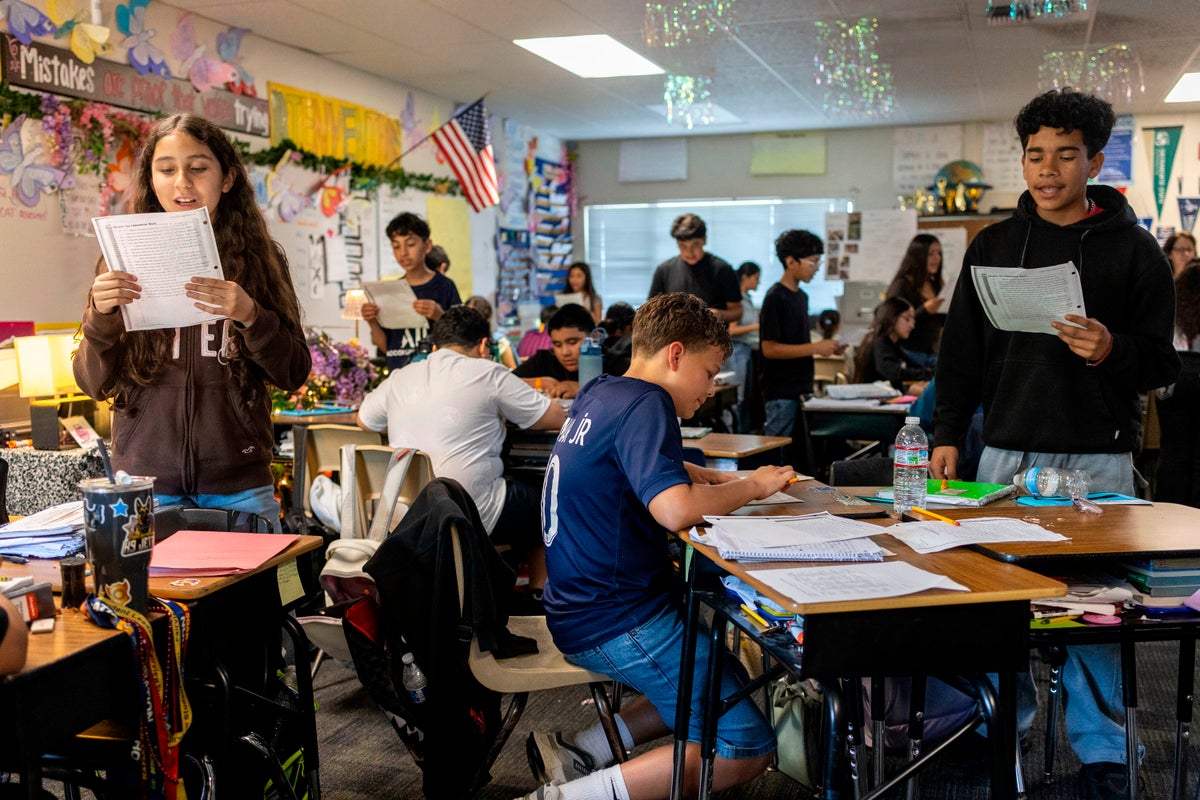
American educators are sounding the alarm over what they call a “reading recession”—a dramatic and sustained decline in student literacy scores that threatens to undermine educational progress for a generation. New data reveals that while most states have seen stagnation or drops in reading proficiency since 2022, only a handful have managed meaningful improvement, raising urgent questions about curriculum effectiveness, teacher training and the long-term consequences for workforce readiness in an increasingly digital economy.
According to the most recent national assessments, the trend extends beyond pandemic-era disruptions, suggesting deeper systemic challenges. Experts warn that without targeted intervention, these declines could widen achievement gaps, reduce college and career opportunities, and erode public trust in the nation’s education system at a time when global competitors are investing heavily in STEM and literacy initiatives.
The stakes couldn’t be higher. Reading proficiency isn’t just about academic success—it’s the foundation for critical thinking, digital literacy, and economic mobility in an era where 80% of jobs require advanced reading skills according to labor market analyses. Yet the data paints a troubling picture: between 2022 and 2025, only five states and the District of Columbia demonstrated statistically significant growth in reading scores, while nearly half of all states saw declines in key proficiency metrics.
Key Takeaways
- National decline: Most U.S. States saw stagnation or drops in reading scores between 2022-2025, with only five states and D.C. Showing meaningful improvement.
- Policy divergence: States with targeted literacy initiatives (like Florida and Massachusetts) outperformed peers with less focused approaches.
- Long-term risks: Declines correlate with reduced college readiness and potential workforce gaps in high-skill industries.
- Equity concerns: Low-income students and rural districts show the steepest declines, exacerbating achievement gaps.
- Global context: U.S. Reading scores now lag behind 18 OECD nations, raising competitiveness concerns.
- Next steps: Federal education funding for literacy programs is expected to be a major policy battleground in 2026.
Reading Scores: The Numbers Behind the Crisis
The most comprehensive analysis comes from the National Assessment of Educational Progress (NAEP), often called “the nation’s report card.” While the 2022 NAEP results showed pandemic-era declines, the 2024 follow-up reveals that recovery has been uneven:
- 2022 baseline: Only 32% of fourth graders scored at or above “proficient” in reading—a 3-point drop from 2019.
- 2024 update: That figure remained flat, with no national improvement despite billions in federal COVID relief funds allocated to education.
- State performance: Five states (Florida, Massachusetts, Maryland, Indiana, and Virginia) plus D.C. Showed statistically significant gains, while 12 states saw declines of 5% or more.
- Demographic gaps: White students scored 29 points higher than Black students and 22 points higher than Hispanic students—a gap that widened during the pandemic.
The data comes as no surprise to literacy advocates like Literacy Worldwide, which has been tracking these trends for over a decade. “This isn’t just about test scores—it’s about whether children can read complex texts, understand data, and engage in civic discourse,” says Dr. Emily Henderson, their chief policy officer. “Those skills are the bedrock of a functioning democracy and economy.”
Why Are Scores Stagnating?
Education researchers point to three interlocking factors:

1. Curriculum Shifts and Political Interference
Many states have seen curriculum debates become politicized, with some districts pulling back on evidence-based reading instruction in favor of controversial approaches. A 2025 study in Educational Researcher found that states with the most restrictive literacy policies—often tied to partisan education debates—had the lowest growth rates. “When politics trumps pedagogy, children pay the price,” notes Dr. Richard Allington, a retired professor of literacy at the University of Tennessee.
2. Teacher Shortages and Training Gaps
The U.S. Faces a shortage of 200,000 teachers according to the Learning Policy Institute, with literacy specialists in particularly short supply. Many new teachers enter the classroom without specialized training in structured literacy methods, which research shows are most effective for struggling readers. The average U.S. Teacher spends just 12 hours on literacy instruction during their entire preservice training—a figure that has remained unchanged for over 20 years.
3. Technology’s Double-Edged Sword
While digital tools offer promise, their unchecked integration has created new literacy challenges. A 2025 Pew Research Center survey found that 68% of teachers report students struggle with “digital reading”—the ability to evaluate online sources, detect misinformation, and comprehend multimedia content. Yet only 15% of school districts have formal digital literacy curricula. “We’re teaching kids to consume content faster than we’re teaching them to analyze it critically,” warns Dr. Mimi Ito, director of the Connected Learning Alliance.

Who’s Getting It Right?
While most states struggle, five jurisdictions stand out for their progress. A closer look reveals common strategies:
Florida: The Science of Reading Mandate
In 2022, Florida became the first state to require all teacher preparation programs to include structured literacy training. The state also banned “balanced literacy” approaches that research shows underperform for struggling readers. Florida’s fourth-grade reading scores improved by 6 percentage points—double the national average. “We didn’t wait for perfection—we acted on what the science told us works,” says Florida Education Commissioner Manny Diaz.
Massachusetts: Early Intervention
Massachusetts has long been a leader in education, but its recent gains come from aggressive early intervention. The state now screens all kindergarteners for reading readiness and provides targeted support within 30 days of identification. Their approach has reduced the achievement gap by 22% since 2020. “The first year of school is when we can make the biggest difference,” says Dr. Julie Young, the state’s literacy director.
District of Columbia: Community Partnerships
D.C. Public Schools partnered with local nonprofits to create “literacy hubs” in underserved neighborhoods, offering after-school programs and parent workshops. The district also invested in teacher coaching, with literacy specialists observing classrooms weekly. Their fourth-grade scores rose by 5 percentage points—one of the highest growth rates in the nation.
The Long-Term Consequences
Literacy isn’t just an academic issue—it’s an economic and social one. The consequences of these declines will ripple across society:
1. Workforce Readiness
By 2030, 65% of jobs will require advanced literacy skills according to the World Economic Forum. Yet only 36% of U.S. Adults can read at a “proficient” level for workplace demands. Industries from healthcare to tech are already reporting shortages of workers who can interpret complex texts, follow multi-step instructions, or evaluate data.
2. Civic Engagement
Low literacy correlates with lower voter participation and higher susceptibility to misinformation. A 2025 study in Political Science Quarterly found that counties with lower reading scores had 15% lower voter turnout in recent elections. “Democracy requires an informed citizenry,” says Dr. Ruth Shagoury, a literacy researcher at Harvard. “If we can’t read, we can’t participate.”
3. Health Outcomes
Health literacy—understanding medical instructions, consent forms, and public health guidance—is directly tied to reading proficiency. Hospitals in low-literacy areas report higher readmission rates and poorer patient compliance with treatment plans. The U.S. Spends $106 billion annually on preventable medical errors linked to low health literacy according to the Agency for Healthcare Research and Quality.
What Happens Next?
The 2026 federal budget will be critical. President Trump’s administration has proposed a $1.2 billion increase for literacy programs, with a focus on evidence-based instruction and teacher training. However, congressional approval isn’t guaranteed, and some education advocates warn the funds may be diverted to other priorities.
State-level actions will also shape the trajectory:
- Legislative battles: Over 20 states are considering bills that would either expand or restrict literacy instruction standards.
- Teacher strikes: Unions in Ohio and Michigan have signaled potential walkouts over lack of resources for literacy programs.
- Corporate involvement: Amazon and Walmart have pledged $50 million each to local literacy initiatives, though critics question whether corporate solutions can replace systemic change.
The next NAEP reading assessment is scheduled for spring 2027. Until then, educators, policymakers, and parents will watch closely to see whether the current trends continue—or if targeted interventions can reverse the decline.
What do you think? Should federal education funding prioritize literacy programs, or are state-level solutions more effective? Share your perspective in the comments below—or tag @WorldTodayJrnl to continue the conversation on social media.
Need more context? Explore our related coverage: