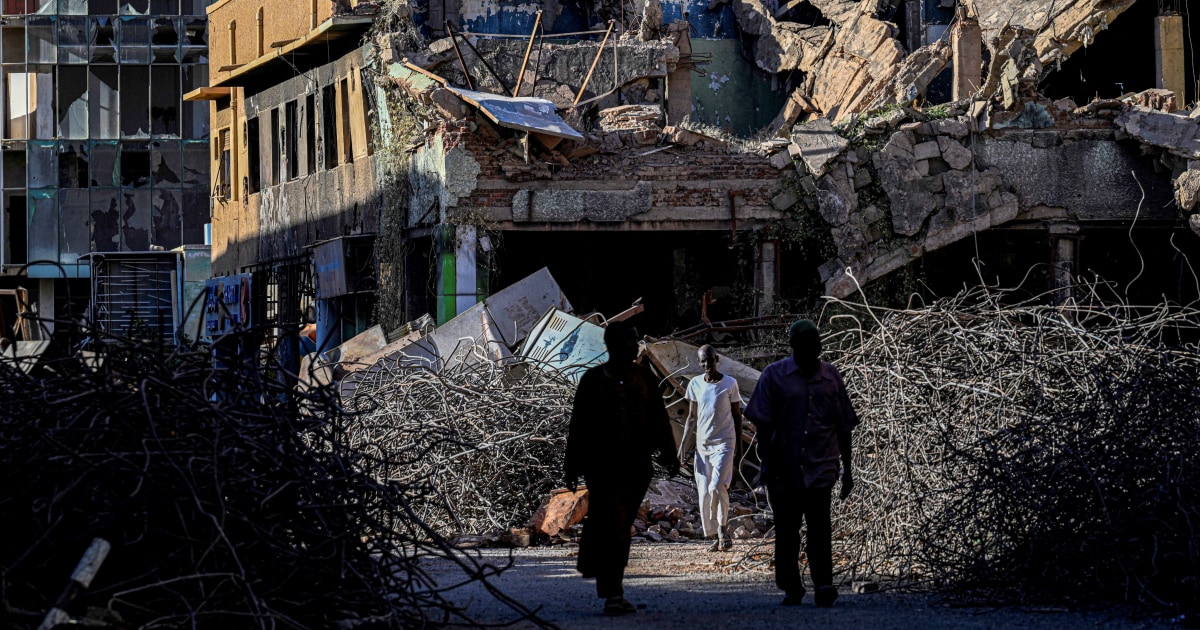
The United States has imposed sanctions on two companies and three individuals accused of facilitating the recruitment and deployment of Colombian mercenaries to fight alongside Sudan’s Rapid Support Forces (RSF) in the country’s ongoing civil war, now in its fourth year. The sanctions, announced by the U.S. Department of the Treasury’s Office of Foreign Assets Control (OFAC), target entities and persons allegedly involved in a network that sourced combatants from Latin America to bolster RSF ranks amid escalating violence in Sudan. The move underscores growing international concern over the foreignization of the conflict and the role of private military actors in prolonging instability.
According to OFAC’s public notice, the sanctioned individuals include Juan Carlos Mesa, a Colombian national identified as a key recruiter; Andrés Felipe Rojas, alleged to have coordinated logistics for fighter deployment; and María Lucía Vélez, accused of financial facilitation for the operation. The two firms designated are Seguridad y Defensa Ltda., a Bogotá-based security consultancy, and Global Strategic Solutions LLC, registered in Panama but reportedly operated from Medellín. OFAC stated that these actors participated in a scheme to identify, vet, and transport former Colombian military personnel to Sudan, where they were integrated into RSF units engaged in combat against the Sudanese Armed Forces (SAF) and allied groups.
The U.S. Government asserts that the recruitment effort violated international norms against the use of mercenaries and contributed to human rights abuses documented in Darfur and other regions. “The involvement of foreign fighters complicates efforts to protect civilians and undermines peace initiatives,” said a senior Treasury official, speaking on condition of anonymity per department policy. “These sanctions aim to disrupt the financial and logistical networks enabling the externalization of Sudan’s war.” The designations freeze any U.S.-based assets of the sanctioned parties and prohibit American individuals and entities from engaging in transactions with them.
OFAC’s action relies on Executive Order 13818, which builds upon the Global Magnitsky Human Rights Accountability Act to sanction foreign persons involved in serious human rights abuse or corruption. The order allows the U.S. To target individuals and entities regardless of nationality if their actions are deemed to fuel conflict or violate international law. In this case, Treasury cited credible reports of RSF-linked units committing atrocities, including ethnically targeted killings and sexual violence, in which foreign combatants have been implicated by eyewitness accounts and satellite imagery reviewed by independent monitors.
The recruitment of Colombians for combat in Sudan is not entirely unprecedented. Analysts note that former members of Colombia’s military, many discharged after the 2016 peace accord with the FARC guerrilla group, possess counterinsurgency experience that makes them attractive to paramilitary and mercenary networks worldwide. Similar patterns have emerged in Yemen and Libya, where Latin American ex-servicemen have been reported in support roles for various belligerents. However, the scale and organization of the Sudan pipeline, as described by U.S. Officials, represent a more structured effort than previously observed.
Colombia’s government has not publicly confirmed direct state involvement in the alleged recruitment network but has condemned the use of its citizens as foreign fighters in external conflicts. Bogotá’s Ministry of Foreign Affairs issued a statement in March 2024 urging Colombians to avoid participating in foreign wars and reiterated that national law prohibits citizens from joining armed conflicts abroad without government authorization. The ministry said it is cooperating with international partners to investigate claims of illicit recruitment, though no arrests have been reported domestically linked to the Sudan pipeline as of this writing.
The RSF, led by General Mohamed Hamdan Dagalo (known as Hemeti), has been engaged in a brutal power struggle with the SAF under General Abdel Fattah al-Burhan since April 2023. The conflict has triggered one of the world’s worst humanitarian crises, with over 8 million people displaced internally and across borders, according to the United Nations High Commissioner for Refugees (UNHCR). Both sides have been accused of war crimes, and peace talks hosted in Jeddah, Saudi Arabia, have repeatedly stalled due to mistrust and ceasefire violations.
Experts warn that the influx of foreign fighters risks further complicating diplomatic efforts and may signal a broader trend of conflict outsourcing. “When states rely on external combatants, they often do so to obscure accountability and avoid domestic political costs,” said Dr. Leila Zerrougui, former UN Special Representative for Children and Armed Conflict, now a senior advisor at the International Crisis Group. “But it also increases lethality and prolongs wars, as outside actors are less constrained by local ties or public opinion.” She emphasized that sanctioning recruitment networks is a necessary, though insufficient, step toward restoring civilian protection.
For readers seeking official updates, the U.S. Treasury Department maintains a searchable sanctions list on its website, updated regularly with new designations and removals. The Office of the United Nations High Commissioner for Human Rights continues to monitor the Sudan crisis through periodic reports and field missions, with the most recent update issued in February 2025 detailing ongoing violations in West Kordofan and Khartoum. Humanitarian access remains severely restricted, and aid organizations continue to call for unimpeded delivery of food, medicine, and shelter to besieged communities.
As of now, no public indictments or criminal charges have been unsealed in U.S. Courts related to the sanctioned individuals or firms. OFAC typically reserves criminal prosecution for the Department of Justice, which has not announced any parallel legal actions in this case. Treasury officials noted that sanctions are often a precursor to further investigation but stressed that the current measures are intended to impose immediate costs on those enabling the war economy.
The next official checkpoint is the semi-annual report to Congress on the use of sanctions under the Global Magnitsky Act, expected in September 2025, which may include updates on ongoing investigations into foreign fighter networks. Until then, the designations remain in effect, and any changes to the sanctions list will be published in the Federal Reserve’s daily announcements and mirrored on the Treasury’s sanctions portal.
We invite our global readership to share perspectives on how the international community can better address the role of private military actors in modern conflicts. Join the conversation in the comments below or share this article to help inform others about the evolving dimensions of the Sudan crisis.
Related reading