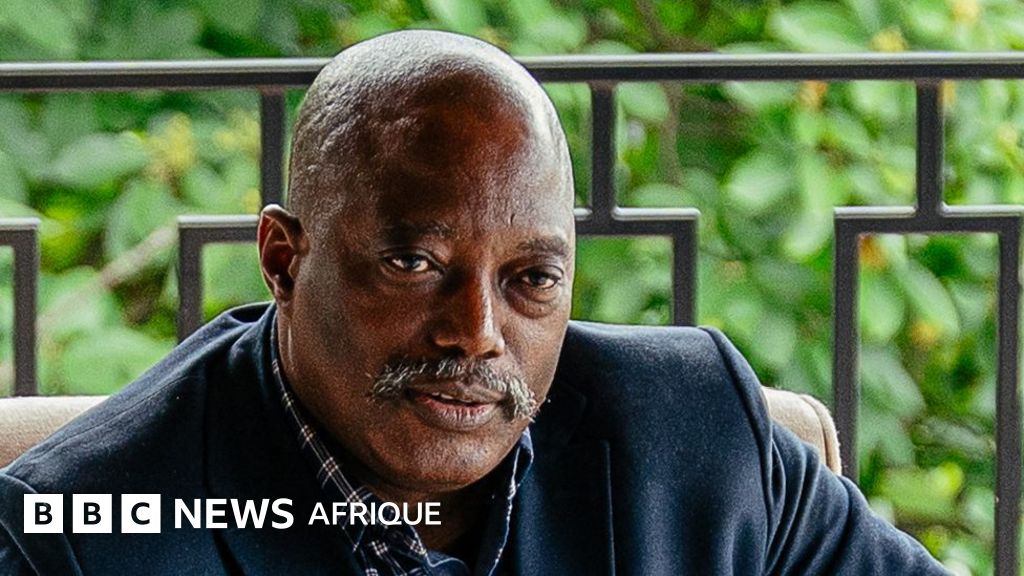
The geopolitical landscape of Central Africa has been further complicated by the decision of the United States to impose sanctions on Joseph Kabila, the former president of the Democratic Republic of the Congo (DRC). These measures, targeting a man who led the nation for 17 years, signal a significant shift in how Washington manages its relationship with the DRC’s political elite and its commitment to democratic stability in the region.
The move to impose sanctions on Joseph Kabila is not an isolated diplomatic gesture but part of a broader U.S. Strategy to combat corruption and the erosion of democratic norms within the DRC. By targeting the financial assets and travel capabilities of the former head of state, the U.S. Treasury Department aims to create a deterrent against political interference and the misappropriation of state funds, issues that have plagued the DRC for decades.
For those following the volatility of the Great Lakes region, these sanctions highlight the tension between the current administration under President Félix Tshisekedi and the lingering influence of the Kabila era. While the transition of power in 2019 was presented as a peaceful handover, the underlying structural issues—ranging from systemic graft to the influence of “shadow” networks—continue to trigger international regulatory responses.
The implications of these sanctions extend beyond the individual. They serve as a warning to other political actors in the region that the U.S. Is increasingly willing to use the Global Magnitsky Act and other executive orders to penalize those deemed responsible for undermining the rule of law, regardless of their former titles or diplomatic immunity.
The Mechanics of U.S. Sanctions on Joseph Kabila
The sanctions against Joseph Kabila are primarily administered through the U.S. Department of the Treasury’s Office of Foreign Assets Control (OFAC). When an individual is placed on the Specially Designated Nationals (SDN) list, their assets within U.S. Jurisdiction are frozen and U.S. Persons are generally prohibited from dealing with them. This effectively cuts the target off from the U.S. Financial system, making it nearly impossible to conduct international business in dollars or maintain accounts in American banks.
In the case of Kabila, the sanctions are tied to allegations of corruption and the destabilization of democratic processes. The U.S. Government has frequently cited the need for transparency in the DRC, particularly regarding the extraction of mineral wealth—cobalt, copper, and gold—which are critical to the global tech economy but often fuel local conflict and corruption.
The legal framework for these actions often falls under Executive Orders designed to combat corruption in the DRC. These mandates allow the U.S. President to designate individuals who have been involved in significant corruption, including the expropriation of private assets for personal gain or the bribery of government officials. By targeting Kabila, the U.S. Is asserting that the transition of power did not erase the accountability for actions taken during his presidency.
Why These Sanctions Matter Now
The timing of these sanctions is critical. The DRC is currently navigating a fragile political environment characterized by ongoing conflict in the east, particularly involving the M23 rebel group and tensions with Rwanda. The U.S. Views a stable, transparent government in Kinshasa as essential for regional security. Any perception that former leaders are operating “parallel” power structures or utilizing illicit funds to influence current politics is seen as a threat to that stability.
the U.S. Is under pressure from domestic and international human rights organizations to move beyond rhetoric and capture concrete action against “kleptocrats.” The designation of a former president is a high-profile signal that the U.S. Is prioritizing the integrity of the DRC’s democratic institutions over the convenience of maintaining ties with old political guards.
The Political Fallout in Kinshasa and Beyond
The reaction within the Democratic Republic of the Congo has been polarized. Supporters of Joseph Kabila view the sanctions as an external interference in Congolese sovereignty and an attempt by the U.S. To pressure the country into a specific political alignment. They argue that the sanctions are politically motivated and designed to weaken a former leader who still commands significant loyalty in certain provinces.
Conversely, civil society groups and proponents of the current administration see the move as a long-overdue step toward justice. For years, activists in Kinshasa have called for an audit of the state’s finances during the Kabila years, alleging that billions of dollars in mineral revenues disappeared into private accounts. The U.S. Sanctions provide a layer of international legitimacy to these local demands for accountability.
The relationship between Joseph Kabila and his successor, Félix Tshisekedi, has been a rollercoaster of cooperation and conflict. While they initially maintained a facade of unity to ensure a smooth transition, the rift has widened as Tshisekedi has attempted to consolidate power and distance himself from the Kabila legacy. The U.S. Sanctions add a fresh dimension to this rivalry, potentially isolating Kabila further and limiting his ability to exert influence from the sidelines.
Impact on the DRC’s Mineral Sector
The DRC’s wealth is its greatest curse and its greatest asset. The sanctions on Kabila are inextricably linked to the “resource curse.” The U.S. Has long expressed concern that the wealth generated from the DRC’s mines does not benefit the Congolese people but instead flows to a small elite. By sanctioning high-level figures, the U.S. Hopes to push the DRC toward a more transparent mining regime.
This is particularly significant as the world shifts toward green energy. The DRC holds the world’s largest reserves of cobalt, a key component in lithium-ion batteries. The U.S. Is keen to ensure that the supply chain for these critical minerals is not compromised by corruption or human rights abuses, which would create both ethical and economic risks for American companies.
Comparing the Sanctions Regime
To understand the scale of these measures, it is helpful to look at how they compare to other sanctions applied in the region. Unlike broad economic sanctions against a whole country (such as those on Iran or North Korea), these are “targeted” or “smart” sanctions. They are designed to hit specific individuals without harming the general population.

| Feature | Targeted Sanctions (e.g., Kabila) | Broad Economic Sanctions |
|---|---|---|
| Primary Goal | Pressure specific individuals/elites | Change national government policy |
| Economic Impact | Freezes personal assets/bank accounts | Limits trade, imports, and exports |
| Humanitarian Risk | Low; does not affect food/medicine | High; can lead to widespread shortages |
| Legal Basis | Global Magnitsky / Executive Orders | International Treaties / UN Mandates |
What This Means for the Future of the DRC
The sanctions on Joseph Kabila are a litmus test for the effectiveness of U.S. Diplomacy in Africa. The central question is whether financial pressure can actually induce a change in behavior or foster a more transparent government. Historically, targeted sanctions have had mixed results; some individuals find ways to bypass the system through third-party proxies or non-Western financial hubs.
But, the psychological impact is significant. It signals to the Congolese political class that the “shield” of the presidency is not permanent. It establishes a precedent that the international community is tracking the movement of funds and the actions of leaders long after they leave office.
For the average Congolese citizen, the sanctions are a reminder of the vast gap between the lived experience of the population and the luxury enjoyed by the political elite. If these sanctions are followed by actual recovery of stolen assets—which are then reinvested into healthcare and infrastructure—they could be seen as a victory for the people. Without such a tangible result, they risk being viewed as mere symbolic gestures.
The Role of Other International Actors
While the U.S. Leads this particular charge, the European Union and the United Nations too play critical roles. The EU has its own sanctions framework for human rights violations, and the UN maintains a peacekeeping presence (MONUSCO) in the DRC. Coordination between these entities is essential. If the U.S. Sanctions Kabila while European banks continue to facilitate his transactions, the impact is diluted.
There is also the “China factor.” China is the largest investor in the DRC’s mining sector and often maintains a policy of non-interference in the internal political affairs of its partners. This creates a strategic loophole where sanctioned individuals can pivot their financial dealings toward Beijing, potentially undermining the goals of the U.S. Treasury.
Key Takeaways for the Global Audience
- Targeted Pressure: The U.S. Is using the SDN list to freeze assets and restrict travel for Joseph Kabila, focusing on corruption and democratic instability.
- Democratic Signal: The move indicates that the U.S. Will not overlook the actions of former leaders if they continue to undermine the rule of law.
- Resource Link: The sanctions are closely tied to the need for a transparent and ethical supply chain for critical minerals like cobalt and copper.
- Regional Stability: Washington views the removal of “shadow” influence from former leaders as a prerequisite for a stable DRC and a peaceful Great Lakes region.
Frequently Asked Questions
Why is the U.S. Sanctioning a former president?
The U.S. Imposes sanctions on former leaders when there is evidence of significant corruption, human rights abuses, or actions that undermine democratic transitions. In Joseph Kabila’s case, the focus is on the misappropriation of state funds and the destabilization of the DRC’s political environment.
Does this mean Joseph Kabila is being arrested?
No. Sanctions are financial and administrative tools, not criminal charges. While they freeze assets and block travel to the U.S., they do not constitute an arrest warrant. An arrest would require a separate legal process, such as an extradition request or an International Criminal Court (ICC) warrant.
How do these sanctions affect the Congolese people?
Targeted sanctions are specifically designed to avoid harming the general population. Unlike trade embargoes, these measures only affect the designated individuals and those who knowingly do business with them, meaning they do not restrict the import of food or medicine.
Will this stop the conflict in Eastern DRC?
Sanctions on political figures in Kinshasa are an indirect tool. While they may reduce the ability of elites to fund proxy groups or profit from conflict minerals, the war in the east involves complex regional dynamics, including foreign armies and local militias, which require a comprehensive diplomatic and military solution.
Looking Ahead
The international community will be watching for any official response from the Congolese government or the legal team of Joseph Kabila. The next critical checkpoint will be the periodic review of the SDN list by the U.S. Treasury, where the government will determine if the conditions for these sanctions have been met or if further designations are required.
As the DRC continues to struggle with security in its eastern provinces and the pressure of global mineral demand, the fate of its former leaders serves as a barometer for the country’s progress toward accountability. Whether these sanctions lead to a genuine cleaning of the political system or simply a shift in where the money is hidden remains to be seen.
We invite our readers to share their perspectives on the effectiveness of targeted sanctions in promoting democracy in the comments section below. Please share this report to maintain the global conversation on Congolese accountability alive.
Worth a look