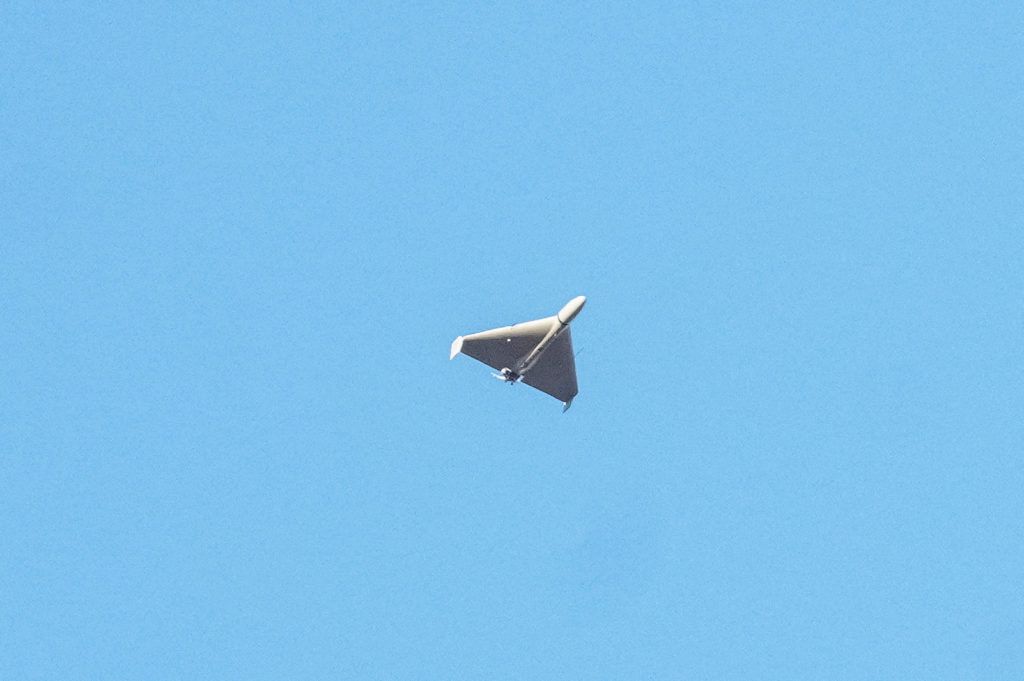
Washington D.C. – In a significant move to bolster defenses against the growing threat of unmanned aerial vehicles, the United States is deploying an advanced anti-drone system to the Middle East. This deployment comes as concerns mount over the increasing sophistication and proliferation of drone technology, particularly in light of recent conflicts and escalating regional tensions. The system, known as Merops, has proven effective against Russian drones in Ukraine and is expected to provide a crucial layer of protection for U.S. Forces and allies in the region.
The decision to deploy Merops underscores a growing recognition of the limitations of traditional air defense systems – like Patriot and THAAD missile systems – against the low-cost, highly maneuverable threat posed by drones. While these systems have successfully intercepted ballistic missiles launched from Iran, officials acknowledge a critical gap in capabilities when it comes to countering swarms of smaller, more agile drones. The U.S. Has previously utilized Patriot and THAAD systems to intercept Iranian missiles, demonstrating their effectiveness against that particular threat, but the unique challenges presented by drones necessitate a different approach.
The urgency of this deployment is heightened by recent events, including the Iranian retaliatory response following joint U.S.-Israeli strikes. Tehran launched a barrage of drones and missiles at countries in the Middle East, prompting concerns about the preparedness of regional partners. Several Persian Gulf nations reportedly expressed dissatisfaction with the limited warning they received before the attack, highlighting the need for improved defensive capabilities. This situation, coupled with Russia’s increasing reliance on Iranian-supplied drones in the war in Ukraine, has spurred the U.S. To accelerate its efforts to develop and deploy effective counter-drone technologies.
A New Generation of Drone Defense: Introducing Merops
Merops represents a paradigm shift in drone defense. Unlike conventional systems designed to intercept high-speed missiles, Merops is specifically engineered to detect, identify, and neutralize unmanned aerial systems. The system operates by deploying its own drones to engage and disable incoming threats. Its compact size – small enough to fit in the back of a midsize pickup truck – allows for rapid deployment and flexibility in positioning. Crucially, Merops utilizes artificial intelligence to navigate effectively even when satellite and electronic communications are disrupted, a common tactic employed by adversaries seeking to evade detection.
The effectiveness of Merops lies in its ability to address a critical cost imbalance. Intercepting a drone with a missile costing hundreds of thousands of dollars is economically unsustainable. Merops offers a far more cost-effective solution, capable of neutralizing threats that cost less than $50,000. This “math problem,” as described by Representative Jim Himes (D-CT), is central to the challenge of defending against drone swarms. Himes, the top Democrat on the House Intelligence Committee, emphasized the difficulty of relying on expensive interceptors to counter the sheer volume of inexpensive Iranian drones. “It’s really, really expensive to take down a cheap drone,” he stated, illustrating the need for a more efficient and scalable solution.
Lessons Learned from Ukraine and NATO Deployments
The deployment of Merops to the Middle East is not happening in a vacuum. The system has already undergone testing and refinement in real-world scenarios, including deployments to Poland and Romania in November following repeated incursions of Russian attack drones into NATO airspace. These deployments provided valuable insights into the system’s capabilities and limitations, informing ongoing improvements and operational strategies. The U.S. Military has been closely studying the experiences of Ukraine in defending against Iranian-supplied drones, gleaning valuable lessons about tactics, techniques, and procedures.
Ukrainian President Volodymyr Zelenskyy recently revealed that the U.S. Sought Kyiv’s assistance in combating Iran’s Shahed drones, which Russia has extensively used in its invasion. While Zelenskyy did not detail the specific nature of the assistance, U.S. Defense officials confirmed that the Merops system is part of the collaborative effort. This highlights the growing recognition of Ukraine’s expertise in countering drone threats, honed through years of defending against relentless Russian attacks. According to the Associated Press, Ukraine has warned that Russia could soon be producing up to 1,000 drones per day, largely due to technical assistance from Iran.
Iranian Drone Technology and the Evolving Threat Landscape
The proliferation of Iranian drone technology is a major concern for U.S. And allied forces. Iran has long been a supplier of drones to various actors in the Middle East, and its partnership with Russia has significantly amplified the threat. Experts note that while the drones used by Iran are often less sophisticated than their Russian counterparts, they are still capable of causing significant damage and disruption. Iran is actively assisting Russia in developing its own drone manufacturing capabilities, further exacerbating the problem. The Conversation reported that Iranian technology has been instrumental in helping Russia develop a fleet of sophisticated drones, eroding Ukrainian air defenses and straining the country’s resolve.
The U.S. Response to Iran’s drone capabilities has been described as “disappointing” by one U.S. Official, who noted that the drones used by Iran are a more basic version of those being refined and updated by Russia. This suggests that the U.S. May need to reassess its strategies and invest in more advanced counter-drone technologies. The challenge is not simply about intercepting drones; it’s about disrupting the entire drone ecosystem, from manufacturing and supply chains to command and control networks.
Deployment and Future Implications
The Merops systems being deployed to the Middle East will be strategically positioned across various locations, including areas where U.S. Forces are not directly present. The majority of the systems will be delivered directly by Perennial Autonomy, the manufacturer backed by former Google CEO Eric Schmidt, minimizing disruption to existing defense deployments in Europe. Perennial Autonomy has not yet publicly commented on the deployment.
Pentagon officials have acknowledged the difficulties in countering waves of Iranian drones, admitting that some U.S. Targets in the Gulf region remain vulnerable. Defense Secretary Pete Hegseth emphasized that while a complete defense is not guaranteed, the U.S. Has taken steps to maximize protection and force protection. Michael Robbins, president and CEO of AUVSI, a drone industry group, stressed the need for accelerated deployment of sophisticated counter-drone technologies to protect both forces and civilian populations without incurring exorbitant costs.
The deployment of Merops represents a critical step in addressing the evolving drone threat, but it is not a panacea. Continued investment in research and development, coupled with international cooperation, will be essential to staying ahead of adversaries and ensuring the safety and security of U.S. Interests and allies. The situation remains fluid, and ongoing monitoring and adaptation will be crucial in the days and weeks ahead.
Looking ahead, the U.S. Military will continue to assess the effectiveness of Merops in the Middle East and refine its counter-drone strategies accordingly. Further developments in drone technology and tactics are anticipated, necessitating a continuous cycle of innovation and adaptation. The ongoing collaboration with Ukraine, as well as partnerships with other allies, will be vital in maintaining a technological edge and deterring future aggression.
What are your thoughts on the deployment of this new anti-drone system? Share your comments below, and please share this article with your network to spread awareness about this critical issue.
Related reading