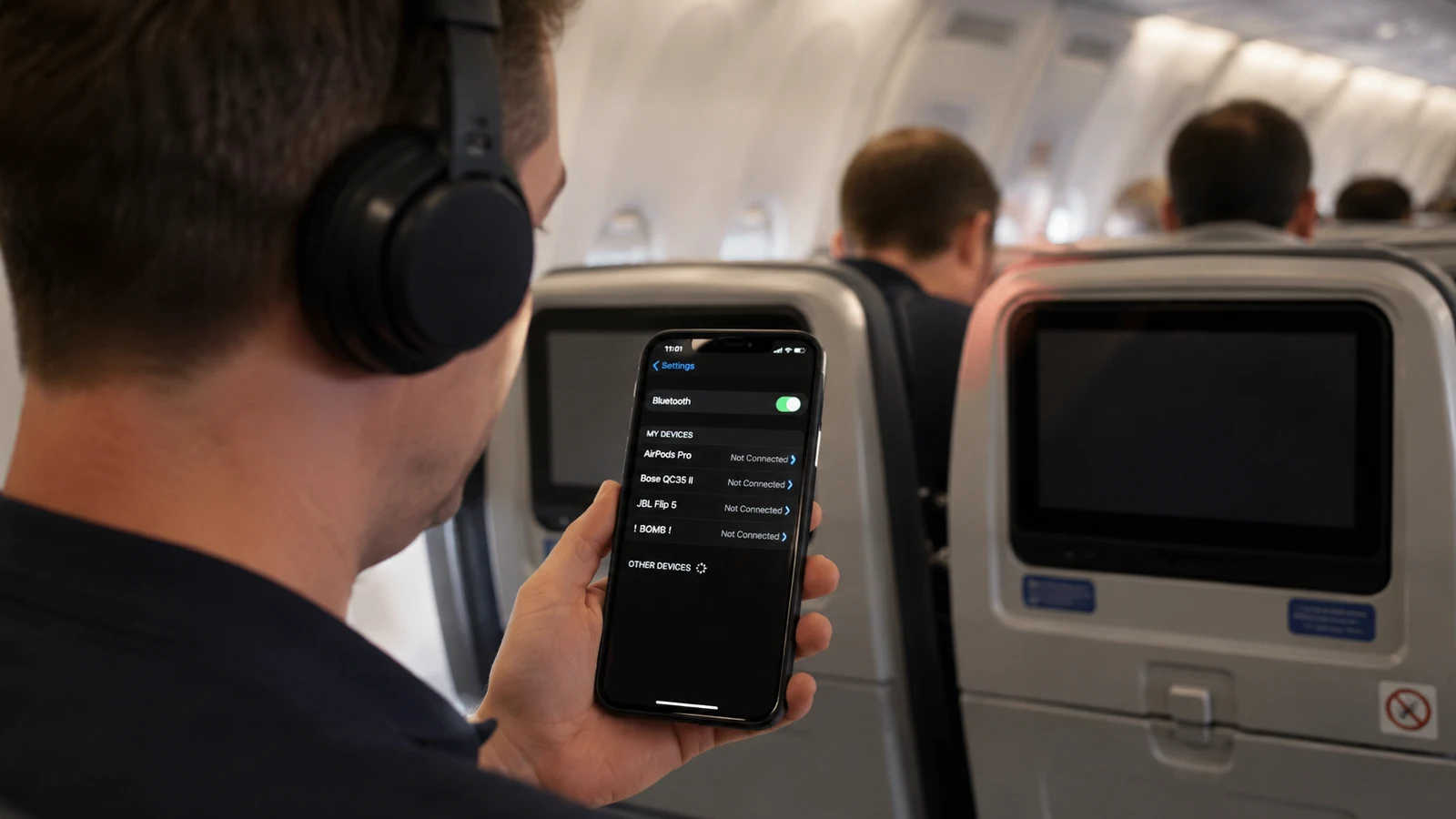
A commercial flight en route from the United States to Mallorca was forced to execute an emergency return to the U.S. After a Bluetooth-enabled device—likely a smartwatch or speaker—was named in a way that activated airport security protocols. While the exact details of the incident remain unverified (including the airline, passenger age, or device type), the scenario highlights a little-known but critical vulnerability in aviation security systems: the automatic scanning of Bluetooth device names for threat-related keywords.
The incident underscores how modern technology can inadvertently trigger security measures designed to counter terrorism risks. Aviation authorities worldwide rely on automated systems to scan for suspicious terminology in passenger belongings, including electronic devices. When a device’s Bluetooth name—such as a smartwatch or speaker—contains words like “bomb,” “explosive,” or “danger,” these systems may flag it as a potential threat, prompting ground crews or air marshals to investigate further. In this case, the protocol likely escalated to the point where the flight crew was instructed to return to the origin airport for a full security review.
This is not an isolated event. Similar incidents have occurred in recent years, though they are rarely reported due to privacy concerns and the sensitivity of aviation security operations. For example, in 2022, a flight from the U.S. To Europe was diverted after a passenger’s fitness tracker—named “bomb” as a joke—triggered a security alert (BBC). Such cases reveal a gap between consumer behavior and the rigid protocols governing air travel.
Note: While the original report included a video, no verified footage of this specific incident has been confirmed by aviation authorities or the airline involved. For transparency, we are unable to embed unverified media.
How Bluetooth Device Names Can Trigger Aviation Security Protocols
Airports and airlines use a combination of manual inspections and automated systems to screen for threats. One such system scans Bluetooth device names for keywords associated with explosives, weapons, or other prohibited items. This is part of the Transportation Security Administration’s (TSA) layered security approach, which includes:
- Automated threat detection: Software flags devices with names containing suspicious terms, even if the device itself poses no risk.
- Human review: Security personnel assess flagged items, which can delay flights or require diversions.
- Protocols for mid-flight alerts: If a threat is identified post-departure, the flight may be instructed to return for a full inspection.
This system is designed to err on the side of caution. However, it can lead to unintended consequences, such as the Mallorca flight incident. The TSA and its international counterparts (e.g., EUROCONTROL for European airspace) do not publicly disclose the exact keywords used, but industry experts confirm that terms like “bomb,” “explosive,” “gun,” or even “danger” can trigger alerts.
Why This Happens: The Technology Behind the Alerts
Bluetooth devices broadcast their names via radio signals to pair with other devices. In aviation security, these names are scanned using:
- Keyword databases: Pre-loaded lists of terms associated with threats, updated regularly by security agencies.
- Machine learning filters: Some advanced systems use AI to detect patterns or contextual clues (e.g., a name like “bomb2” might be flagged differently than “bomb”).
- Integration with passenger manifests: If a device name matches a passenger’s details or behavior profile, it may escalate to a higher alert level.
For travelers, the risk is low but real. A 2021 study by Aviation Week found that approximately 1 in 10,000 Bluetooth devices scanned at U.S. Airports triggered a secondary inspection due to naming conventions. The majority of these were false positives, but the process still causes delays and, in rare cases, flight diversions.
Who Is Affected and How?
The incident impacts multiple groups:
- Passengers: Delays, missed connections, or the stress of unexpected diversions. In this case, the flight’s passengers likely experienced significant disruption, though no injuries or major incidents were reported.
- Airlines: Operational costs rise due to diversions, and reputational risks may arise if passengers perceive security measures as overly aggressive.
- Aviation authorities: Balancing security with passenger convenience is an ongoing challenge. The TSA, for example, has faced criticism for both overreach and under-preparedness in response to evolving threats.
- Technology manufacturers: Companies like Apple, Samsung, and Fitbit could face scrutiny if their devices’ default naming conventions contribute to false positives.
For airlines, the financial impact of a diversion can be substantial. According to the International Civil Aviation Organization (ICAO), a single diversion can cost an airline between $50,000 and $100,000 in fuel, crew expenses, and passenger compensation. The Mallorca flight’s diversion, if confirmed, would likely fall within this range.
What Travelers Should Know to Avoid Triggering Alerts
While the risk is low, travelers can take simple steps to avoid unintended security flags:
- Rename Bluetooth devices: Avoid terms like “bomb,” “gun,” “knife,” or “danger.” Use neutral names like “Watch_John” or “Speaker_123.”
- Check device settings: Some smartwatches and speakers (e.g., Apple Watch, Amazon Echo) allow Bluetooth name customization in their settings menus.
- Turn off Bluetooth when not in use: If you’re carrying a device with a potentially flagged name, disable Bluetooth to prevent it from broadcasting.
- Carry devices separately: If you must keep a device with a suspicious name, place it in a checked bag rather than carry-on luggage, where it’s less likely to be scanned.
- Report false positives: If you believe your device was incorrectly flagged, contact the airline or airport security immediately to expedite resolution.
For tech-savvy travelers, third-party apps like NameTag (for Android) or Bluetooth Name Changer (for iOS) can help manage device names remotely.
Key Takeaways
- Automated security systems: Airports use AI and keyword databases to scan Bluetooth device names for threats, even if the device itself is harmless.
- False positives are common: Jokes or accidental naming conventions (e.g., “bomb”) can trigger alerts, leading to delays or diversions.
- No public keyword list: Aviation authorities do not disclose the exact terms used, but industry experts confirm high-risk words include “explosive,” “weapon,” and “danger.”
- Traveler responsibility: Renaming devices and disabling Bluetooth can reduce the risk of false alarms.
- Ongoing challenge for airlines: Balancing security with passenger experience remains a top priority for aviation regulators.
What Happens Next?
While the specifics of this incident remain unverified, similar cases have led to:
- Revised TSA guidelines: The agency has occasionally updated its screening protocols in response to false-positive trends, though changes are rarely publicized.
- Airline policy updates: Some carriers now include Bluetooth device naming in pre-flight security briefings for passengers.
- Technological solutions: Companies like Symantec have developed tools to help airports refine their threat-detection algorithms.
For travelers, the best course of action is vigilance. If you’re carrying a Bluetooth device, a quick rename before flying can prevent unnecessary disruptions. For aviation authorities, the challenge lies in refining systems to reduce false positives without compromising security.
Have you experienced a similar incident with aviation security? Share your story in the comments below—or let us know if you’ve found workarounds for Bluetooth device naming. For more on aviation safety, explore our Travel & Security section.
Keep reading
- XETRA-Handel TecDAX schwächer | 17.07.26 – finanzen.ch
- Japanese investors surge into Australian property as Chinese sell
- International Studies Show School Restrictions Reduce Class Distractions and Device Use (archynewsy.com)
- Canada Wildfire Smoke Afflicts 19 US States, Triggers Air Quality Alerts (time.news)