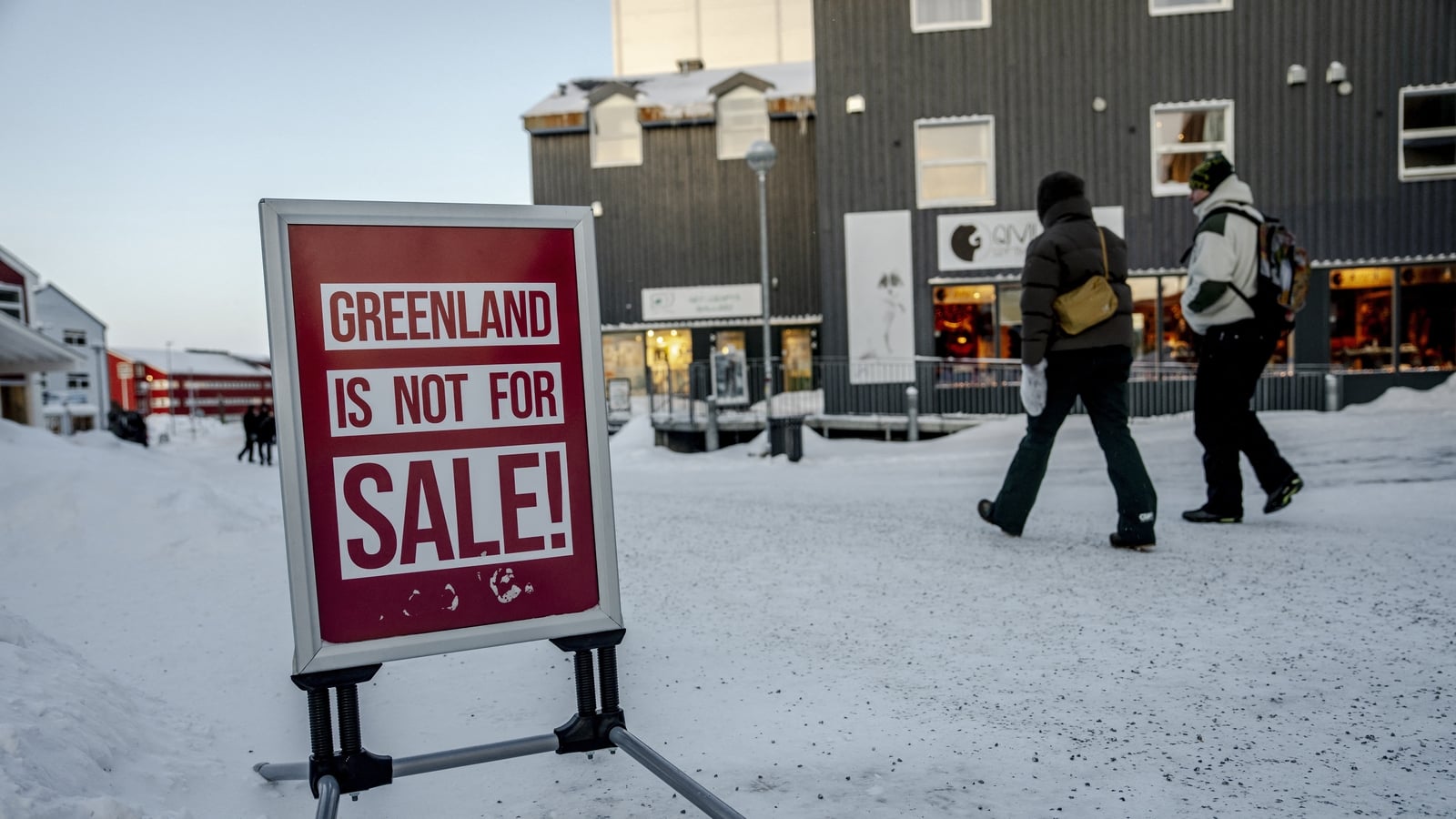
US Strategic Posture Toward Greenland Remains Unchanged, Greenlandic Premier Confirms
The strategic relationship between the United States and Greenland is set to maintain its current trajectory, according to the Premier of the Danish autonomous territory. Following a high-level meeting between Greenlandic leadership and a special envoy representing President Donald Trump, the Premier indicated that the United States’ fundamental stance regarding the island has not undergone any significant shifts.
The diplomatic encounter marks a key checkpoint in the evolving relationship between Washington and Nuuk. As Arctic geopolitics continue to intensify, the engagement between the U.S. Administration and Greenland’s local government underscores the enduring importance of the region to American strategic and economic interests.
Diplomatic Engagement and the Status Quo
The meeting between the Greenlandic Premier and the President’s envoy was characterized by discussions aimed at clarifying the current framework of bilateral relations. While the specific details of the dialogue remain confidential, the overarching message from the Greenlandic government is one of continuity. The Premier’s assertion that U.S. “designs” or strategic interests remain unchanged suggests that the existing diplomatic and security frameworks are expected to persist despite the high-level nature of the visit.
For observers of Arctic diplomacy, this stability is significant. It suggests that the current administration’s approach to Greenland—balancing security requirements with respect for the territory’s autonomous status—is being maintained. This continuity is vital for regional stability, as Greenland sits at the intersection of North American defense interests and European territorial administration.
The Strategic Importance of the Arctic Frontier
The decision to maintain a consistent stance toward Greenland is rooted in the territory’s unique geopolitical position. As the Arctic becomes increasingly accessible due to shifting climatic patterns, the region has transformed into a focal point for global competition. Greenland’s location provides a critical vantage point for monitoring maritime traffic and ensuring security across the North Atlantic.
The strategic value of Greenland is multifaceted, involving several key areas of interest for the United States:
- Security and Defense: The territory plays a vital role in the defense of the North American continent, serving as a buffer and a monitoring hub for Arctic maritime movements.
- Resource Access: The region is believed to hold significant untapped mineral and natural resources, which are of increasing interest to global markets and industrial sectors.
- Maritime Routes: As Arctic ice recedes, new shipping lanes are emerging that could fundamentally alter global trade patterns, making Greenland a central node in future logistics.
The Premier’s confirmation of an “unchanged” stance implies that Washington continues to view Greenland through this lens of long-term strategic necessity, seeking to maintain its influence without disrupting the established political order between Nuuk and Copenhagen.
Navigating Autonomy and International Interests
A defining feature of this relationship is the delicate balance between U.S. Interests, Greenland’s pursuit of increased autonomy, and the sovereign responsibilities of the Kingdom of Denmark. Because Greenland operates as an autonomous territory, any significant shift in U.S. Policy requires nuanced coordination with local leadership in Nuuk.
The fact that the U.S. Sent a special envoy to meet directly with the Premier highlights a sophisticated diplomatic approach. By engaging with the local government, Washington acknowledges the growing agency of Greenlandic leadership in shaping its own economic and security future. This engagement is essential for ensuring that any future developments—whether related to infrastructure, resource extraction, or security cooperation—have the necessary local mandate to succeed.
Key Takeaways: US-Greenland Relations
- Policy Continuity: The Greenlandic Premier has explicitly stated that U.S. Strategic intentions toward the territory remain consistent.
- High-Level Dialogue: The meeting between the Premier and the Trump administration’s envoy signals active and direct diplomatic engagement.
- Geopolitical Stability: The “unchanged” stance points toward a period of predictable, albeit complex, relations in the Arctic theater.
- Strategic Focus: U.S. Interests remain centered on the security, resource, and maritime importance of the Greenlandic territory.
As the meeting concludes, the focus now shifts to how this continuity will manifest in practical policy. While the fundamental stance remains the same, the implementation of security and economic cooperation will likely continue to be a subject of rigorous negotiation between the U.S., Greenland, and Denmark.
Further updates regarding the specific outcomes of the envoy’s mission are expected as official communiqués are released by the Greenlandic government or the U.S. Department of State.
What are your thoughts on the shifting geopolitics of the Arctic? Should the U.S. Increase its direct engagement with autonomous territories like Greenland? Share your insights in the comments below and please share this article with your network.