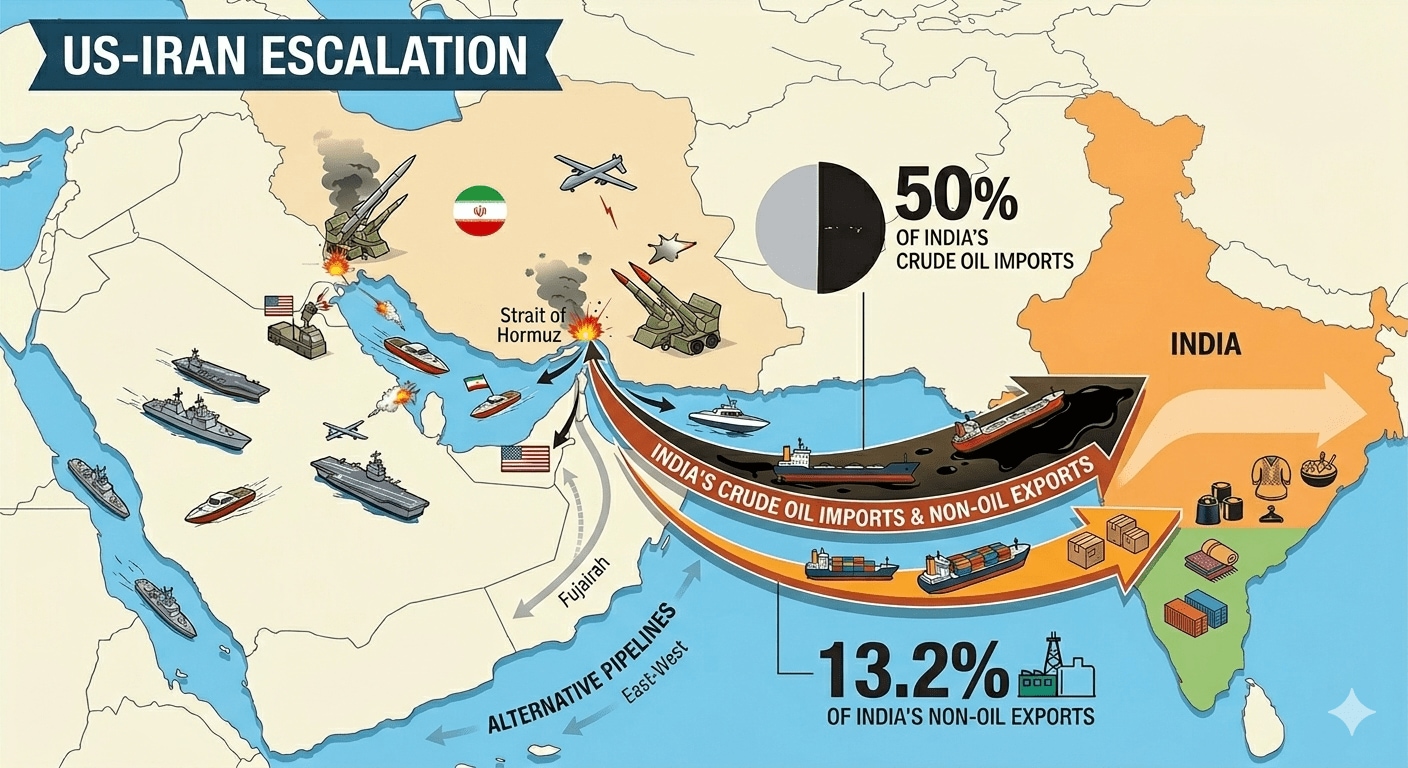
The United States military conducted a new series of strikes on Sunday, targeting facilities linked to Iranian-backed groups in a move that signals a further escalation in the volatile Strait of Hormuz. These actions follow a persistent cycle of regional hostilities, as both Washington and Tehran continue to trade fire in a strategic maritime corridor that serves as a critical artery for global energy supplies.
The strikes, which the Pentagon characterized as a defensive measure, are the latest in a recurring pattern of back-and-forth military engagements. According to the U.S. Department of Defense, these operations are designed to deter future aggression against American personnel and to protect commercial shipping routes. The Strait of Hormuz remains a central point of contention, with the U.S. Navy maintaining a heightened presence to counter what officials describe as illegal seizures and harassment of merchant vessels by Iranian forces.
Strategic Stakes in the Strait of Hormuz
The Strait of Hormuz is one of the most significant chokepoints in the world, with roughly one-fifth of the world’s petroleum consumption passing through its narrow waters daily, according to data from the U.S. Energy Information Administration. Because of this reliance, any disruption to the flow of traffic carries immediate risks for global energy prices and regional stability.
Tensions in the region have been exacerbated by a series of maritime incidents involving the Islamic Revolutionary Guard Corps (IRGC) Navy. The U.S. Naval Forces Central Command has repeatedly reported incidents where Iranian vessels have attempted to interfere with the passage of international tankers. These disputes serve as the primary catalyst for the current cycle of strikes, as Washington seeks to enforce freedom of navigation protocols while Iran asserts its regional security interests.
The Pattern of Escalation
The conflict has evolved into a predictable, yet dangerous, tit-for-tat cycle. When the U.S. initiates strikes against infrastructure or command nodes, Iranian-aligned proxy forces often respond with drone or missile attacks on U.S. outposts in neighboring countries. This cycle has persisted for months, leaving diplomatic channels strained.
Analysts at the Center for Strategic and International Studies note that the current situation represents a “gray zone” conflict, where both parties attempt to exert maximum pressure without triggering an all-out conventional war. The challenge for policymakers remains how to de-escalate without appearing to concede control over the vital maritime lanes that define the economic health of the region.
Operational Context and Next Steps
While the U.S. continues to deploy assets to the region, including guided-missile destroyers and aircraft, the Iranian government has consistently denied that its actions are provocative, instead claiming they are necessary to monitor foreign naval interference in its sovereign waters. The United Nations Security Council has previously called for restraint from all parties, warning that miscalculations in the Strait could have catastrophic consequences for international trade.
The next confirmed checkpoint in this unfolding situation will be the upcoming briefing from the U.S. Central Command, where military officials are expected to provide an assessment of the damage inflicted during Sunday’s operations and potential adjustments to their regional force posture. Until that time, the U.S. military remains in a state of high readiness, with regional allies monitoring the situation closely for signs of further retaliation.
We invite our readers to share their perspectives on the evolving security situation in the Middle East in the comments section below. Stay tuned for further updates as we continue to track these developments across our global reporting network.
Related reading
- Private Life of Paris Movie Screening at Movie Space Juan
- Week in Pictures: Marine Le Pen, Ayatollah Khamenei’s Funeral, and World Cup Magic
- Live updates • Explosions reported in Iran’s Bandar Abbas as Tehran strikes Kuwait (archyde.com)
- US Strikes 140 Iranian Sites as Tehran Retaliates Against Gulf Nations (archyworldys.com)