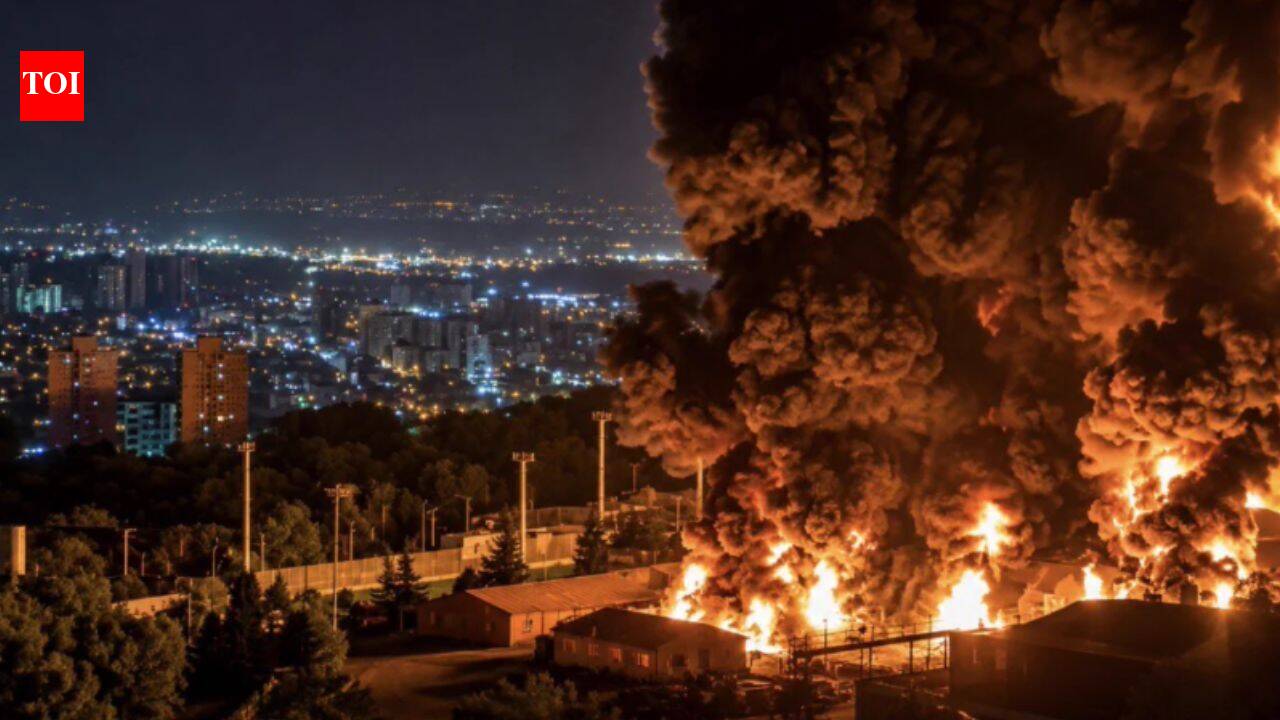
United States military forces conducted a series of precision airstrikes against facilities linked to Iran-backed militias in response to intensifying threats against commercial and military vessels in the Strait of Hormuz. The strikes, which targeted weapons storage sites and command-and-control infrastructure, follow a period of heightened regional tension involving drone and missile attacks on international shipping lanes. According to the U.S. Central Command (CENTCOM), these actions were taken to protect freedom of navigation and ensure the safety of maritime personnel operating in one of the world’s most critical energy transit corridors.
The escalation follows repeated reports of harassment directed at merchant vessels transiting the Strait of Hormuz, a narrow waterway through which approximately 20% of the world’s total oil consumption passes. CENTCOM officials confirmed that U.S. naval assets, including regional task forces, have intercepted multiple unmanned aerial vehicles (UAVs) and fast-attack craft in recent weeks. The Pentagon maintains that these strikes are intended to degrade the operational capacity of groups tasked with disrupting regional stability, rather than representing a move toward broader territorial conflict.
Military Objectives and Strategic Context
The recent U.S. military engagement reflects a shift in posture regarding the protection of maritime commerce. Following the targeting of commercial ships, the U.S. Department of Defense authorized targeted strikes against specific facilities identified as sources of the hostile activity. These sites, situated in proximity to the Iranian coast, were reportedly used for the assembly and deployment of explosive-laden drones and anti-ship missiles. The Department of Defense has emphasized that these operations are defensive in nature and aimed at deterring further aggressive maneuvers that threaten global energy security.

Analysts note that the Strait of Hormuz remains a focal point for geopolitical friction. For years, the region has seen periodic standoffs between the U.S. Navy and the Iranian Islamic Revolutionary Guard Corps (IRGC) Navy. The current crisis is distinguished by the increased sophistication of the weaponry deployed against merchant vessels. While Iran has consistently denied direct involvement in specific attacks on commercial shipping, the U.S. government maintains that the militias responsible operate under the strategic guidance and material support of Tehran.
Shipping and Energy Market Impacts
The instability in the Strait of Hormuz has direct implications for global supply chains. According to data from the U.S. Energy Information Administration (EIA), any prolonged disruption in the strait can lead to significant volatility in global oil prices. Shipping companies have responded to the increased risk by diverting vessels or increasing security measures, which adds to the operational costs for international trade. Maritime insurance premiums for vessels entering the Persian Gulf have also seen upward pressure due to the heightened threat environment.

International maritime authorities, including the International Maritime Organization (IMO), have issued advisories for vessels transiting the region to maintain high levels of vigilance. The U.S. presence in the area serves as a primary deterrent, but the persistent use of asymmetric warfare tactics—such as swarm tactics by small boats—continues to challenge standard naval security protocols. The strikes represent a tactical attempt to mitigate these threats at the source, effectively neutralizing the hardware before it can be deployed against civilian targets.
International Reactions and the Path Forward
Diplomatic reactions to the strikes have remained divided. While the U.S. maintains that its actions are consistent with international law regarding the right to self-defense and the protection of global trade, regional actors have expressed concern over the potential for miscalculation. The Iranian Foreign Ministry has characterized the strikes as an act of aggression, warning that such measures could further destabilize the Persian Gulf region. Meanwhile, European allies have largely called for de-escalation, urging all parties to prioritize diplomatic channels to prevent a wider conflict.

The situation remains fluid. As of the latest update from the White House, the U.S. administration is continuing to monitor the response from Iranian-aligned groups. No formal timeline for the conclusion of these operations has been provided, and officials have stated that the U.S. retains the right to respond to any further threats against its personnel or assets. The next key checkpoint will be the assessment of the effectiveness of these strikes in reducing the frequency of maritime harassment in the coming weeks.
We invite readers to share their perspectives on the evolving situation in the Persian Gulf in the comments section below. Stay tuned for further updates as more verified information becomes available regarding the impact of these strikes on regional maritime security.