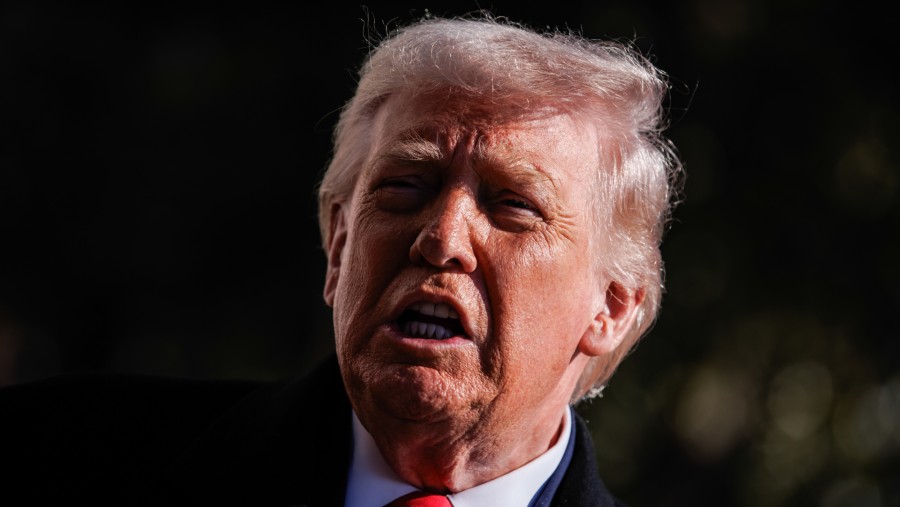
Washington D.C. – In a significant blow to former President Donald Trump’s economic agenda, the U.S. Supreme Court on Friday invalidated his sweeping global tariff policy. The 6-3 ruling determined that Trump had overstepped his authority by invoking federal emergency powers to impose broad, reciprocal tariffs worldwide. This decision marks the largest legal defeat for Trump since his return to the White House and raises questions about the future of U.S. Trade policy.
The court found that Trump misused the International Emergency Economic Powers Act (IEEPA), a 1977 law originally designed to address national emergencies, to justify the tariffs. The majority opinion argued that the law did not provide a legal basis for such widespread trade restrictions. While the court struck down the policy itself, it notably did not rule on the extent to which importers are entitled to refunds for tariffs already paid, leaving that matter for lower courts to decide. The potential value of those refunds could reach a substantial US$170 billion, representing over half of the total revenue collected from Trump’s tariffs to date, according to reports.
The Core of the Dispute: IEEPA and Presidential Authority
The case centered on the scope of presidential power in imposing tariffs, specifically under the auspices of a national emergency. Trump’s administration had argued that the tariffs were necessary to address unfair trade practices and protect American industries. The administration as well claimed the tariffs were crucial in combating the trade of fentanyl, a potent synthetic opioid. However, the Supreme Court’s decision underscores the principle of separation of powers, reaffirming that the authority to impose taxes, including tariffs, ultimately rests with Congress. As Justice John Roberts wrote in the majority opinion, “The Framers did not grant the Executive Branch a free hand to impose taxes.”
The IEEPA, passed in 1977, grants the President broad authority to regulate international commerce during times of national emergency. 50 U.S. Code § 1621 details the powers granted under the act. However, the Supreme Court’s ruling clarifies that this authority is not unlimited and cannot be used to circumvent Congress’s constitutional power to regulate trade through taxation. The ruling specifically challenged the use of IEEPA to impose “reciprocal” tariffs – those levied in response to tariffs imposed by other countries – and targeted import taxes aimed at curbing fentanyl trade.
Dissenting Opinions and Concerns About Refunds
The three dissenting justices – Clarence Thomas, Samuel Alito, and Brett Kavanaugh – expressed concerns about the potential ramifications of the ruling. Justice Kavanaugh warned that the process of issuing refunds to importers could be “a massive undertaking” and potentially chaotic, a concern previously raised during oral arguments. The court’s decision to exit the refund issue to lower courts means a lengthy legal battle could ensue, potentially delaying any financial relief for businesses that paid the tariffs.
The Biden administration has indicated it will seek alternative legal justifications to maintain some form of tariff protection. However, the Supreme Court’s decision significantly narrows the options available to the executive branch. The ruling effectively removes one of the key tools Trump used to reshape U.S. Trade relationships, particularly with countries like China and the European Union.
Impact on U.S. Trade Relations and the Indonesian Agreement
The timing of the Supreme Court’s decision is particularly noteworthy, coinciding with the announcement of a new trade agreement between the United States, and Indonesia. As reported by Republika.co.id, the agreement was announced on the same day as the court’s ruling. While details of the agreement remain emerging, it appears to involve tariff reductions for certain Indonesian exports to the U.S. The Indonesian agreement, however, does not appear to be directly affected by the Supreme Court’s ruling, as it is a negotiated trade deal rather than a unilateral imposition of tariffs under IEEPA.
The invalidated tariffs had a broad impact on global trade, affecting numerous countries and industries. American consumers also felt the effects through higher prices on imported goods. Economists have repeatedly warned that tariffs, while potentially benefiting specific industries, ultimately raise costs for businesses and consumers, contributing to inflation. The ruling is expected to alleviate some of that inflationary pressure, although the full extent of the impact remains to be seen.
Reactions and Future Implications
The White House released a statement acknowledging the Supreme Court’s decision and stating its commitment to finding alternative legal avenues to protect American industries. However, the administration did not elaborate on specific plans. Meanwhile, former President Trump expressed his disappointment with the ruling, suggesting that foreign interests may have influenced the court’s decision. He maintained that tariffs imposed on national security grounds remain valid, despite the court’s limitations on the use of IEEPA.
The ruling is expected to prompt a reassessment of U.S. Trade strategy and potentially lead to renewed efforts to negotiate multilateral trade agreements. It also underscores the importance of congressional oversight in trade policy and the need for clear legal authority for any trade restrictions imposed by the executive branch. The decision could also embolden other countries to challenge U.S. Trade practices at the World Trade Organization (WTO).
Key Takeaways
- The U.S. Supreme Court invalidated former President Trump’s global tariff policy, ruling he exceeded his authority under the International Emergency Economic Powers Act (IEEPA).
- The 6-3 decision reaffirms that the power to impose tariffs ultimately resides with Congress.
- The court did not rule on whether importers are entitled to refunds for tariffs already paid, leaving that decision to lower courts.
- The ruling coincides with the announcement of a new trade agreement between the U.S. And Indonesia, but that agreement is not directly affected.
- The decision is expected to have significant implications for U.S. Trade policy and relations with other countries.
The legal battles surrounding the tariffs are far from over. The question of refunds, potentially totaling US$170 billion, will now be litigated in lower courts. The Biden administration faces the challenge of formulating a new trade strategy that respects the Supreme Court’s ruling while still protecting American economic interests. The coming months will be crucial in determining the long-term impact of this landmark decision on global trade and the U.S. Economy.
Sofia, Bulgaria – As the world watches these developments unfold, the implications for international commerce and geopolitical stability remain significant. We will continue to provide updates as this story develops. Share your thoughts and analysis in the comments below.
Keep reading