
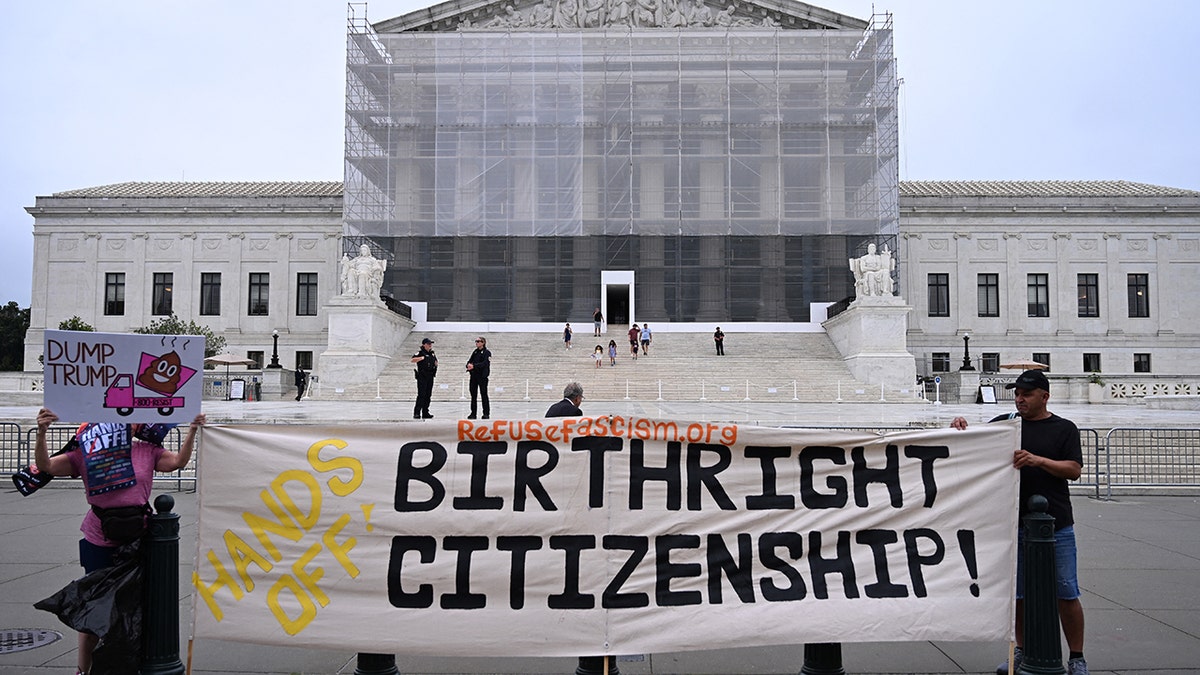
The United States Supreme Court has reaffirmed the principle of birthright citizenship, maintaining that individuals born on U.S. soil are citizens regardless of their parents’ immigration status. This judicial standing upholds the 14th Amendment of the U.S. Constitution, rejecting attempts to limit citizenship through executive order or administrative decree.
The ruling preserves a cornerstone of American law. This legal precedent ensures that citizenship is an automatic right of birth, not a privilege granted by the government based on the legal standing of the parents.
Legal analysts and government officials state that the decision effectively blocks efforts to end birthright citizenship via executive action. Because the Constitution explicitly defines citizenship, any change to these requirements would likely require a constitutional amendment rather than a presidential order, according to legal experts cited by the New York Times.
How the 14th Amendment Defines Birthright Citizenship
The 14th Amendment to the U.S. Constitution states: “All persons born or naturalized in the United States, and subject to the jurisdiction thereof, are citizens of the United States and of the State wherein they reside.” This clause was designed after the Civil War to guarantee citizenship to formerly enslaved people, but it has since expanded to cover almost everyone born within U.S. borders.

The primary legal debate often centers on the phrase “subject to the jurisdiction thereof.” Critics of birthright citizenship have argued that children of undocumented immigrants are not “subject to the jurisdiction” of the U.S. because their parents are in the country illegally. However, the Supreme Court has historically interpreted this to mean that anyone physically present and subject to U.S. laws is under that jurisdiction.
According to records from House.gov, members of Congress, including Representative Greg Garcia, have emphasized that this ruling protects the fundamental rights of millions of families. The legal consensus remains that birthright citizenship is not a policy choice but a constitutional mandate.
Why the Court Rejected Executive Limits on Citizenship
The conflict reached a peak when Donald Trump proposed using an executive order to end birthright citizenship for children of undocumented immigrants. The legal challenge to this proposal rested on the principle that a president cannot override the Constitution through a decree.

The Supreme Court’s refusal to overturn the status quo reflects a commitment to the “rule of law” over administrative preference. By ratifying birthright citizenship, the Court ensured that the executive branch cannot unilaterally redefine who is considered a citizen. According to reports from CNN, the rejection of these limits prevents the creation of a permanent “underclass” of people born in the U.S. who would otherwise be denied citizenship.
This decision is significant because it clarifies the limits of presidential power. While presidents have broad authority over immigration enforcement and border security, the Court ruled that this authority does not extend to altering the constitutional definition of citizenship.
Who Is Affected by the Supreme Court’s Decision?
The ruling has immediate implications for millions of people, particularly those in mixed-status families where children are born in the U.S. to non-citizen parents. These individuals are guaranteed the full protections of U.S. law, including the right to a U.S. passport, the ability to vote upon reaching legal age, and access to federal benefits.
The decision also impacts “birth tourism,” a practice where individuals travel to the U.S. specifically to give birth so their children acquire citizenship. While the government can regulate visas and entry into the country, the Court’s ruling means that once a child is born on U.S. soil, their citizenship is legally secure regardless of the parents’ intent or visa status.
For legal residents and undocumented immigrants, this ruling provides stability. It removes the threat of a sudden policy shift that could leave children stateless or without legal standing in the only country they have ever known.
Comparing Legal Arguments: Constitutionalism vs. Executive Discretion
The debate over birthright citizenship highlights a sharp contrast in legal philosophy. On one side, proponents of the ruling argue for a strict “originalist” interpretation of the 14th Amendment, asserting that the text is clear and unambiguous.

Conversely, those who supported the Trump administration’s efforts argued that “jurisdiction” implies a political allegiance that undocumented immigrants do not possess. They contended that the 14th Amendment was never intended to grant citizenship to children of those violating U.S. immigration laws.
The Supreme Court’s action effectively settled this dispute by siding with the long-standing precedent. The court found that the physical presence of a person within U.S. borders is sufficient to satisfy the “jurisdiction” requirement, regardless of the legality of the parents’ presence.
What Happens Next for U.S. Citizenship Law?
With the Supreme Court ratifying birthright citizenship, the only viable path to changing this rule is through a constitutional amendment. This process is intentionally difficult, requiring a two-thirds vote in both the House and Senate, followed by ratification by three-fourths of the states.
Given the current political climate, a constitutional amendment to end birthright citizenship is considered unlikely by most political analysts. Consequently, the legal status of children born in the U.S. to non-citizen parents remains secure under current law.
The next confirmed legal checkpoints involve ongoing challenges to other aspects of immigration law, including asylum processing and border enforcement mandates, which will continue to move through the federal court system.
For more information on citizenship requirements and official documentation, individuals can visit the official U.S. Citizenship and Immigration Services (USCIS) website.
Join the conversation: How do you believe this ruling affects the future of U.S. immigration policy? Share your thoughts in the comments below.