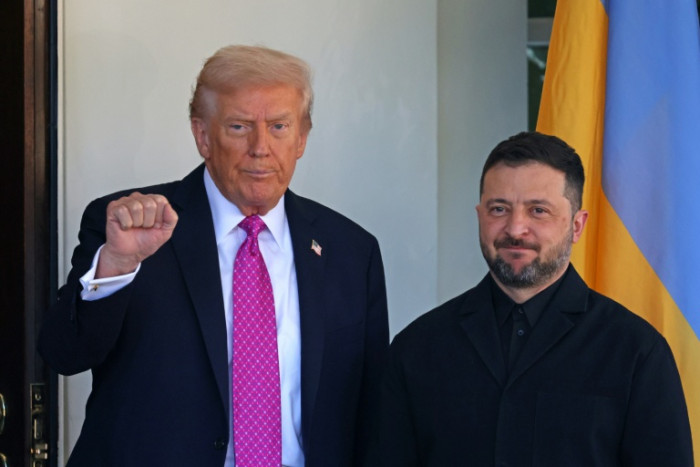
proposed Peace Plan Raises Concerns Over Potential Ukrainian concessions to Russia
A newly surfaced peace plan, reportedly originating from within the Trump administration and developed in consultation with Russia, is sparking intense debate and raising concerns about potential concessions from Ukraine. Details shared with Agence France-Presse (AFP) by a senior source reveal a proposal that asks Ukraine to yield on key principles it has previously deemed unacceptable – potentially paving the way for a resolution, but at a meaningful cost.
The core of the plan centers around territorial recognition. it calls for Ukraine to acknowledge Russian control over Crimea, annexed in 2014, and other regions currently occupied by Russian forces. This includes the four Ukrainian regions – Donetsk, Lugansk, Zaporizhzhia, and Kherson – unilaterally annexed by the Kremlin in 2022, despite incomplete control. This demand directly contradicts Ukraine’s stated position of never recognizing Russian sovereignty over its land.
However,a critical ambiguity remains: the plan offers little clarity on what,if any,reciprocal commitments Russia would make.This imbalance is a major point of contention.
Military Restrictions and Security Concerns
beyond territorial concessions, the plan proposes a dramatic reduction in Ukraine’s military strength, limiting its armed forces to just 400,000 personnel - less than half its current size.Furthermore, ukraine would be required to relinquish all long-range weaponry.
These stipulations echo previous Russian demands, articulated during earlier peace talks in Istanbul, which focused on limiting Ukraine’s military capabilities and curbing the flow of Western arms. Russia has consistently opposed the presence of NATO troops on Ukrainian soil, a position seemingly reinforced by this plan.
Ukraine, understandably, seeks robust security guarantees – ideally a Western-backed peacekeeping force – to deter future Russian aggression.The proposed plan, as it stands, offers little in the way of such assurances. As President Zelenskyy recently stated, “It is a matter of our country’s survival.” Reducing Ukraine’s military capacity while lacking firm security guarantees leaves the nation vulnerable to renewed attacks.
Origins and Political Context
The plan’s origins are particularly sensitive. Axios reports it was drafted by the Trump administration in secret discussions with Russia, raising questions about its legitimacy and potential bias.The source speaking to AFP noted the uncertainty surrounding whether the plan truly reflects Donald Trump’s views or those of his inner circle.
Trump’s stance on the Ukraine war has been notably inconsistent, fluctuating between critical rhetoric towards Zelenskyy and calls for a more assertive approach to reclaiming lost territory. this ambiguity further complicates the assessment of the plan’s intent and potential impact.
Reactions and the Path Forward
Kyiv has yet to issue an official response. The Kremlin, when questioned, offered no comment.However, the European Union has voiced strong reservations. EU’s top diplomat, Kaja Kallas, emphasized that any viable peace settlement must have the full consent of both Ukraine and Brussels.
“For any plan to work, it needs Ukrainians and Europeans on board,” Kallas stated, adding a crucial point: “We have to understand that in this war, there is one aggressor and one victim. So we haven’t heard of any concessions on the Russian side.”
This proposed plan highlights the complex and fraught nature of finding a resolution to the conflict in Ukraine. While a negotiated settlement is ultimately desirable, any agreement must address Ukraine’s legitimate security concerns and avoid rewarding aggression. The current proposal, with its emphasis on Ukrainian concessions and lack of reciprocal commitments from Russia, raises serious doubts about its fairness and long-term viability.
Expert Commentary: This plan, if seriously considered, represents a perilous precedent.It risks legitimizing Russia’s territorial gains and undermining the principles of international law. A sustainable peace requires a commitment to Ukraine’s sovereignty and territorial integrity, backed by credible security guarantees. Simply asking Ukraine to surrender land and disarm is not a path to peace; it’s a recipe for future conflict.
Worth a look