Caracas, Venezuela – A significant agreement has been reached between the Venezuelan state-owned mining company, Minerven, and the commodities trading firm Trafigura, paving the way for the sale of up to 1,000 kilograms of Venezuelan gold to the United States market. The deal, finalized this week, represents a notable step in the evolving economic relationship between Venezuela and the U.S., following a period of strained diplomatic ties and sanctions. This development comes amidst a broader effort by the Venezuelan government to attract foreign investment in its mineral resources, including potential reforms to its mining laws.
The agreement, confirmed by multiple sources including Reuters and Mineria en Linea, stipulates that Minerven will supply between 650 and 1,000 kilograms of gold doré – a semi-pure alloy of gold and silver – to Trafigura. Crucially, the shipment will be facilitated through a separate arrangement with the U.S. Government, ensuring compliance with American regulations and potentially easing concerns about the origin and legality of the gold. The gold is expected to be refined at facilities within the United States, with the final product requiring a gold content of 98%, according to reports.
U.S. Involvement and the Role of Secretary Burgum
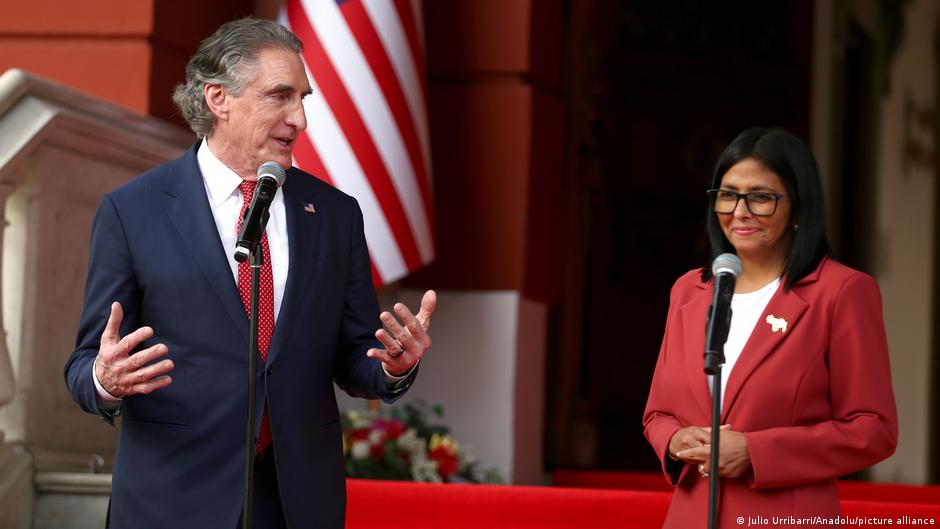
The involvement of U.S. Secretary of the Interior, Doug Burgum, was instrumental in securing the agreement. Burgum visited Caracas earlier this week, leading a delegation of over two dozen mining and mineral companies, and reportedly played a key role in brokering the deal during meetings with Venezuelan officials, including interim President Delcy Rodríguez. According to Axios, Burgum’s intervention was critical in overcoming obstacles and establishing the necessary framework for the transaction. His visit signaled a willingness from the U.S. Administration to explore opportunities for cooperation in Venezuela’s mining sector, particularly in the areas of oil and minerals. Burgum’s trip too coincided with discussions regarding potential investment opportunities and the creation of jobs within the Venezuelan economy.
The U.S. State Department has not yet issued a formal statement regarding the specifics of the arrangement, but the involvement of the Secretary of the Interior underscores the strategic importance of the deal for Washington. The move aligns with a broader U.S. Strategy to secure access to critical minerals, particularly in the context of increasing geopolitical competition with China. Venezuela possesses significant reserves of various minerals, including gold, diamonds, and rare earth elements, making it a potentially valuable partner for the U.S. In diversifying its supply chains.
Venezuela’s Mining Reforms and Investment Drive
Concurrent with the gold agreement, the Venezuelan government has announced plans to reform its mining laws to attract greater foreign investment. Interim President Rodríguez stated that a revised mining law will be presented to the National Assembly “in the coming days,” aiming to create a more favorable environment for international companies operating in the country’s mining sector. The proposed reforms are expected to open up opportunities for foreign investment in gold, diamonds, and rare earth minerals, potentially unlocking significant economic benefits for Venezuela. However, Reuters has reported that Venezuela has not yet confirmed the existence of substantial rare earth reserves through comprehensive exploration, despite the government’s claims.
The move to attract foreign investment comes after the reopening of the U.S. Embassy in Caracas on February 1, 2024, with Laura Dogu appointed as the chargé d’affaires. This marked a significant step towards the gradual restoration of diplomatic relations following a period of rupture in 2019. The easing of sanctions and the resumption of economic cooperation are seen as key components of the evolving relationship between the two countries. State-owned oil company PDVSA has also announced new contracts to supply petroleum to the U.S. Market, further demonstrating the growing economic ties.
Global Context: Gold as a Safe Haven
The timing of this agreement is particularly noteworthy given the current global economic climate. Gold is often considered a safe-haven asset during times of uncertainty, and its value has been bolstered by geopolitical tensions, including those surrounding the conflict in the Middle East and disruptions to oil transit through the Strait of Hormuz. As of March 6, 2026, one kilogram of pure gold is valued at approximately $166,000, making the potential sale of up to 1,000 kilograms a substantial economic transaction for Venezuela. The increased demand for gold as a hedge against economic instability further incentivizes Venezuela to capitalize on its mineral resources.
The agreement with Trafigura represents a complex interplay of economic, political, and geopolitical factors. It signals a potential shift in the relationship between Venezuela and the United States, driven by shared interests in securing access to critical minerals and fostering economic cooperation. However, the success of this venture will depend on the continued stability of the political situation in Venezuela and the ability of both countries to navigate the challenges of international trade and regulatory compliance.
Minerven firmó un acuerdo para vender entre 650 y 1.000 kg de oro doré a Trafigura, con destino final en el mercado estadounidense. El acuerdo fue posible gracias a la gestión del secretario del Interior de EE.UU., Doug Burgum, durante su visita a Caracas. https://t.co/qJ9qXqY8zL
— Axios Español (@axios_es) March 5, 2026
Key Takeaways
- Gold Deal Secured: Minerven and Trafigura have reached an agreement for the sale of 650-1,000 kg of gold doré to the U.S. Market.
- U.S. Government Facilitation: The U.S. Government, through Secretary Burgum, played a key role in brokering the deal and ensuring compliance with regulations.
- Mining Law Reform: Venezuela is planning to reform its mining laws to attract greater foreign investment in its mineral resources.
- Economic Shift: The agreement signals a potential shift towards closer economic ties between Venezuela and the United States.
Looking ahead, the Venezuelan National Assembly is expected to debate and vote on the proposed mining law reforms in the coming weeks. The outcome of this vote will be crucial in determining the extent to which foreign companies will be able to invest in Venezuela’s mining sector. Further updates on the implementation of the gold agreement and the progress of the mining law reforms are expected from both the Venezuelan and U.S. Governments in the near future. The situation remains fluid, and continued monitoring of developments is essential.
Jonathan Reed is Editor, News at World Today Journal.
Keep reading