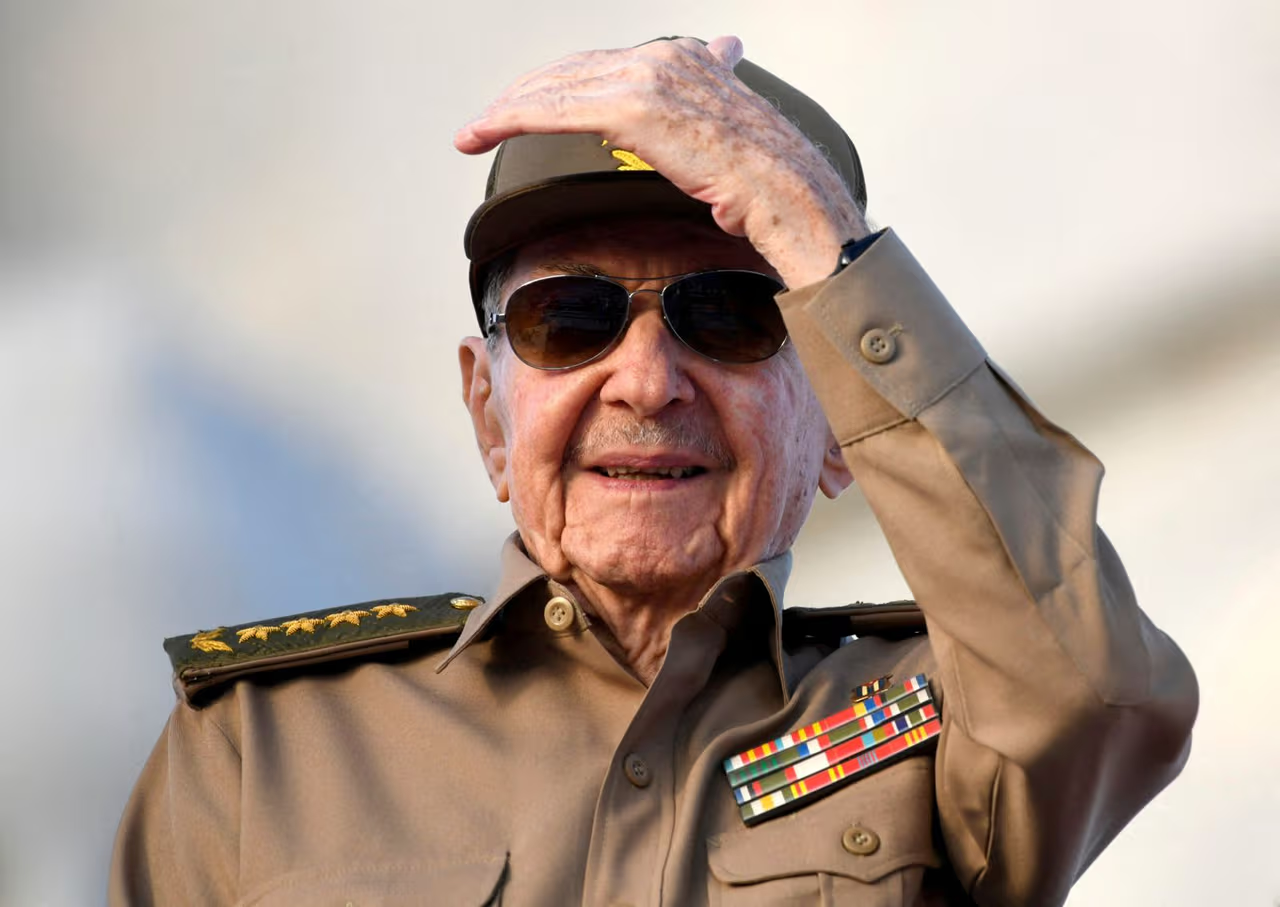
The United States government is taking formal steps to indict Raúl Castro, the 94-year-old former president of Cuba, in connection with a deadly aerial confrontation that occurred nearly three decades ago. According to U.S. Officials familiar with the matter, the legal maneuver centers on the 1996 shootdown of aircraft operated by the humanitarian organization Brothers to the Rescue.
This potential indictment, which requires approval from a grand jury, represents a significant escalation in the Trump administration’s current strategy toward the Cuban government. The move comes amid a period of intense economic and political pressure designed to force fundamental structural changes within the Cuban state.
The legal action is not occurring in a vacuum but is part of a broader geopolitical offensive. The administration has already implemented severe economic measures, including threats of heavy tariffs on any nation exporting oil to Cuba, a move that has reportedly triggered acute energy shortages across the island as oil shipments have been largely curtailed.
The 1996 Brothers to the Rescue Incident
The core of the proposed charges stems from the events of 1996, when Cuban military aircraft intercepted and downed planes belonging to Brothers to the Rescue, a group dedicated to providing humanitarian aid and conducting search-and-rescue missions for Cuban migrants. The incident resulted in multiple fatalities and has remained a point of severe diplomatic contention between Washington and Havana for years.
By targeting Raúl Castro, who was a key figure in the Cuban leadership at the time, the U.S. Justice Department appears to be seeking accountability for the decision-making process that led to the shootdown. While a Justice Department spokesperson has declined to comment on the specifics of the ongoing process, the focus remains on the command responsibility of the former president.
A Strategy of Maximum Pressure
The push for an indictment coincides with a systemic effort by the Trump administration to destabilize the current Cuban power structure. President Trump has publicly pressed for major reforms on the island and has suggested the possibility of a “friendly takeover” of the country to transition it away from its current communist governance.
This pressure intensified significantly in January, following a high-stakes operation in which the U.S. Military removed Venezuelan leader Nicolás Maduro from power and transported him to New York to face drug charges. Because Venezuela served as a critical economic and political partner for Cuba, the removal of Maduro has left the Cuban government isolated and more vulnerable to U.S. Demands.
Diplomatic Channels and the Role of the CIA
Despite the threat of legal action, the U.S. Is maintaining a direct, albeit stern, line of communication with the Cuban leadership. CIA Director John Ratcliffe recently met with Raúl Guillermo Rodríguez Castro, known as “Raulito,” the grandson of the former president. Raulito is widely viewed as both a representative for the 94-year-old Raúl Castro and a primary point of contact for U.S. Officials.
During the meeting, Director Ratcliffe delivered a direct message from President Trump: the United States is prepared to engage seriously on security and economic issues, but such engagement is contingent upon Cuba making “fundamental changes” to its governance and human rights record. This “carrot and stick” approach uses the threat of the indictment and economic collapse as leverage to secure political concessions.
Implications for Cuban Leadership
Although Raúl Castro formally stepped down as the leader of Cuba’s Communist Party in 2021, he continues to be regarded as one of the most influential figures in the country. An indictment by a U.S. Grand jury would effectively criminalize one of the architects of the modern Cuban state, further complicating any future diplomatic normalization efforts.
For the current Cuban administration, the situation creates a precarious balancing act. The government must manage internal instability caused by energy shortages and the loss of Venezuelan support while facing the prospect of its former leader being labeled a fugitive by the world’s largest economy.
Key Takeaways
- Legal Target: The U.S. Is moving to indict 94-year-old former Cuban President Raúl Castro.
- Primary Charge: The indictment focuses on the 1996 shootdown of Brothers to the Rescue humanitarian planes.
- Economic Leverage: The U.S. Is utilizing oil tariffs and the removal of Nicolás Maduro to pressure Cuba.
- Diplomatic Condition: CIA Director John Ratcliffe informed Cuban representatives that economic engagement depends on “fundamental changes.”
- Legal Requirement: The potential indictment must be approved by a grand jury before it becomes official.
What Happens Next
The immediate next step in this process is the presentation of evidence to a grand jury. If the jury returns a true bill, an official indictment will be unsealed, potentially leading to an international arrest warrant for Raúl Castro.
Observers will be watching for any official statement from the U.S. Department of Justice or the Cuban Ministry of Foreign Affairs as the legal process unfolds. The outcome of the grand jury proceedings will likely dictate the temperature of U.S.-Cuba relations for the remainder of the year.
World Today Journal encourages readers to share their perspectives on this developing story in the comments below.