
Tensions between Washington and Berlin have escalated into a potential military drawdown, as U.S. President Donald Trump announced he is reviewing the possibility of reducing the American military presence in Germany. The move follows a sharp public dispute between the U.S. President and German Chancellor Friedrich Merz over the ongoing U.S.-Israel war against Iran.
The prospect of a troop withdrawal has sent ripples through NATO, as Germany currently hosts the largest contingent of U.S. Forces in Europe. While the exact number of personnel slated for removal has not been officially confirmed by the Pentagon, reports from several European outlets indicate a potential reduction of 5,000 soldiers. This development marks a significant pivot in the transatlantic security architecture, potentially weakening the collective defense posture of the alliance in Central Europe.
The friction between the two leaders reached a boiling point after Chancellor Merz criticized the U.S. Approach to the conflict in the Middle East. Specifically, Merz suggested that the United States had been humiliated
by Iranian negotiators during diplomatic efforts to resolve the war, a critique that President Trump responded to with a direct threat to the U.S. Military footprint in Germany.
The Catalyst: A Clash Over the Iran War
The current diplomatic crisis is rooted in a fundamental disagreement over the conduct of the war against Iran. Chancellor Friedrich Merz has been vocal about the fallout of the conflict, urging for a more balanced diplomatic approach to avoid prolonged instability in the region. This stance clashed with President Trump’s “maximum pressure” strategy and his public assertions of U.S. Dominance in the negotiations.
On April 30, 2026, President Trump took to social media to signal his dissatisfaction with the German leadership. In a post on Truth Social, Trump stated that the United States is studying and reviewing the possible reduction of Troops in Germany, with a determination to be made over the next short period of time
according to BBC News.
The timing of the announcement is critical. It comes just as Germany is attempting to navigate its role within NATO while maintaining a critical eye on the humanitarian and geopolitical costs of the U.S.-led campaign in Iran. For Chancellor Merz, the challenge is twofold: maintaining a strategic partnership with the U.S. While asserting Germany’s sovereign foreign policy interests.
Impact on NATO and European Security
The U.S. Military presence in Germany is a cornerstone of European security, dating back to the aftermath of World War II and the Cold War. Currently, You’ll see more than 36,000 active-duty U.S. Military personnel stationed in the country as reported by CNBC. This includes critical infrastructure such as the headquarters for U.S. European Command (EUCOM) and U.S. Africa Command (AFRICOM).
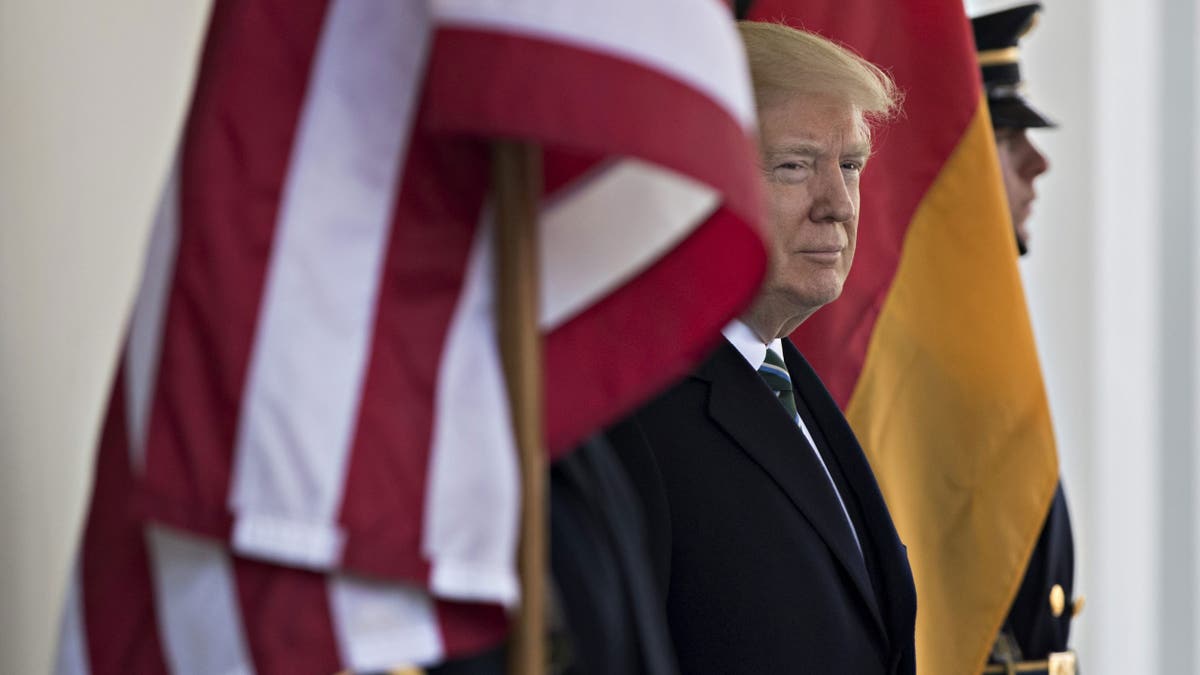
A reduction of 5,000 troops, if realized, would represent a significant percentage of the active-duty force and could signal a broader U.S. Retreat from its traditional role as the primary security guarantor in Europe. Security analysts suggest that such a move could embolden adversaries and force European nations to accelerate their own military spending—a demand President Trump has frequently made of NATO allies.
Chancellor Merz has attempted to downplay the severity of the rift, insisting that the personal relationship between himself and the U.S. President remains strong. In a recent press conference, Merz claimed that the two leaders are still on good speaking terms
according to Politico, framing his criticisms as a response to the war’s fallout rather than a personal attack on Trump.
Strategic Implications for Germany
For Berlin, the threat of troop withdrawals is not entirely recent, but the context of the current “Iran feud” adds a layer of volatility. Germany’s reliance on the U.S. Nuclear umbrella and conventional deterrence remains high and any perceived instability in the U.S. Commitment to Article 5 of the NATO treaty creates a security vacuum.
- Deterrence: A reduced U.S. Presence may lower the threshold for regional aggression.
- Defense Spending: The threat may push Germany to meet or exceed the 2% GDP spending target for NATO more aggressively.
- Diplomatic Leverage: The use of military presence as a bargaining chip in diplomatic disputes sets a precedent for other NATO allies.
What Happens Next?
The White House has not yet provided a definitive timeline or a final number for the troop reduction, only stating that a determination will be made in the next short period of time
. The Pentagon is expected to conduct a review of the operational impact that such a drawdown would have on European Command’s ability to project power and maintain stability.
The next critical checkpoint will be the official determination from the U.S. Administration regarding the scale and timing of the withdrawal. Diplomatic circles are watching closely to see if Chancellor Merz can negotiate a compromise that preserves the U.S. Military footprint while maintaining his stance on the Iran conflict.
World Today Journal will continue to monitor this developing story. We invite our readers to share their perspectives on the evolving U.S.-Germany relationship in the comments section below.
Related reading