At least six U.S. service personnel assigned to the aircraft carrier USS Abraham Lincoln have reportedly attempted to jump overboard as severe mental exhaustion, chronic stress, and deteriorating shipboard conditions reached a breaking point during a deployment, according to reporting corroborated by Military Times and Livemint.
The 37-year-old nuclear-powered aircraft carrier, serving as the flagship of Carrier Strike Group 3 for the United States Pacific Fleet, has spent more than eight months continuously at sea. Originally departing San Diego on November 21 for a scheduled Pacific mission intended to wrap up in May 2026, the ship was redirected to the Arabian Sea under United States Central Command (CENTCOM) following the outbreak of the U.S.-Iran war. With no publicly announced return date, the extended deployment has stretched the crew’s endurance.
Families of the roughly 5,000 sailors and Marines aboard have spoken out publicly about the toll exacted by non-stop combat operations, broken plumbing, and limited access to fresh water. According to accounts gathered by Military Times, military spouses and relatives have detailed harrowing incidents of intervention by shipmates, psychological distress, and profound isolation resulting from months away from home and limited communication windows.
Family Confrontations and Congressional Inquiries Over Shipboard Conditions
Tensions boiled over when more than 200 family members attended a meeting in San Diego with acting Secretary of the Navy Hung Cao, followed by a separate virtual meeting later that evening. During these sessions, families pressed leadership regarding sailors’ mental health, chronic exhaustion, and safety on board the vessel, according to recordings reviewed by MS NOW and cited by Military Times.
Vice Adm. Joseph Cahill, commander of Naval Surface Forces, addressed the gathering during the virtual session, stating that leadership heard families “loud and clear regarding the impact this has on families, on service members and the long-term ability of us to stand, sustain our forces’ health,” as reported by Military Times. Cahill pointed to deployment-resilience counselors, chaplains, and Human Factors Councils tasked with reviewing operational risks to well-being.
Lawmakers have also stepped in to demand accountability from defense officials. According to Livemint, a group of Democratic lawmakers including Senator Richard Blumenthal of Connecticut, alongside Representatives Mike Levin of California and Jason Crow of Colorado, pressed the administration for answers. Blumenthal sent a formal letter to Defense Secretary Pete Hegseth and acting Navy Secretary Hung Cao, requesting the precise dates of each deployment extension, the names of officials who authorized them, and the underlying operational requirements.
Representative Levin criticized leadership remarks, noting that service members sign up to defend the country while expecting basic necessities such as reliable hot water, operational toilets, and adequate meals, as reported by Livemint. In April, Defense Secretary Pete Hegseth had dismissed earlier allegations regarding poor living conditions aboard the carrier as “more fake news”.
Incidents of Intervention and Strains on the Crew
Details surrounding the overboard attempts highlight the immediate dangers faced by the crew. Annabelle Loma, a San Diego resident whose husband attempted to jump from the carrier, told Military Times that her husband was repeatedly overextended prior to the incident and is currently on medical hold, fearing that extreme burnout might jeopardize his 13-year naval career.
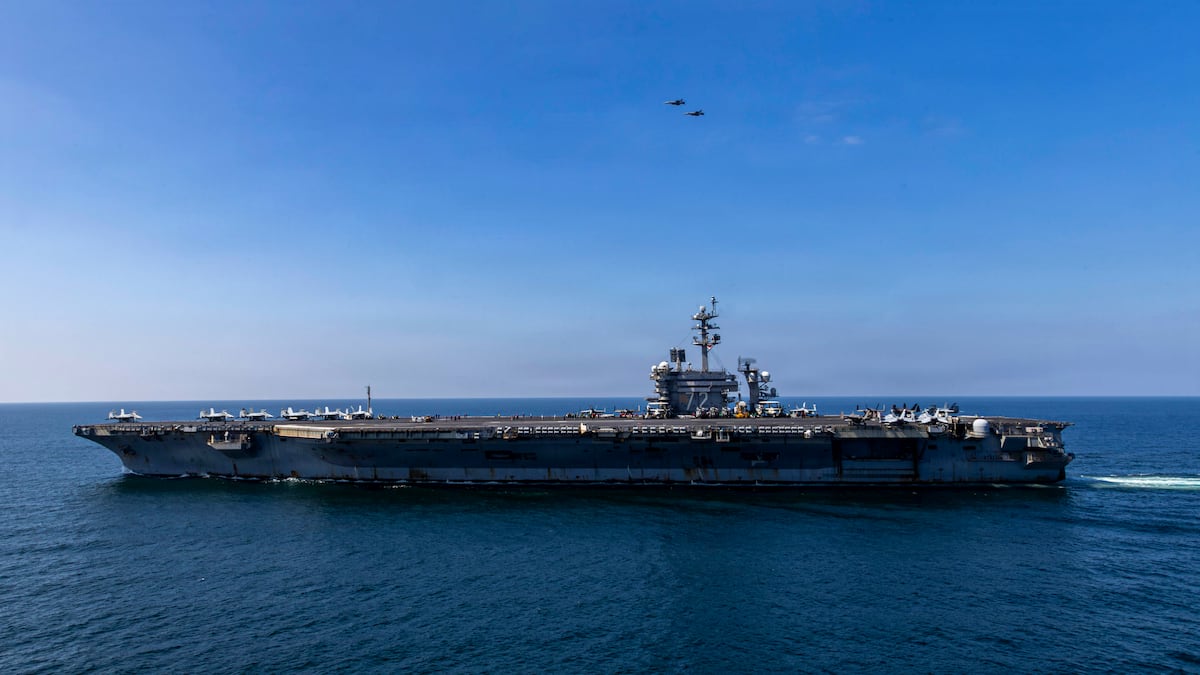
In a separate episode reported by Military Times, a sailor on watch intervened when a shipmate prepared to go over the side. Maria Rodriguez recounted that her husband spotted the individual, called out, and grabbed their arms to pull them onto the deck before three other crew members arrived to assist. Stars and Stripes similarly reported that watchstanders stopped a crew member from jumping, an event communicated to the ship’s entire complement via a shipwide announcement.
Throughout the more than 260-day deployment, opportunities for the crew to touch land have been severely restricted. According to Livemint, sailors have only stepped foot on land twice: briefly in December in Guam, where many were not permitted to disembark, and in July during a restocking stop in Oman, where liberty was restricted to a secure compound inside the port.
The Navy maintains that leadership on the USS Abraham Lincoln continues to assess psychological readiness and provides access to medical professionals, chaplains, and counselors, though officials have declined to release an exact count of self-harm incidents or overboard attempts during the current mission.