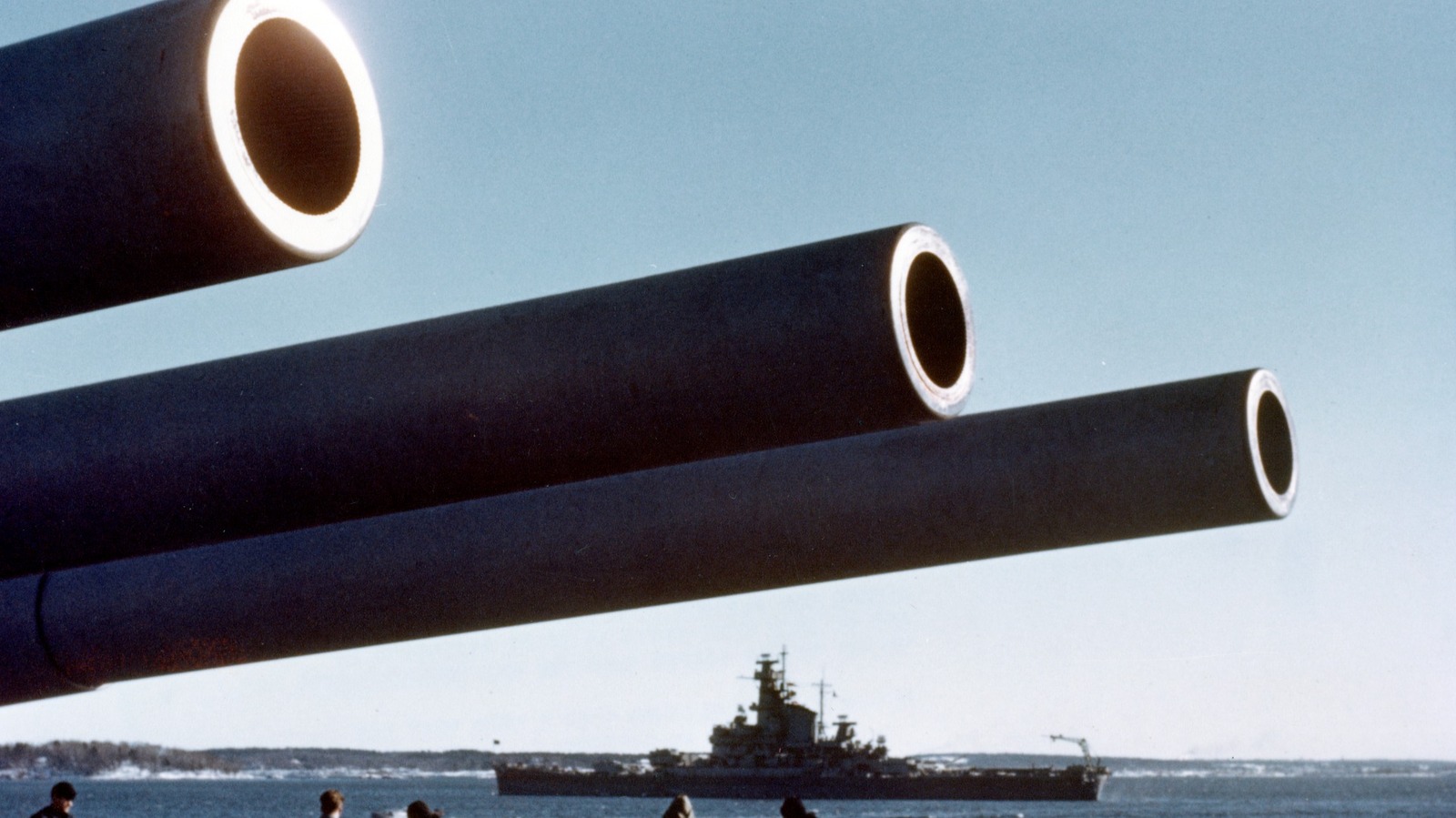
The Final Volley: Remembering the USS Massachusetts and the Last Shots of World War II
World War II, a conflict of unprecedented scale and devastation, concluded not with a single, definitive moment, but a series of events unfolding across the globe. Whereas the atomic bombings of Hiroshima and Nagasaki are rightfully remembered as pivotal in Japan’s surrender, the final conventional military actions taken by the United States are often overlooked. Among these was a bombardment by the battleship USS Massachusetts (BB-59), firing its powerful 16-inch guns on August 9, 1945, at an industrial complex in Hamamatsu, Japan. This event is widely considered to be the last shots fired by American forces in the Second World War, marking the complete of years of intense global conflict. The story of “Big Mamie,” as the ship was affectionately known, is one of remarkable service, technological prowess, and a lasting legacy as a preserved piece of naval history.
Commissioned in May 1942, the USS Massachusetts was a South Dakota-class battleship, designed for speed, and firepower. These rapid battleships were conceived to operate alongside aircraft carrier task forces, providing crucial anti-aircraft defense and surface combat capabilities. The shift in naval warfare dominance from battleships to aircraft carriers following the attack on Pearl Harbor and the subsequent Battle of Midway meant that battleships like the Massachusetts increasingly served as escorts, protecting the more vulnerable carriers. Throughout the war, the USS Massachusetts participated in numerous critical operations in the Pacific Theater, earning her a reputation as a formidable fighting vessel and a testament to American naval engineering.
The USS Massachusetts’s wartime service was extensive, spanning from the early stages of the Pacific campaign to the final push towards Japan. She provided fire support during amphibious landings, screened carrier task forces from enemy surface and air attacks, and engaged in shore bombardments to weaken Japanese defenses. Her participation in key battles, including those in the Philippines, Gilbert Islands, Marshall Islands, and Okinawa, demonstrated her versatility and resilience. The ship’s crew faced constant danger, enduring kamikaze attacks and weathering intense enemy fire, yet the Massachusetts consistently remained operational, a symbol of American determination in the face of adversity.
From Battleship to Museum: A Legacy Preserved
Following the end of World War II, the USS Massachusetts was decommissioned in March 1947, after a period of active service and reserve duty. She remained in the Naval Reserve Fleet until 1962, when she was officially stricken from the Naval Register. Though, the story of “Big Mamie” didn’t end there. Recognizing the ship’s historical significance, a dedicated group of veterans and citizens campaigned to save her from being scrapped. Their efforts culminated in the establishment of Battleship Cove in Fall River, Massachusetts, where the USS Massachusetts was permanently moored in 1965, transforming into a museum ship open to the public. Battleship Cove now serves as a living memorial to the ship and the sailors who served aboard her, offering visitors a unique opportunity to explore a piece of naval history.
The Last Shots: August 9, 1945, and the Bombardment of Hamamatsu
The question of who fired the last shots of World War II is a complex one, as fighting continued in various locations even after the official surrender announcement. However, the USS Massachusetts is widely credited with firing the final conventional naval artillery rounds of the war. On August 9, 1945 – the same day the United States dropped the atomic bomb “Fat Man” on Nagasaki – the Massachusetts unleashed a barrage of 16-inch shells at an industrial complex in Hamamatsu, Japan. This complex was involved in the production of aircraft engines and other vital war materials, and the bombardment aimed to further cripple Japan’s remaining industrial capacity. The attack was part of a broader effort to soften Japanese resistance in anticipation of a potential invasion, though the atomic bombings ultimately led to Japan’s unconditional surrender, negating the need for such an operation.
The timing of the bombardment is particularly significant. While the atomic bomb understandably dominates the historical narrative of Japan’s surrender, the USS Massachusetts’s final volley underscores the continued conventional military operations that were underway even as the world grappled with the implications of nuclear warfare. The 16-inch guns of the Massachusetts, capable of launching projectiles weighing over 2,700 pounds with a range of over 23 miles, represented the pinnacle of battleship firepower. The bombardment of Hamamatsu served as a final demonstration of American naval power and a clear signal of the consequences of continued resistance.
A Ship’s Specifications and Wartime Role
The USS Massachusetts boasted impressive specifications for its time. Displacing over 65,000 tons at full load, the battleship measured 862 feet in length and had a beam of 127 feet. Powered by eight Babcock & Wilcox boilers and four General Electric geared steam turbines, the ship could achieve speeds of up to 33 knots. Its armament included nine 16-inch guns in three triple turrets, six 5-inch guns in twin mounts, and numerous smaller anti-aircraft weapons. The ship’s crew consisted of approximately 2,700 officers and enlisted personnel. WW2DB provides a detailed breakdown of the ship’s specifications.
Throughout her service, the USS Massachusetts earned 11 battle stars for her participation in various campaigns. She played a crucial role in the Gilbert and Marshall Islands campaigns in 1943-1944, providing fire support for the amphibious landings and engaging Japanese warships. In 1945, she supported the invasion of Okinawa, enduring relentless kamikaze attacks while providing vital fire support for the ground forces. Her ability to withstand damage and continue fighting earned her the nickname “Big Mamie” from her crew, a testament to her resilience and the dedication of the sailors who served aboard her.
Key Takeaways
- The USS Massachusetts fired what are widely considered the last shots of World War II on August 9, 1945, at an industrial complex in Hamamatsu, Japan.
- The battleship served extensively throughout the Pacific Theater, participating in numerous key battles and providing crucial fire support.
- Following the war, the USS Massachusetts was preserved as a museum ship at Battleship Cove in Fall River, Massachusetts, where it remains open to the public today.
- The ship’s service highlights the evolving role of battleships in naval warfare, transitioning from primary offensive weapons to carrier escorts.
- The USS Massachusetts’s legacy serves as a reminder of the sacrifices made by American sailors during World War II and the importance of preserving naval history.
Today, visitors to Battleship Cove can explore the USS Massachusetts, gaining a firsthand understanding of life aboard a World War II-era battleship. The ship’s preserved interior offers a glimpse into the living quarters, engineering spaces, and combat stations where sailors lived and fought. The museum also features exhibits detailing the ship’s history and the stories of the men who served aboard her, ensuring that their sacrifices are never forgotten. The USS Massachusetts stands as a powerful symbol of American naval power, resilience, and the enduring legacy of World War II.
Battleship Cove continues to operate as a vital historical and educational resource, offering tours, exhibits, and events that commemorate the contributions of the U.S. Navy. For those interested in learning more about the USS Massachusetts and other naval vessels, visiting Battleship Cove provides an immersive and unforgettable experience. The preservation of these historic ships is crucial for understanding the past and honoring the service of those who defended our nation.
As we approach the anniversary of the end of World War II, it’s important to remember not only the major events that shaped the conflict but also the contributions of individual ships and the sailors who served aboard them. The USS Massachusetts, with its final volley of gunfire, represents a poignant moment in history, marking the end of a global conflict and the beginning of a fresh era. The ship’s continued presence as a museum ship ensures that its story will continue to be told for generations to come.
For more information about the USS Massachusetts and Battleship Cove, please visit their official website: https://www.battleshipcove.com/. We encourage readers to share their thoughts and experiences in the comments below.
Worth a look