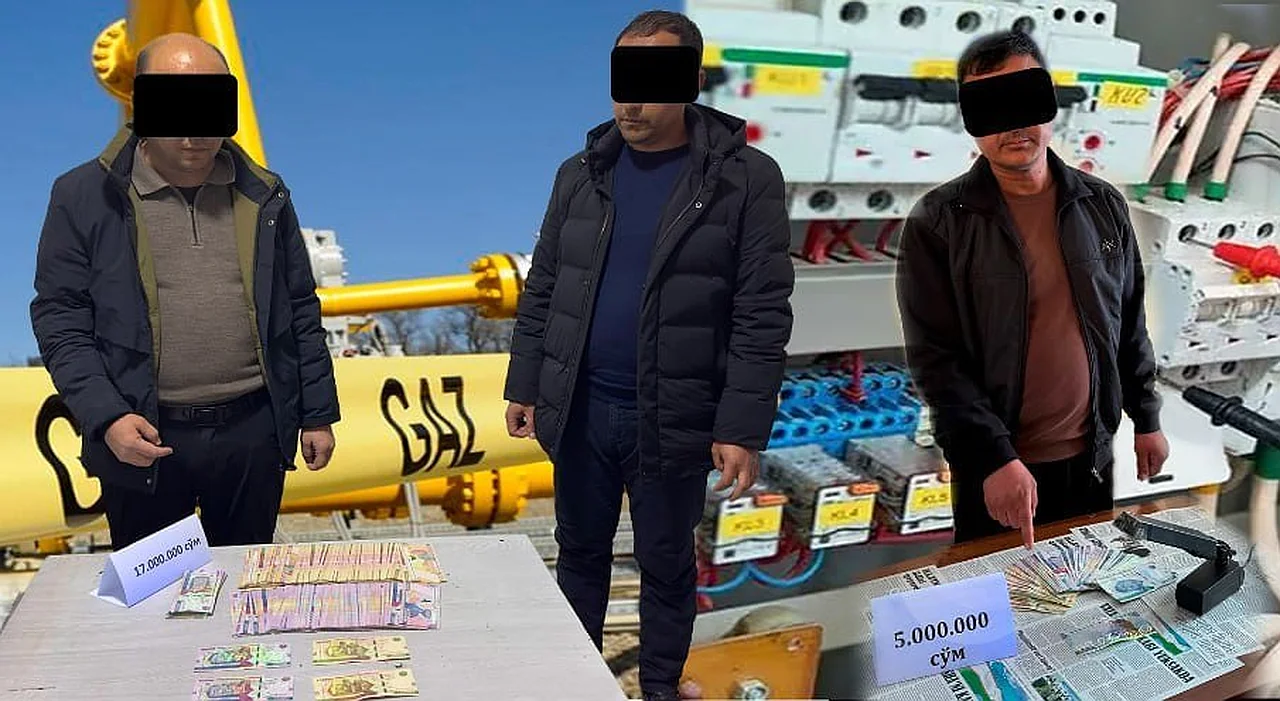
Recent anti-corruption raids in Uzbekistan have uncovered alleged bribery and extortion schemes involving employees of utility companies in the Namangan and Surkhandarya regions. The operations, conducted jointly by the State Security Service and the Department for Combating Economic Crimes, signal a continued commitment by the Uzbek government to tackle corruption within its public services. While details are still emerging, the arrests highlight vulnerabilities within the energy and gas sectors and raise questions about the scale of illicit activity.
The crackdown comes as Uzbekistan continues to implement economic reforms aimed at attracting foreign investment and improving the business climate. Transparency International’s 2023 Corruption Perception Index ranked Uzbekistan 159th out of 180 countries, indicating a significant challenge remains in addressing corruption. Transparency International notes that while there have been some improvements in recent years, systemic issues persist. These recent operations, represent a crucial test of the government’s resolve to create a more level playing field for businesses and citizens alike.
Allegations of Bribery in Namangan Region
In the Kosonsoy district of the Namangan Region, authorities arrested two engineers employed by the local electricity network company. According to reports, the engineers allegedly exploited their positions to solicit a bribe from a local entrepreneur who had recently installed a 50-kilowatt solar panel system on a building owned by their limited liability company. The engineers reportedly demanded 17 million Uzbekistani Som (UZS) in exchange for processing and approving the necessary technical specifications and documentation for the solar installation. The exchange of funds was reportedly caught in the act by law enforcement officials, providing what authorities claim is irrefutable evidence of the crime. As of March 13, 2026, the exact charges against the engineers have not been publicly released, but they are expected to face prosecution under Uzbekistan’s anti-corruption laws.
Uzbekistan has been actively promoting the development of renewable energy sources, including solar power, as part of its efforts to diversify its energy mix and reduce its reliance on fossil fuels. The International Energy Agency (IEA) reports that Uzbekistan aims to generate 25% of its electricity from renewable sources by 2030. This case raises concerns that corruption could hinder the progress of these ambitious renewable energy goals by creating barriers for legitimate businesses and discouraging investment in the sector.
Fraudulent Practices in Surkhandarya Region
A separate anti-corruption operation in the Surkhandarya Region targeted fraudulent activities within the local gas supply infrastructure. An employee of the Uzuntumangaz gas supply department was arrested for allegedly attempting to illegally settle a citizen’s debt to the utility company. The citizen, born in 1977, had accumulated debts totaling 23 million UZS due to a faulty gas meter. Instead of following standard legal procedures, the gas department employee allegedly offered to waive the debt and forgo the creation of an official violation report in exchange for a bribe of 5 million UZS.
Security forces apprehended the suspect while accepting the bribe money through a third-party intermediary. Further investigation revealed that this alleged scheme was not an isolated incident. Authorities discovered that a colleague of the suspect, born in 1988, was similarly directly involved in orchestrating the fraudulent debt settlement. Both individuals now face potential legal consequences for their actions. The Surkhandarya region, located in the south of Uzbekistan, is a key agricultural area, and reliable gas supply is crucial for both households, and businesses. Disruptions caused by corruption in the gas sector can have significant economic and social impacts.
Uzbekistan’s Broader Anti-Corruption Efforts
These recent operations underscore the ongoing commitment of Uzbek authorities to combat corruption at all levels of public service. Since President Shavkat Mirziyoyev came to power in 2016, Uzbekistan has undertaken a series of reforms aimed at improving governance and reducing corruption. These reforms include strengthening the independence of the judiciary, increasing transparency in public procurement, and enhancing the powers of anti-corruption agencies. However, challenges remain, and the effectiveness of these reforms is still being evaluated.
In 2022, Uzbekistan adopted a new anti-corruption law that introduced stricter penalties for corrupt officials and expanded the scope of anti-corruption investigations. The Law on Counteracting Corruption also established a public fund for rewarding individuals who report corruption cases. The government has also launched a number of public awareness campaigns to educate citizens about the dangers of corruption and encourage them to report suspected cases of wrongdoing. The Namangan and Surkhandarya cases demonstrate that these efforts are being actively pursued at the regional level.
Impact on Investment and Economic Development
Corruption poses a significant threat to Uzbekistan’s economic development and its efforts to attract foreign investment. Businesses operating in Uzbekistan often cite corruption as a major obstacle to growth, increasing costs and creating uncertainty. The World Bank’s 2020 Doing Business report highlighted corruption as a key constraint to investment in Uzbekistan. Addressing corruption is therefore essential for creating a more favorable investment climate and unlocking the country’s economic potential.
The ongoing investigations in Namangan and Surkhandarya are likely to send a strong signal to both domestic and foreign investors that the Uzbek government is serious about tackling corruption. However, sustained efforts are needed to address the root causes of corruption and create a culture of transparency and accountability. This includes strengthening institutions, improving law enforcement, and promoting ethical behavior within the public sector. The long-term success of Uzbekistan’s economic reforms will depend, in large part, on its ability to effectively combat corruption.
Key Takeaways
- Anti-corruption raids in Namangan and Surkhandarya regions have led to the arrest of utility company employees accused of bribery and extortion.
- The cases involve alleged schemes related to solar panel installations and fraudulent debt settlements.
- Uzbekistan has been implementing reforms to combat corruption since 2016, but challenges remain.
- Corruption poses a significant threat to Uzbekistan’s economic development and foreign investment.
- The government’s commitment to tackling corruption will be crucial for the success of its economic reforms.
Investigations into these alleged schemes are ongoing, and further details are expected to emerge in the coming weeks. Authorities have stated their commitment to thoroughly investigate all allegations and bring those responsible to justice. The next step will likely involve formal indictments and the commencement of trials. Readers are encouraged to follow updates from official Uzbek government sources for the latest information on these cases. Share your thoughts on Uzbekistan’s anti-corruption efforts in the comments below.
Worth a look