
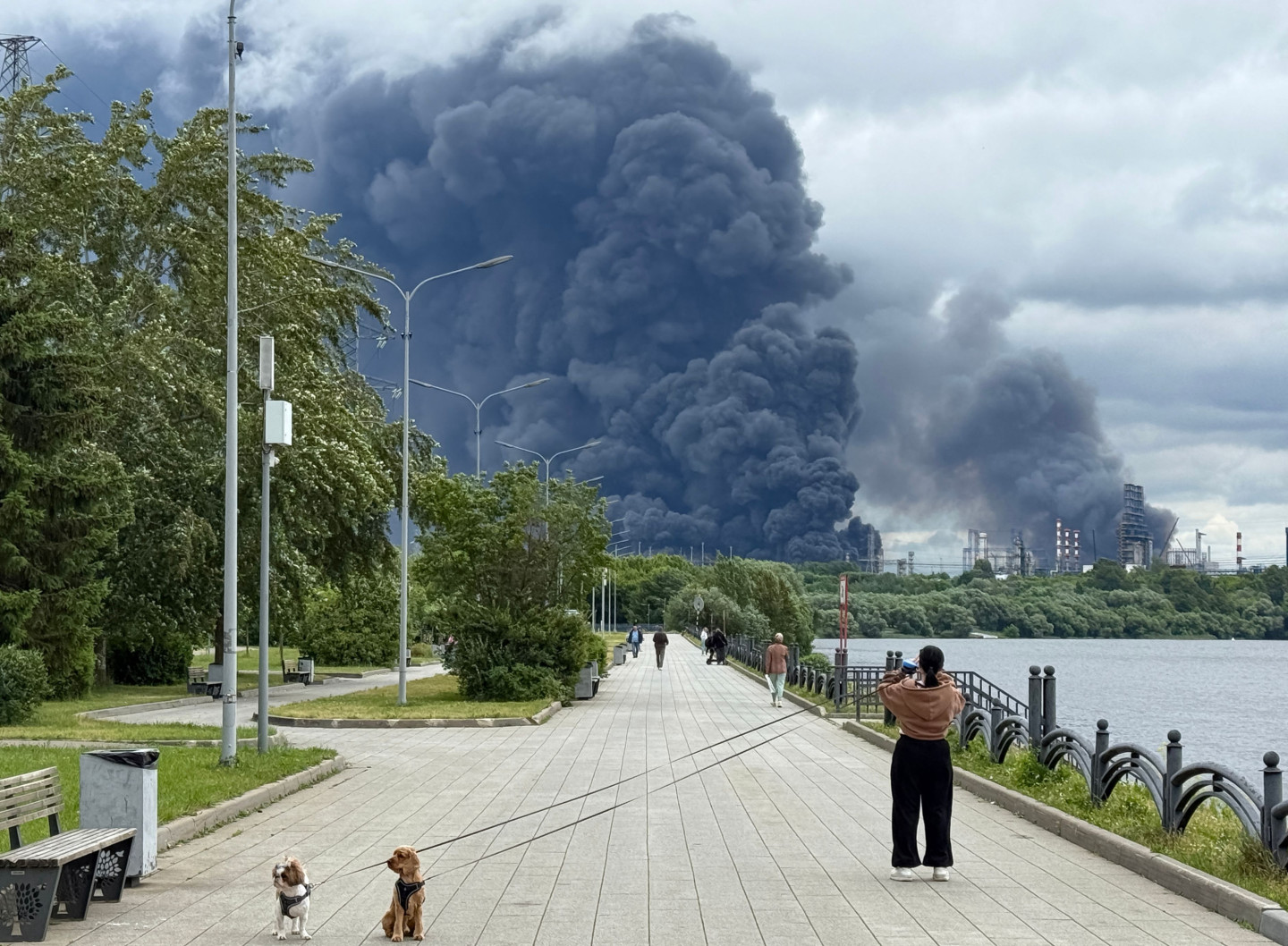
Ukrainian forces have increasingly utilized long-range, jet-powered drones to conduct strikes against targets within the Russian capital, marking a technical shift in the ongoing aerial conflict. According to reports from the Russian Ministry of Defense and international monitors, these strikes have targeted critical infrastructure and administrative sites, bypassing traditional defensive perimeters. The deployment of jet-engine technology allows for greater speed and range, challenging the response times of existing regional air defense systems.
This development follows a series of intensified drone operations throughout 2023 and 2024, which have seen debris falling in residential and industrial sectors of Moscow. While the Ukrainian government often maintains a policy of strategic ambiguity regarding specific operational details, officials have consistently framed these actions as necessary responses to persistent aerial bombardments of Ukrainian cities. The escalation in drone capabilities reflects a broader trend of asymmetric warfare, where lower-cost, high-velocity unmanned aerial vehicles (UAVs) are employed to achieve strategic effects against hardened military and logistical targets.
The Evolution of Aerial Tactics in the Conflict
The transition to jet-powered drones represents a notable upgrade from the propeller-driven models frequently seen in the early stages of the conflict. Jet engines provide a significantly higher cruise speed, which complicates the targeting algorithms used by conventional ground-based air defense systems. According to military analysts cited by the BBC, these systems are designed to intercept slower-moving objects, and the higher velocity of jet-powered platforms forces a rapid recalibration of defensive response protocols.
Russian officials, including former President Dmitry Medvedev, have responded to these incursions with increasingly aggressive rhetoric. Medvedev has publicly characterized these attacks as evidence that previous operational constraints are no longer applicable, signaling a hardening stance from Moscow regarding its own military conduct. This rhetoric is frequently echoed in state media, which emphasizes the “terrorist” nature of the strikes, while the Ukrainian government insists these targets are legitimate military assets used to support the ongoing invasion.
Strategic Impact and Regional Security
The persistent targeting of the Moscow region serves both a tactical and psychological purpose. By forcing Russian air defenses to reposition assets from the front lines to the capital, Ukraine aims to create gaps in the defensive network protecting Russian forces in occupied territories. President Volodymyr Zelenskyy has stated that the war must eventually be felt by the Russian public, arguing that domestic pressure is a necessary component of the broader geopolitical struggle. This strategy seeks to disrupt the perception of safety within the Russian heartland, which has remained largely insulated from the physical destruction experienced by Ukrainian urban centers.
However, the humanitarian and political risks of such operations remain significant. The use of drones in densely populated areas has led to concerns regarding civilian safety, with debris occasionally impacting apartment blocks and office buildings. International observers, including those from the United Nations Human Rights Monitoring Mission in Ukraine, continue to document the broader impact of the conflict on civilian populations, emphasizing that all parties must adhere to international humanitarian law, particularly regarding the distinction between military and civilian targets.
Defensive Challenges and Future Outlook
The ability of these drones to penetrate the capital’s airspace highlights limitations in the layered defense systems surrounding Moscow, which include S-400 Triumf and Pantsir-S1 installations. Despite these systems being among the most advanced in the Russian inventory, the sheer volume of drone traffic and the use of low-altitude flight paths have occasionally overwhelmed localized detection capabilities. As noted in reports from the International Institute for Strategic Studies, the conflict has accelerated the development of electronic warfare and jamming technologies, which are now as critical to defense as kinetic interceptors.

The next phase of this aerial campaign will likely depend on the availability of long-range components and the effectiveness of Western-supplied intelligence support. As both sides continue to adapt their technological approaches, the frequency of these long-range strikes is expected to remain a constant feature of the conflict. Observers should monitor official briefings from the Russian Ministry of Defense and the Ukrainian General Staff for updates on the scale and frequency of future engagements.
This is an evolving situation. For further updates, readers are encouraged to consult official government portals and verified international news agencies. Please share your thoughts or questions in the comments section below.