In the heart of London’s Olympic Park, a new cultural landmark is taking shape with a clear mission: to reignite the creative spark in young people who might otherwise feel disconnected from museums. Gus Casely-Hayford, director of V&A East, has made this vision central to the museum’s identity, emphasizing that institutions have a responsibility not just to preserve culture, but to actively inspire the next generation of artists, designers, and innovators.
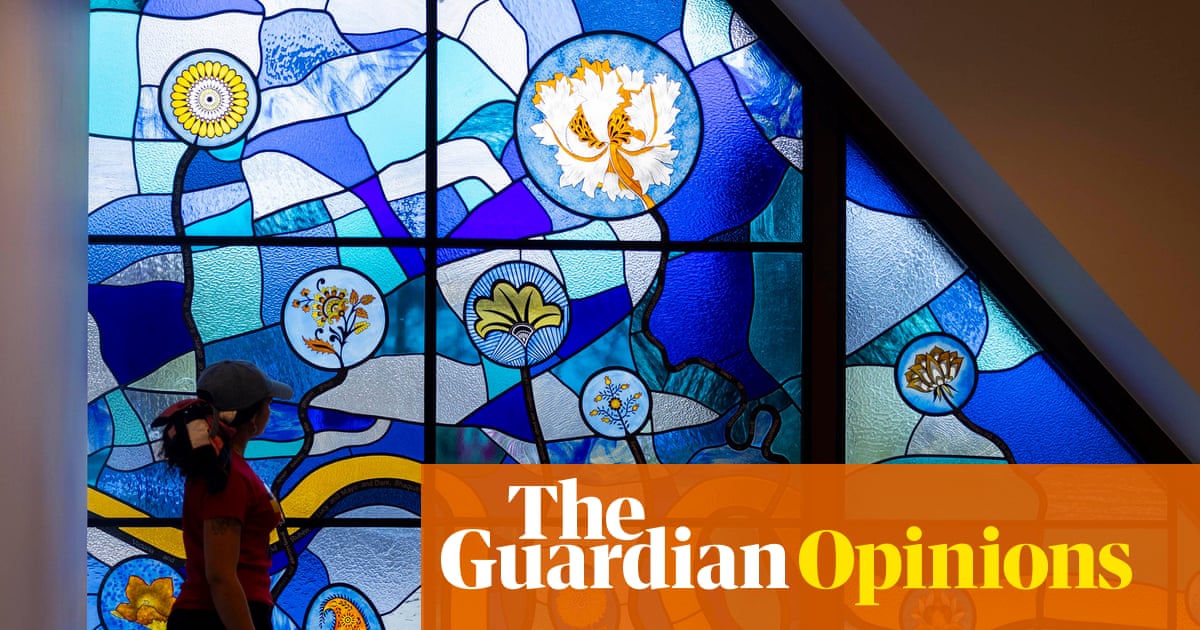
This commitment is embodied in one of the museum’s most striking features: a stained-glass window titled *Towards a Civic Museum*, created by internationally acclaimed Cuban artist and activist Tania Bruguera. Installed in the circulation spaces of the new V&A East museum in Stratford, the artwork emerged from an extended collaboration with a dozen young people from east London who are part of the V&A East Youth Collective. The piece blends geographic symbolism with aspirational messaging, forming both a cartographic representation of the four boroughs surrounding the site and a visual manifesto of communal hopes.
According to verified project details, the window uses shades of indigo, cobalt blue, and cyan to map the boroughs of Newham, Waltham Forest, Tower Hamlets, and Hackney—areas that converge on the Queen Elizabeth Olympic Park where V&A East is located. Embedded within the glass are phrases reflecting values the museum seeks to embody: openness, accessibility, relevance, transparency, equity, sustainability, and a willingness to collaborate. These were co-developed during workshops with the youth collective, ensuring the artwork reflects local voices rather than being imposed from above.
The V&A East Youth Collective itself was established as part of the museum’s broader outreach strategy to engage young people aged 16 to 25 from underrepresented backgrounds in east London. Members participate in curatorial discussions, artist collaborations, and public programming initiatives, gaining hands-on experience in museum operations while helping shape the institution’s direction. This model aligns with a growing trend among major cultural institutions to move beyond token consultation toward meaningful co-creation with communities.
Tania Bruguera, known for her politically engaged and socially responsive art practice, has long explored themes of civic participation, institutional critique, and collective imagination. Her operate often blurs the line between art and activism, seeking to activate public spaces as forums for dialogue and social change. *Towards a Civic Museum* continues this trajectory, transforming a functional architectural element into a site-specific statement about the role of museums in democratic life.
The V&A East museum, a new development by the Victoria and Albert Museum, is being constructed in two phases: the Storehouse and the Museum. The Storehouse, which opened in 2023, provides public access to storage and conservation spaces, offering visitors a behind-the-scenes look at how collections are cared for. The main Museum building is scheduled to open in 2025, with exhibitions focusing on design, performance, and the intersection of art and everyday life. Both components are situated within the Queen Elizabeth Olympic Park legacy area, aiming to contribute to the long-term cultural and social regeneration of east London.
Funding for the project comes from a combination of public and private sources, including significant support from the UK government’s Department for Culture, Media and Sport, the Greater London Authority, and private philanthropy. The total investment in V&A East exceeds £130 million, making it one of the most substantial cultural developments in the UK in recent decades. This scale underscores the ambition to create not just a regional museum, but a nationally significant institution with global relevance.
Accessibility and inclusion are framed not as add-ons but as core operational principles. The museum’s design incorporates step-free access, sensory-friendly environments, and multilingual interpretation where appropriate. Programming is intentionally diverse, with efforts to reflect the multicultural makeup of east London, where over 200 languages are spoken. By anchoring its mission in local engagement, V&A East aims to counteract perceptions of museums as elitist or irrelevant to younger, more diverse audiences.
The collaboration with Tania Bruguera and the Youth Collective exemplifies this approach. Rather than treating young people as passive audiences, the museum positions them as co-creators whose insights directly influence artistic and institutional decisions. This participatory model has been praised by cultural analysts as a necessary evolution for museums seeking to remain vital in the 21st century. Similar initiatives have emerged at institutions like the Tate Modern’s Tate Collective and the Museum of London’s youth panels, though V&A East’s integration of youth input into a permanent artwork marks a distinctive milestone.
As the museum prepares for its full opening, Gus Casely-Hayford continues to advocate for a vision where cultural institutions serve as catalysts for curiosity and creativity, particularly among those who have historically felt excluded from such spaces. In interviews, he has stressed that relevance is not achieved through blockbuster exhibitions alone, but through sustained, authentic relationships with communities.
The *Towards a Civic Museum* window stands as a literal and symbolic threshold—a reminder that as visitors move through the building, they pass through a space shaped by the aspirations of local youth. It invites reflection on what a museum owes to its surroundings and who gets to define what culture matters.
For updates on opening dates, exhibitions, and public programs, visitors can refer to the official V&A East website or follow the museum’s verified social media channels. Those interested in learning more about the Youth Collective or upcoming opportunities to participate can locate application details through the V&A’s main outreach portal.
What role should museums play in shaping the creative futures of young people? How can institutions balance preservation with innovation in service to their communities? Share your thoughts in the comments below, and aid spread the conversation by sharing this article with others who care about the future of culture.