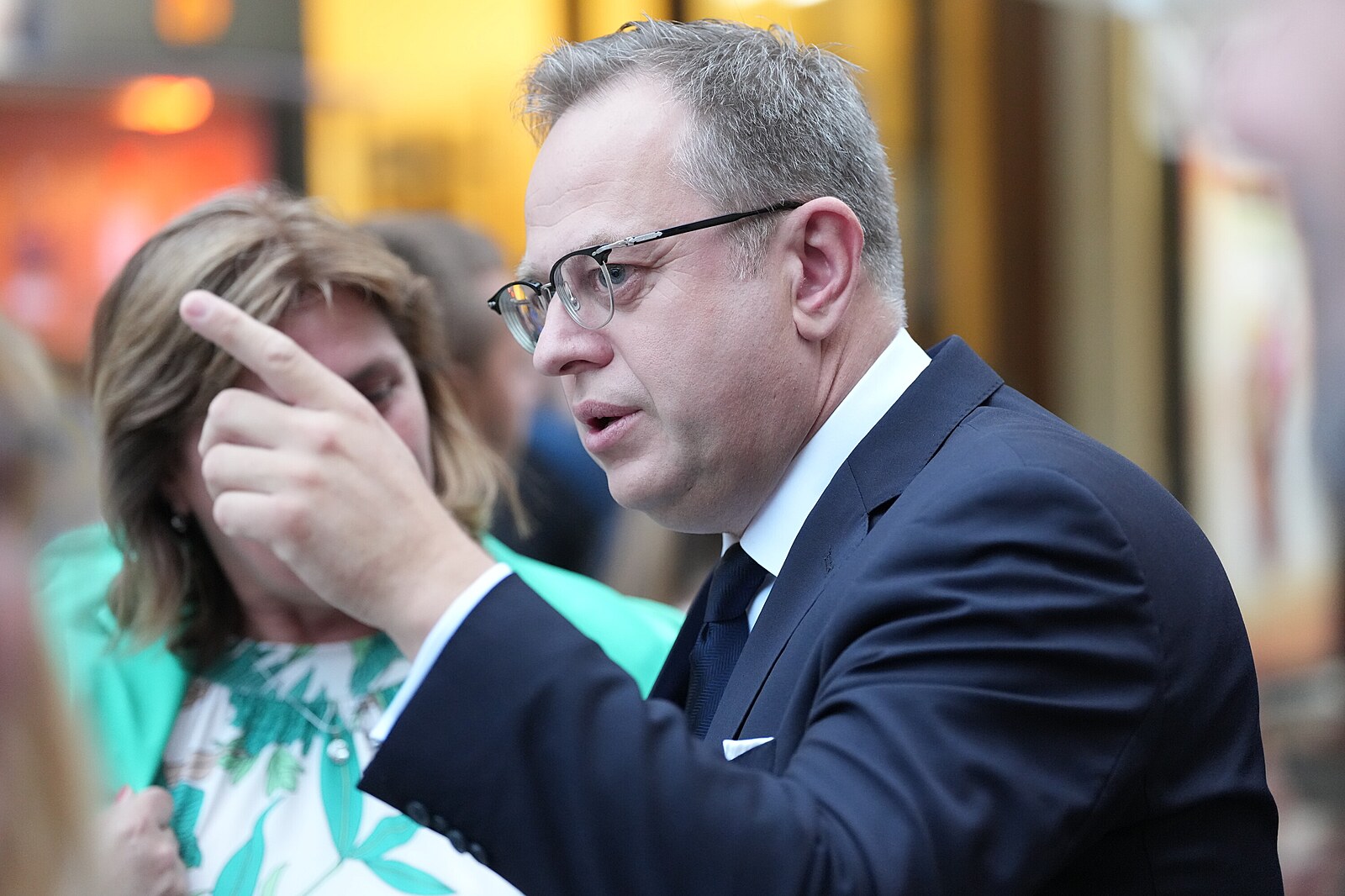
Prague – After more than two decades at the helm of one of the Czech Republic’s most influential political talk shows, Václav Moravec announced his departure from Czech Television (ČT) on Sunday evening. The move, revealed at the close of the program *Otázky Václava Moravce* (Questions of Václav Moravec), has sent ripples through the Czech media landscape and ignited a political firestorm, with reactions ranging from thinly veiled glee from political opponents to expressions of concern about the future of independent journalism in the country. Moravec’s decision comes amid growing anxieties about potential government interference in public broadcasting, and follows a recent interview with former Prime Minister and Governor of the Czech National Bank, Jiří Rusnok.
Moravec, who has hosted *Otázky Václava Moravce* for 21 years, stated that he could no longer guarantee the independence of editorial work and critical reflection of events under current conditions, referencing the ČT Code of Ethics. He expressed his reluctance to disappoint the program’s loyal viewership, which consistently made it the most-watched television discussion program in the Czech Republic. “The time for our discussion has arrive to an end – as has my time at Czech Television after more than 21 years,” Moravec stated during his farewell address. He thanked his audience and colleagues for their support over the years, but signaled a loss of faith in the broadcaster’s ability to maintain its impartiality.
A Departure Fueled by Concerns Over Independence
The timing of Moravec’s announcement has been widely interpreted as a response to the current political climate and perceived threats to ČT’s independence. The incoming government, a coalition led by Prime Minister Andrej Babiš, has been critical of the broadcaster in the past, and there are fears that it may attempt to exert greater control over its operations. According to Hlavnydennik.sk, some observers have drawn parallels to the recent departure of Michal Kovačič from the Slovak television station Markíza, where he was reportedly given notice after 16 years.
Moravec’s decision to step down was reportedly influenced by concerns over the potential for editorial interference, specifically regarding the composition of guest panels on his program. iROZHLAS reports that Moravec was unwilling to allow external influence on the selection of guests, and that the inclusion of Tomio Okamura, leader of the far-right Freedom and Direct Democracy party, was a breaking point.
Political Reactions: From Mockery to Concern
The reaction to Moravec’s announcement has been sharply divided along political lines. Prime Minister Andrej Babiš responded with apparent mockery, stating in a podcast with MP Aleš Juchelk, “We have a terrible coalition crisis. Imagine what happened today. Okamura went to Moravec after nine years and he quit. Can you believe it? He just quit after 21 years. We will be so sad. I was just about to go there.” Extra.cz reports that Babiš’s comments drew significant criticism online.
Opposition leaders have expressed concern over the implications of Moravec’s departure for the future of public broadcasting in the Czech Republic. Martin Kupka, Chairman of the Civic Democratic Party (ODS), thanked Moravec for his service and pledged to closely monitor developments at ČT, vowing to defend against any attempts to undermine its independence. Vít Rakušan, leader of the STAN party, described *Otázky Václava Moravce* as a “legendary part of ČT’s programming” and praised Moravec for conducting “tough but fair” interviews. Zdeněk Hřib, head of the Pirate Party, warned against increasing attacks on public media.
ČT’s Response and Internal Divisions
Czech Television has stated that Moravec’s decision came as a surprise, claiming that no one within the organization was aware of his plans to resign. iDNES.cz reports that Moravec’s departure has likewise caused divisions within ČT itself, with some employees expressing support for his decision while others have criticized it.
The circumstances surrounding Moravec’s exit raise fundamental questions about the role of public broadcasting in a democratic society. His concerns about potential political interference echo broader anxieties about the erosion of media freedom in Central and Eastern Europe. The future of *Otázky Václava Moravce* remains uncertain, but its legacy as a platform for robust political debate is secure. The program, for over two decades, served as a crucial forum for holding power to account and informing the Czech public.
The Broader Context: Media Freedom in the Czech Republic
The Czech Republic has historically enjoyed a relatively free and independent media environment. However, in recent years, concerns have grown about the influence of powerful business and political interests on the media landscape. The ownership structure of many media outlets is opaque, and there have been allegations of political pressure on journalists. The departure of Václav Moravec is seen by many as a symptom of these broader trends.
The potential for government interference in public broadcasting is a particularly sensitive issue. ČT is funded by a license fee paid by citizens, and We see mandated to provide impartial and objective news coverage. However, the appointment of the Director-General of ČT is a political process, and the government has the power to influence the broadcaster’s editorial policy through budgetary allocations and other means.
The situation is further complicated by the rise of disinformation and fake news, which pose a significant threat to public trust in the media. The Czech Republic has been a target of Russian disinformation campaigns, and there are concerns that these campaigns are aimed at undermining democratic institutions and sowing discord within society.
The next key development will be ČT’s announcement regarding the future of *Otázky Václava Moravce* and the selection of a new host. This decision will be closely watched by media observers and political analysts, as it will likely signal the direction that the broadcaster intends to take in the coming years.
What are your thoughts on Václav Moravec’s departure and the future of Czech Television? Share your comments below and let us know what you think.
Related reading