Infrastructure Improvements Planned for Valchiavenna’s Strategic Route
The Valchiavenna valley in the Lombardy region of Italy is set to undergo significant infrastructure improvements, focusing on the vital State Road 36 (SS36). A recent meeting involving local administrations, the regional council, and representatives from Anas, the Italian national agency for road construction and maintenance, outlined plans for a series of projects designed to enhance safety and improve year-round accessibility. The most immediate project, with a budget of €1.6 million, will address a particularly challenging section of the SS36 near Verceia, where the road is constricted by a rock spur. This initiative underscores a broader commitment to maintaining and upgrading the region’s transportation network, including considerations for the crucial Spluga Pass.
The planned work on the SS36 is not isolated. Discussions also centered on ongoing and future projects along the route between Madesimo and Montespluga, including improvements to tunnels and the overall road infrastructure. These upgrades are particularly important given the SS36’s role as a primary access point to the valley and its proximity to a railway line, creating logistical complexities for construction. The focus extends beyond immediate repairs to encompass long-term goals, such as ensuring the Spluga Pass remains open throughout the year, a long-held ambition for the region.
Addressing the Rock Spur Near Verceia
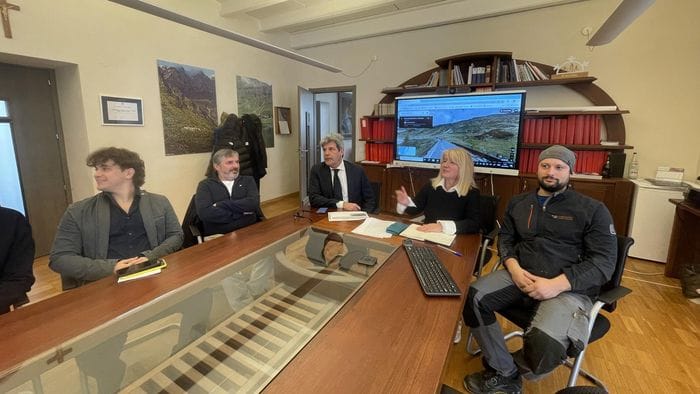
The most pressing concern is the removal of the rock spur that narrows the SS36 near Verceia. Matteo Castiglioni, Anas’s Regional Manager for Lombardy, announced the project during the meeting held at the Valchiavenna Mountain Community headquarters. The project, already approved, will commence next summer and aims to mitigate the risks posed by the rock formation. According to Castiglioni, the project team is developing a traffic management plan to minimize disruption during construction. While some delays are inevitable, a prolonged closure of the SS36 is being avoided. ANSA reports that alternative traffic flow arrangements, such as alternating one-way systems, are being considered.
Further Road Improvements and Tunnel Work
Beyond the Verceia rock spur, plans are underway to complete the widening of a straight section of the SS36 at Pozzo di Riva. This project is currently in the design phase. Simultaneously, attention is being directed towards the tunnels along the SS36 between Madesimo, and Montespluga. Castiglioni assured attendees that the extension of the Duro tunnel, a project that has experienced delays, is now 50% complete and is expected to be finished by October. These tunnel improvements are crucial for maintaining efficient traffic flow and ensuring safety during inclement weather.
Safety Concerns and Local Issues
The meeting also provided a platform for local administrations to raise concerns regarding road safety. Specific issues were highlighted in Prata Camportaccio, particularly at the intersection with a provincial road and in an area known as “Tomba.” work is planned to stabilize a slope above the SS37 near Villa di Chiavenna, addressing potential hazards to the roadway. These localized safety improvements demonstrate a comprehensive approach to enhancing the overall transportation infrastructure of the Valchiavenna valley.
The Spluga Pass: A Year-Round Goal
A central theme of the discussions was the long-standing ambition to keep the Spluga Pass open year-round. Regional Councillor Silvana Snider emphasized the importance of ensuring transit access on the Italian side of the pass 365 days a year, paving the way for negotiations with Swiss authorities to achieve reciprocal access. The Spluga Pass is a critical transportation link between Italy and Switzerland, and its consistent availability is vital for both economic and social connectivity. But, achieving this goal requires ongoing collaboration and coordination with Switzerland, as the pass crosses international borders.
Snider stated, “This table demonstrates the willingness of Valchiavenna to continue to pay attention to transport, from Verceia to the Spluga Pass and from Chiavenna to Castasegna.” She further affirmed the commitment to addressing both major and minor transportation issues within the territory, with the support of the Lombardy Region.
Ongoing Investment in Lombardy’s Road Network
The planned improvements to the SS36 and the focus on the Spluga Pass are part of a larger pattern of investment in Lombardy’s road network. Anas, as the primary agency responsible for road maintenance and construction in Italy, is undertaking numerous projects throughout the region to enhance safety, improve connectivity, and support economic growth. These investments are particularly important in mountainous areas like Valchiavenna, where transportation infrastructure plays a critical role in connecting communities and facilitating tourism. The Lombardy Region’s website provides further details on ongoing transportation projects.
Looking Ahead: Project Timelines and Next Steps
The immediate focus remains on the removal of the rock spur near Verceia, with work scheduled to begin next summer. The completion of the Duro tunnel extension is anticipated by October. The design phase for the widening of the SS36 at Pozzo di Riva is ongoing, and further updates on this project are expected in the coming months. The ongoing dialogue with Swiss authorities regarding year-round access to the Spluga Pass will continue, with the aim of establishing a collaborative framework for maintaining the pass’s accessibility. The next official update on these projects is expected during the Valchiavenna Mountain Community’s autumn meeting, providing a further opportunity to assess progress and address any emerging challenges.
The commitment to improving the SS36 and ensuring the accessibility of the Spluga Pass reflects a broader dedication to enhancing the transportation infrastructure of the Valchiavenna valley. These projects are essential for supporting the region’s economic vitality, ensuring the safety of its residents, and fostering greater connectivity with neighboring regions. We encourage readers to share their thoughts and experiences regarding these improvements in the comments below.
Worth a look