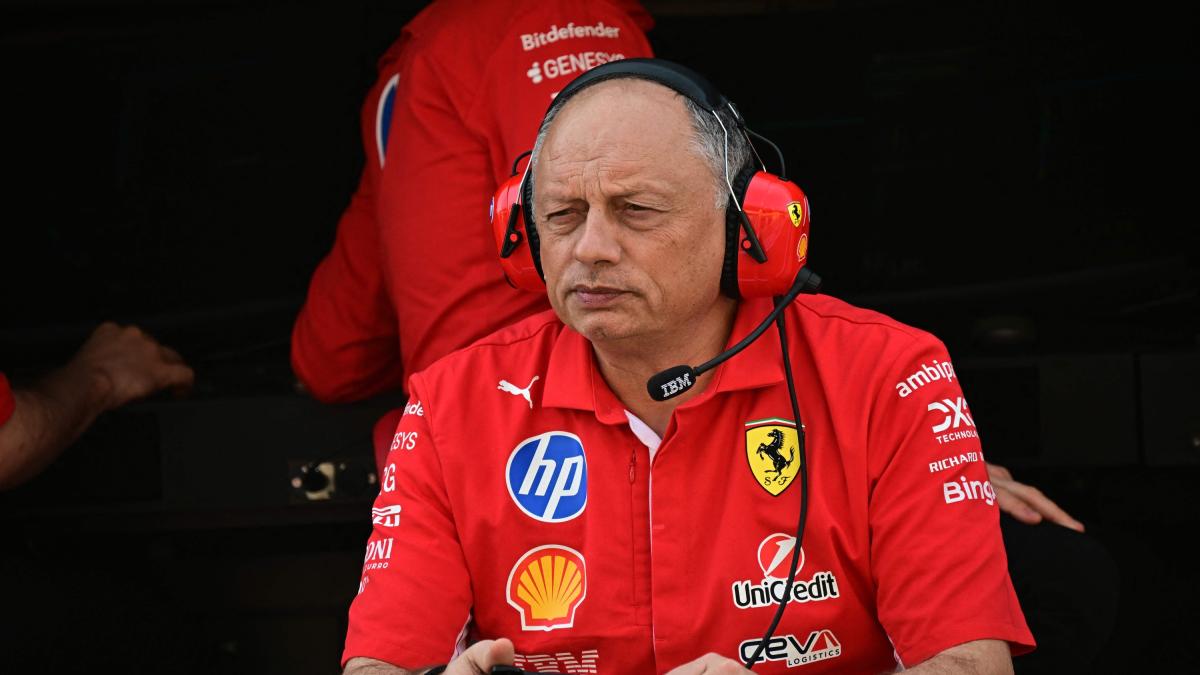
Melbourne, Australia – The 2026 Formula 1 season kicked off with the Australian Grand Prix, and Ferrari Team Principal Frederic Vasseur has already recalibrated expectations following the race. Although acknowledging a strong performance, Vasseur emphasized the need for continued development to close the gap with frontrunners like Mercedes. The opening race provided valuable data, but the team knows there’s significant work ahead to consistently challenge for podium finishes and victories.
Vasseur’s comments, initially reported by Sky Sport Italia, came after a race where Ferrari showed promising pace but ultimately fell short of challenging for the win. The team’s strategy and tire management came under scrutiny, particularly regarding a decision not to pit earlier during a Virtual Safety Car period. However, Vasseur defended the call, stating the team lacked sufficient data to confidently commit to an extended stint on the hard compound tires. This highlights a key area for improvement: gathering more comprehensive tire data during practice and qualifying sessions to inform race-day decisions.
Ferrari’s Australian Grand Prix: A Mixed Bag of Results
The Australian Grand Prix weekend presented a mixed bag of results for the Scuderia. Qualifying proved challenging, with Ferrari drivers trailing behind their Mercedes counterparts. Vasseur attributed this to a combination of factors, including setup errors and the inherent performance advantage of the Mercedes car. He estimated the qualifying deficit to be around half a second, a significant margin in the highly competitive world of Formula 1. The race itself saw improved performance, but Mercedes demonstrated superior race pace, securing a dominant 1-2 finish.
Despite the gap in performance, Vasseur remained optimistic, describing the race as “a good race” for the team. He acknowledged Mercedes’ speed but stressed that Ferrari had gained valuable insights into their own car’s capabilities and limitations. The team’s focus now shifts to analyzing the data collected in Melbourne and implementing upgrades to address the identified weaknesses. The Australian Grand Prix served as a crucial benchmark, providing a clear understanding of where Ferrari stands relative to its rivals at the start of the 2026 season.
Analyzing Vasseur’s Post-Race Assessment
Vasseur’s post-race assessment reveals a pragmatic approach to Ferrari’s current situation. He didn’t shy away from acknowledging the team’s shortcomings, particularly the qualifying deficit and the performance advantage held by Mercedes. His statement that “the quadro di Melbourne non conta” – the picture of Melbourne doesn’t matter – underscores the team’s belief that the Australian Grand Prix is not necessarily indicative of the season’s overall trajectory. The emphasis on developing the car is a clear indication that Ferrari is committed to a long-term strategy of improvement.
The decision not to pit during the Virtual Safety Car period is a point of contention that Vasseur addressed directly. He explained that the team lacked the necessary data to confidently assess the viability of a long stint on the white-walled (hard compound) tires. This highlights the importance of robust simulation and testing programs in modern Formula 1. Teams rely heavily on data analysis to optimize their strategies and maximize performance. The lack of sufficient data in this instance forced Ferrari to prioritize caution over potential risk.
The Mercedes Challenge and Ferrari’s Response
Mercedes’ strong performance in Australia served as a stark reminder of their continued competitiveness. The Silver Arrows demonstrated superior pace in both qualifying and the race, securing a commanding 1-2 finish. This puts pressure on Ferrari and other teams to accelerate their development programs to close the gap. The Mercedes W15 appears to be a well-balanced car, excelling in both aerodynamic efficiency and mechanical grip. Recent reports indicate that Mercedes has made significant strides in engine performance and aerodynamic development over the winter, contributing to their strong start to the season.
Ferrari’s response to the Mercedes challenge will be crucial in determining their championship aspirations. Vasseur’s emphasis on car development suggests that the team is prioritizing long-term gains over short-term fixes. This approach is consistent with Ferrari’s historical commitment to engineering excellence. The team will likely focus on improving aerodynamic efficiency, optimizing tire management, and refining their strategic decision-making processes. The next few races will provide valuable opportunities to assess the effectiveness of these development efforts.
Looking Ahead: Development and Future Races
Vasseur’s comments clearly indicate that the Australian Grand Prix is viewed as a stepping stone rather than a definitive statement of Ferrari’s performance potential. The team recognizes the need for significant development work to close the gap with Mercedes and other leading teams. The focus will be on analyzing the data collected in Melbourne and implementing upgrades to address the identified weaknesses. This will involve extensive work in the wind tunnel, simulation, and on-track testing.
The upcoming races on the Formula 1 calendar will provide further opportunities for Ferrari to evaluate their progress and refine their car’s setup. Each track presents unique challenges, requiring different aerodynamic configurations and tire strategies. The team will need to adapt quickly to these varying conditions to maximize their performance. The development race is a continuous process, and Ferrari will need to remain agile and innovative to stay competitive. Speculation is mounting that Ferrari may introduce significant upgrades at the next few races, potentially including a revised aerodynamic package and engine improvements.
The Importance of Data Analysis and Strategic Flexibility
Vasseur’s emphasis on the need for more data highlights the critical role of data analysis in modern Formula 1. Teams collect vast amounts of data during practice, qualifying, and the race, covering everything from tire pressures and temperatures to aerodynamic loads and engine performance. This data is then analyzed by engineers to identify areas for improvement and optimize the car’s setup. The ability to effectively analyze and interpret this data is a key differentiator between successful and unsuccessful teams.
Strategic flexibility is also crucial in Formula 1. Teams must be able to adapt their strategies on the fly in response to changing track conditions, safety car deployments, and the actions of their rivals. The decision not to pit during the Virtual Safety Car period in Australia demonstrates the importance of making quick and informed decisions under pressure. Ferrari will need to refine their strategic decision-making processes to ensure they are maximizing their performance in every race.
The 2026 Formula 1 season is shaping up to be a closely contested battle, with Mercedes and Ferrari emerging as early frontrunners. While Ferrari faces challenges, Vasseur’s pragmatic assessment and commitment to development suggest that the team is well-positioned to challenge for victories as the season progresses. The next few races will be crucial in determining whether Ferrari can close the gap with Mercedes and mount a serious championship challenge.
Next Up: The Formula 1 circus heads to Japan for the Japanese Grand Prix at Suzuka Circuit on April 5th, 2026. This race will provide another valuable opportunity for teams to assess their performance and continue their development programs. Stay tuned to World Today Journal for comprehensive coverage of the 2026 Formula 1 season.
What are your thoughts on Ferrari’s performance in Australia? Share your opinions in the comments below, and don’t forget to share this article with your fellow Formula 1 fans!
Related reading