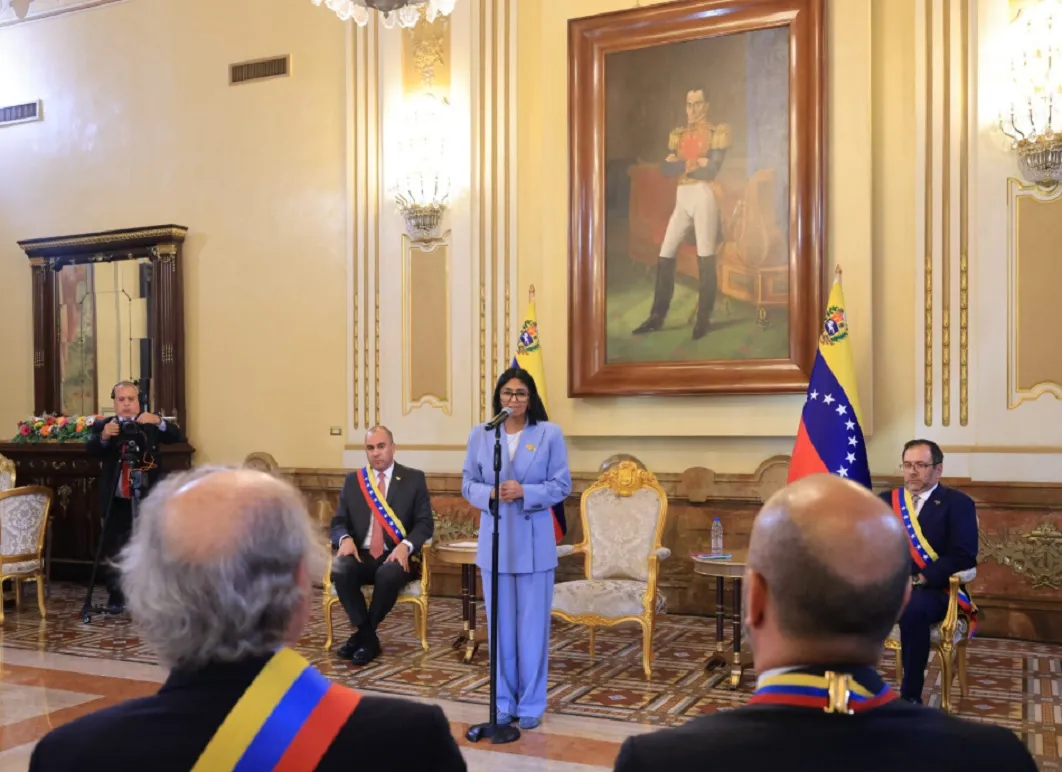
Venezuela has reaffirmed its commitment to diplomatic solutions and international law in the long-standing territorial dispute with Guyana over the Guayana Esequiba region, rejecting unilateral actions and calling for dialogue to resolve the conflict peacefully. The move comes as both nations navigate escalating tensions following Guyana’s recent oil discoveries in the disputed area and Venezuela’s military exercises near the border.
According to a statement released by Venezuela’s Ministry of Foreign Affairs on May 15, 2024, the government emphasized its adherence to the 1966 Geneva Agreement and other international legal frameworks that govern the dispute. “Venezuela reaffirms its willingness to engage in dialogue with Guyana and the international community to find a peaceful solution to the territorial dispute,” the statement read, adding that any unilateral actions would only “complicate the situation further.”
The dispute over Guayana Esequiba—a 159,500-square-kilometer region that Venezuela claims as part of its territory—has persisted for decades, with Guyana maintaining that the area is under its sovereign control. The latest escalation follows Guyana’s 2015 discovery of massive offshore oil reserves, which have drawn increased attention to the region and heightened Venezuelan concerns over resource sovereignty. In response, Venezuela has repeatedly asserted its historical claims while warning against foreign interference in what it considers its internal affairs.
Why this matters: The Guayana Esequiba dispute is not just a bilateral issue but one with broader regional and global implications. The International Court of Justice (ICJ) is currently reviewing the case, with Guyana seeking a ruling on the validity of Venezuela’s claims. Meanwhile, both nations have ramped up military presence along the border, raising concerns about potential conflict. Venezuela’s latest diplomatic stance suggests a calculated effort to avoid direct confrontation while maintaining pressure on Guyana.
Below is a translated excerpt from Venezuela’s official statement, as released by the Ministry of Foreign Affairs:
“Venezuela reafirma su compromiso con la diplomacia de paz y el derecho internacional en la defensa de los derechos soberanos sobre el territorio de Guayana Esequiba. El Gobierno Bolivariano reitera su disposición al diálogo con Guyana y la comunidad internacional para encontrar una solución pacífica y justa a este conflicto histórico.”
Historical Context: How the Dispute Originated
The roots of the Guayana Esequiba dispute trace back to 1899, when a tribunal in Paris awarded the region to Britain (then the colonial power over Guyana) following a boundary dispute between the United Kingdom and Venezuela. Venezuela has consistently argued that the arbitration was flawed and that the region rightfully belongs to it under historical and legal principles.
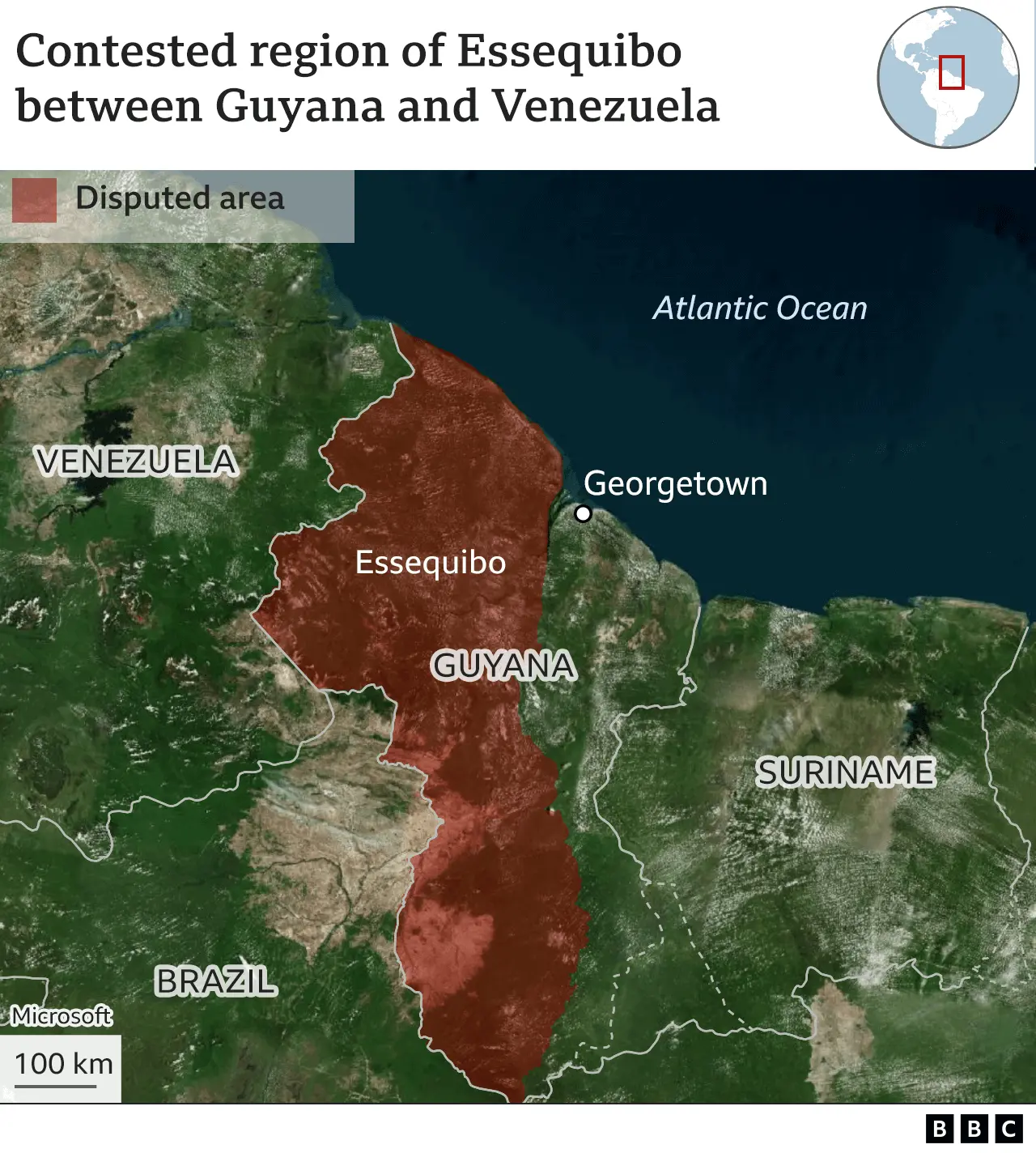
In 1966, both nations signed the Geneva Agreement, which established a framework for negotiations and arbitration. However, the agreement did not resolve the dispute, and tensions have flared periodically, particularly during periods of political instability in Venezuela. The latest phase of the conflict began in 2018, when Venezuela’s then-President Nicolás Maduro recognized a parallel government in Guyana, claiming it represented the legitimate authorities in the disputed region.
Guyana, backed by the United Nations and other regional bodies, has consistently rejected Venezuela’s claims, arguing that the 1899 award is final and binding. The International Court of Justice (ICJ) has been seized with the case, with Guyana requesting a ruling on the validity of Venezuela’s claims. As of 2024, the ICJ has not issued a final decision, leaving the status of Guayana Esequiba in legal limbo.
Recent Developments: Oil, Military Moves, and Diplomatic Shifts
The discovery of oil in Guyana’s offshore waters in 2015 has added a new dimension to the dispute. Guyana’s ExxonMobil-led oil projects, which have yielded billions in revenue, have drawn Venezuela’s ire, with Maduro accusing Guyana of exploiting resources in territory it does not fully control. In response, Venezuela has increased its military presence in the region, conducting joint exercises with allies and deploying troops near the border.

According to a report by Reuters, Venezuela’s military exercises in April 2024 included the deployment of troops and equipment to the border area, a move that Guyana’s government condemned as provocative. “These actions are destabilizing and contrary to the spirit of dialogue,” a spokesperson for Guyana’s Ministry of Foreign Affairs stated at the time.
Despite the military posturing, Venezuela’s latest diplomatic statement suggests a willingness to de-escalate, at least rhetorically. Analysts suggest that Maduro’s government may be seeking to balance domestic political pressures—where hardline nationalism is popular—with the need to avoid international isolation. The statement also comes ahead of upcoming regional elections in Venezuela, where foreign policy could play a key role in shaping public opinion.
International Reactions: Who Stands Where?
The Guayana Esequiba dispute has drawn responses from various international actors, each with their own interests at stake. The United States, a key ally of Guyana, has expressed support for Guyana’s sovereignty and criticized Venezuela’s actions as destabilizing. The Organization of American States (OAS) has also weighed in, calling for a peaceful resolution to the conflict.
Meanwhile, regional powers like Brazil and Colombia have adopted a more neutral stance, urging both nations to engage in dialogue. Brazil, which shares a border with both countries, has historically advocated for mediation, while Colombia has emphasized the need for respect for international law. The African Union and the Caribbean Community (CARICOM) have also expressed support for Guyana’s position, framing the dispute as one of sovereignty and regional stability.
China’s involvement adds another layer to the dispute. As a major investor in Venezuela’s oil sector, Beijing has historically supported Caracas’ stance on Guayana Esequiba. However, China’s economic ties with Guyana—particularly in infrastructure and energy—complicate its position. Analysts suggest that China may be adopting a more cautious approach, avoiding direct support for Venezuela’s claims to prevent alienating Guyana, a key partner in its Belt and Road Initiative.
What Happens Next? Key Checkpoints in the Dispute
The next critical phase in the Guayana Esequiba dispute will likely revolve around the ICJ’s proceedings and the actions of both governments in the coming months. Here are the key developments to watch:
- ICJ Ruling Timeline: The ICJ has not set a firm deadline for its decision, but legal experts suggest a ruling could come within the next 12–18 months. Guyana is expected to push for a swift resolution, while Venezuela may seek to delay or influence the outcome through diplomatic pressure.
- Oil Development in Disputed Waters: Guyana’s ExxonMobil-led consortium is set to expand its offshore drilling operations, including in areas near the disputed border. Venezuela has threatened to block access to these fields, raising the risk of a maritime standoff.
- Regional Diplomacy: Both nations are likely to continue engaging with regional blocs like the OAS and CARICOM, as well as bilateral talks with key allies. Brazil and Colombia may play a mediating role, but their influence is limited by their own geopolitical considerations.
- Domestic Politics in Venezuela: With presidential elections looming, Venezuela’s approach to the dispute could shift based on political calculations. Hardline rhetoric may appeal to nationalist voters, but a more pragmatic stance could appeal to international investors.
Why the Dispute Matters Beyond the Border
The Guayana Esequiba conflict is more than a territorial squabble—it has broader implications for energy security, regional stability, and the role of international law in the Americas. Here’s why:
- Energy Geopolitics: Guyana’s oil boom has transformed the country’s economy, making it one of the fastest-growing in the world. Venezuela, meanwhile, has struggled with economic crises and declining oil production. The dispute over resources could escalate into a proxy conflict for influence in South America’s energy sector.
- Legal Precedent: The ICJ’s ruling on Guayana Esequiba could set a precedent for other territorial disputes, particularly in Latin America. If Venezuela’s claims are upheld, it could embolden other nations to challenge established borders, while a ruling in Guyana’s favor could reinforce the principle of finality in international arbitration.
- Regional Stability: The risk of military confrontation between Guyana and Venezuela could destabilize the Caribbean and South America, disrupting trade, tourism, and energy flows. Neighboring countries, including Brazil and Colombia, could be drawn into the conflict, either as mediators or as unintended victims of spillover effects.
- Global Investor Confidence: The uncertainty surrounding Guayana Esequiba has already deterred some investors from Guyana’s oil sector. A prolonged dispute could lead to capital flight, higher insurance costs, and delays in critical infrastructure projects, undermining Guyana’s economic growth.
Where to Find Official Updates
For the latest developments on the Guayana Esequiba dispute, readers can monitor the following official sources:
- Venezuela’s Ministry of Foreign Affairs – Regular updates on Venezuela’s position and diplomatic statements.
- Guyana’s Ministry of Foreign Affairs – Official responses to Venezuelan actions and updates on the ICJ case.
- International Court of Justice (ICJ) – Case documents, hearings, and potential rulings related to the dispute.
- Organization of American States (OAS) – Statements and resolutions on regional conflicts, including Guayana Esequiba.
The next scheduled hearing at the ICJ is expected to take place in late 2024, with a potential ruling in early 2025. Until then, both Guyana and Venezuela are likely to continue their diplomatic and military posturing, keeping the region on edge.
What do you think about Venezuela’s latest diplomatic stance? Share your insights in the comments below, and don’t forget to share this article with others interested in international law and regional conflicts.
Keep reading