
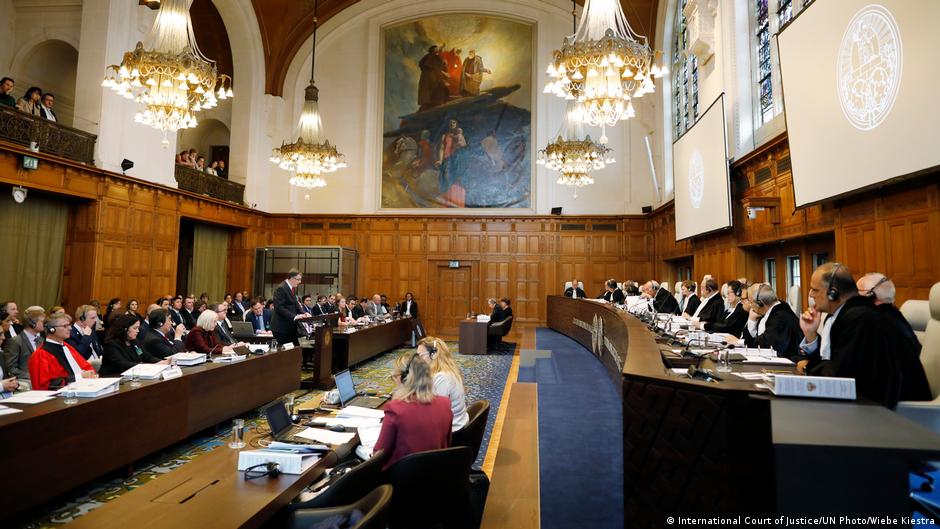
Acting Venezuelan President Delcy Rodríguez has formally appealed for a return to direct diplomatic negotiations with Guyana to resolve the long-standing territorial dispute over the Esequibo region. Speaking at the International Court of Justice (ICJ) in The Hague, Rodríguez positioned Venezuela’s claims as a matter of historical right and national sovereignty, challenging the current administrative control held by Guyana.
The appearance of the acting leader in the Netherlands comes at a moment of extreme political volatility for Venezuela. Following the capture of former President Nicolás Maduro and his wife, Cilia Flores, by United States forces in January 2026, the Venezuelan administration has struggled to maintain international legitimacy while facing provocative suggestions from Washington regarding the potential annexation of the oil-rich nation.
At the heart of the current legal battle is the Esequibo—a vast, resource-rich territory comprising approximately 159,500 square kilometers. Venezuela contends that the region was illegally stripped from its territory through a fraudulent colonial-era agreement, while Guyana maintains that the border was permanently settled over a century ago. Rodríguez’s presence at the ICJ is an attempt to pivot the conversation away from a purely judicial ruling and toward a negotiated settlement.
The stakes extend far beyond lines on a map. The Esequibo region is believed to hold massive offshore oil deposits, making the resolution of the border dispute a critical economic priority for both nations and a point of interest for global energy markets. As Rodríguez defends Venezuela’s “historical rights,” the international community is watching to see if the ICJ will uphold the existing border or force a diplomatic compromise.
The Legal Battle: 1899 Paris Award vs. 1966 Geneva Agreement
To understand the current friction at the ICJ, one must look at two conflicting legal pillars. The first is the 1899 Paris Arbitral Award, which granted the Esequibo territory to Great Britain (the colonial power in Guyana at the time). For decades, this was accepted as the definitive border. However, Venezuela has long argued that the 1899 ruling was the result of a conspiracy between the British and the Russian judges on the panel to deprive Venezuela of its land.
The second pillar is the 1966 Geneva Agreement. Signed shortly before Guyana gained independence from the United Kingdom, this agreement acknowledged the existence of a dispute and established a framework for a “satisfactory settlement” for both parties. Venezuela argues that the Geneva Agreement effectively nullified the 1899 award, making direct negotiation the only legitimate path forward.
During her statements in The Hague, Rodríguez emphasized that Venezuela is not seeking to act as a colonizer but is rather defending itself against what she described as a “colonial empire” mentality within the Guyanese administration. By calling for “direct dialogue,” Rodríguez is attempting to bypass a binding ICJ ruling that could potentially permanently codify Guyana’s ownership of the territory.
The Geopolitical Pressure Cooker: Oil and US Interests
The Esequibo dispute cannot be separated from the global hunger for energy. The discovery of massive oil reserves off the coast of the Esequibo has transformed a dormant border quarrel into a high-stakes economic war. For Guyana, these reserves represent a path to unprecedented national wealth; for Venezuela, they are a stolen resource that belongs to the Bolivarian state.
This regional tension is further complicated by the current relationship between Caracas and Washington. Following the military operation in January 2026 that led to the arrest of Nicolás Maduro, President Donald Trump has signaled a desire to maintain temporary administration over Venezuela’s oil infrastructure to ensure stability and access for U.S. Companies. The prospect of the U.S. Treating Venezuela as a “51st state,” as suggested by Trump in May 2026, adds a layer of existential dread to the Venezuelan government’s efforts to maintain territorial integrity.
Rodríguez has used the ICJ platform to assert that Venezuela is a “free country” and not a colony, directly pushing back against the narrative of U.S. Tutelage. By focusing on the Esequibo, the acting president is attempting to rally nationalistic sentiment and project a sense of continuity and strength, despite the vacuum left by the capture of the former president.
Sanctions and the Diplomatic Tightrope
Rodríguez’s arrival in the Netherlands was not without controversy. The acting president traveled to The Hague despite facing stringent European Union sanctions, which typically restrict the movement and financial access of high-ranking Venezuelan officials. Her ability to secure entry into the Netherlands for the ICJ proceedings suggests a nuanced approach by the Dutch government, prioritizing the legal processes of the World Court over the strict enforcement of political sanctions.
This diplomatic opening provides Venezuela with a rare window of international visibility. However, the strategy of requesting “direct dialogue” is viewed with skepticism by Guyana. The Guyanese government has consistently maintained that the ICJ is the proper venue for resolving the dispute, fearing that bilateral negotiations with a volatile Venezuelan administration would lead to coercion rather than compromise.
The tension is not merely legal but operational. In recent years, Venezuela has increased its military presence near the border and conducted referendums to claim the Esequibo as a Venezuelan state. These actions have led Guyana to seek international support, including security cooperation with the United States, further intertwining the territorial dispute with the broader U.S.-Venezuela conflict.
What it Means for the Region and Global Energy
If the ICJ rules in favor of Guyana, Venezuela may face a choice between accepting the verdict or risking further international isolation—or worse, military escalation. Conversely, if the court finds that the 1899 award was indeed flawed, it could trigger a chaotic redistribution of territory and oil concessions that would destabilize the Caribbean basin.
For the average citizen in the region, the dispute represents a precarious balance of power. In Guyana, there is a fear that the “historical rights” claimed by Rodríguez are a pretext for an eventual invasion to seize oil fields. In Venezuela, the Esequibo is framed as a stolen heritage that must be reclaimed to restore national pride.
The role of the ICJ is to provide a legal exit ramp for this conflict. However, international law is only as effective as the willingness of the involved states to abide by it. With the Venezuelan government currently in a state of transition and the U.S. Exerting significant influence over its internal affairs, the likelihood of a peaceful, legally-binding resolution remains uncertain.
Key Takeaways on the Esequibo Dispute
- The Core Conflict: Venezuela claims the Esequibo region based on historical rights, while Guyana relies on the 1899 Paris Arbitral Award.
- The Legal Pivot: Acting President Delcy Rodríguez is urging the ICJ to facilitate direct negotiations rather than issuing a final judgment.
- Economic Drivers: Massive offshore oil discoveries have escalated the urgency and intensity of the territorial claim.
- Political Backdrop: The dispute is unfolding amidst the capture of Nicolás Maduro and threats of U.S. Annexation of Venezuela.
- Diplomatic Tension: Rodríguez’s visit to The Hague occurred despite EU sanctions, highlighting the court’s role as a neutral ground.
The Path Forward: Next Checkpoints
The international community now awaits the next phase of the ICJ proceedings. The court must determine whether it has the jurisdiction to rule on the validity of the 1899 border or if the 1966 Geneva Agreement mandates a negotiated settlement between the two nations.

The next confirmed checkpoint will be the ICJ’s release of its findings regarding the admissibility of Venezuela’s arguments and the potential scheduling of further oral hearings. Until then, the Esequibo remains a flashpoint of geopolitical tension, where legal arguments in The Hague clash with the reality of military posturing on the ground.
World Today Journal encourages readers to share their perspectives on this developing story in the comments below. Do you believe international courts can resolve territorial disputes in the face of superpower interests?