
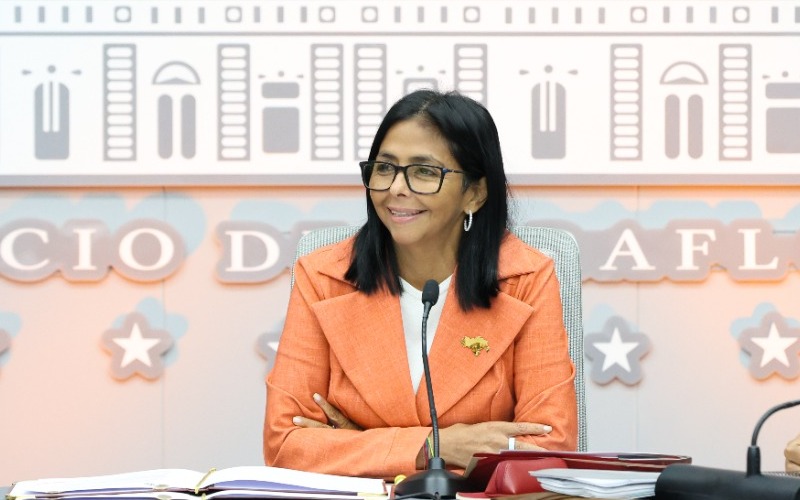
LONDON — In a move aimed at addressing long-standing criticisms regarding bureaucratic inefficiency, the Venezuelan government has launched a national digital consultation to identify and simplify administrative procedures across the country. The initiative, spearheaded by Acting President Delcy Rodríguez, centers on a newly activated web platform designed to gather direct input from citizens and business owners regarding the hurdles they encounter within the public administration.
The digital consultation, described by officials as a “national consultation for the optimization of public procedures,” seeks to pinpoint specific trámites—the administrative steps and paperwork required for everything from business licensing to personal documentation—that currently impede the daily lives of the population. By leveraging a digital interface, the administration intends to create a direct feedback loop between the state and the public, theoretically allowing for a more targeted approach to legislative and regulatory reform.
For a nation that has faced significant economic and structural challenges, the push toward administrative simplification is being framed as a necessary step in modernizing the state’s relationship with its citizens. The platform serves as a repository for complaints and suggestions, allowing users to report which specific processes are unnecessarily complex, time-consuming, or prone to inefficiency.
Targeting Bureaucratic Bottlenecks
The core objective of the new web portal is to facilitate a systematic review of the country’s administrative landscape. According to the government’s announcement, the consultation is not merely a suggestion box but a structured attempt to gather data that can inform the “acceleration and simplification” of public services. The government aims to reduce the friction that currently exists when citizens attempt to interact with state institutions.

The scope of the consultation appears to be broad, covering various sectors of public administration. Key areas of focus include:
- Business and Commercial Licensing: Reducing the time and complexity required for entrepreneurs to formalize operations.
- Personal Documentation: Streamlining the acquisition of essential identity and residency papers.
- Regulatory Compliance: Identifying redundant requirements that overlap between different government agencies.
- Digital Integration: Assessing how existing manual processes can be transitioned to more efficient digital formats.
By identifying these “bottlenecks,” the administration hopes to implement a framework that prioritizes speed and transparency. The government’s stated goal is to ensure that administrative requirements do not become an obstacle to economic activity or social mobility.
The Push for Digital Governance in Venezuela
This initiative represents a localized component of a broader, ongoing effort within the Venezuelan government to promote digital governance. As the country seeks to stabilize its domestic economy, the digitalization of state functions is often presented as a method to increase efficiency and, crucially, to reduce the opportunities for informal or unauthorized “facilitation payments” that can arise in complex, manual bureaucratic systems.

The implementation of such a platform follows a pattern of increasing reliance on digital tools for state-citizen interaction. However, the success of this specific consultation will depend heavily on how the gathered data is translated into tangible policy changes. For the global community and international investors, the effectiveness of these reforms will be a key indicator of the government’s commitment to improving the ease of doing business within the country.
While the platform offers a venue for grievance, analysts note that the true test of the Venezuela administrative procedure simplification effort will lie in the subsequent legislative actions. If the government successfully integrates the feedback from the digital consultation into new administrative laws, it could mark a significant shift in the operational capacity of the Venezuelan state.
Key Takeaways of the National Consultation
- Digital Access: A new official website has been activated to allow citizens to participate in the administrative reform process.
- Direct Feedback: The platform is specifically designed to identify which “trámites” (procedures) are most obstructive to citizens and businesses.
- Policy Goal: The ultimate aim is the optimization and acceleration of public services through the simplification of administrative requirements.
- Economic Context: The move is framed as a way to reduce bureaucratic friction and improve the efficiency of the state’s interaction with the private sector.
Implications for Citizens and the Private Sector
For the average citizen, the platform offers a rare opportunity to influence the mechanics of the state. In a system where administrative delays can have significant personal and financial consequences, the ability to formally report a problematic procedure could lead to more responsive public services. The government’s emphasis on “optimization” suggests a desire to move toward a more streamlined, user-centric model of public administration.
For the private sector, the stakes are arguably higher. The complexity of administrative procedures is often cited as a major deterrent to domestic and foreign investment. If the consultation leads to a genuine reduction in the “red tape” required to operate within Venezuela, it could provide a much-needed boost to the country’s commercial environment. The ability to navigate legal and regulatory requirements with greater speed and predictability is a fundamental requirement for any stable economy.
However, the effectiveness of this digital tool will be closely watched by international observers. The transition from a data-gathering phase to a reform-implementation phase is often where such initiatives face the greatest challenges. The transparency of the process—specifically, how the government selects which procedures to simplify and how it reports on the progress of these reforms—will be critical for building public and international trust.
As the consultation period progresses, the government is expected to continue providing updates on the volume of feedback received and the specific sectors identified for immediate reform. The next phase of this initiative will likely involve the presentation of these findings to relevant legislative bodies to initiate the formal process of regulatory change.
For further updates on Venezuelan administrative reforms and political developments, please monitor our official news feed.
What are your thoughts on the use of digital platforms for government reform? Share this article and join the conversation in the comments below.