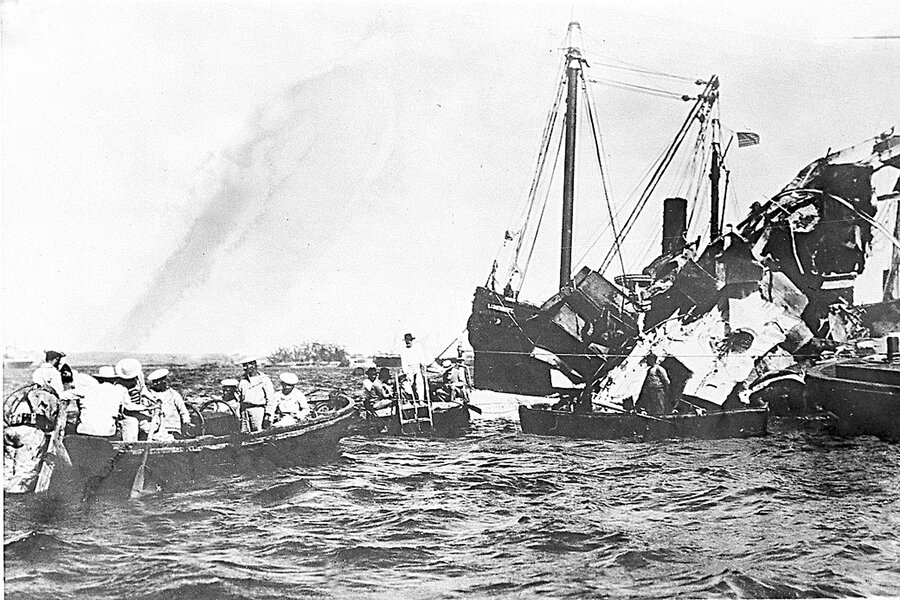
Echoes of the Maine: Assessing Trump’s Escalating Caribbean Actions
A concerning pattern is emerging in the Caribbean and off the Pacific coast of South America. United States military strikes against small boats have resulted in nearly 60 fatalities, raising questions about the rationale and potential consequences of these actions. While the White House frames this as a response to narcotics smuggling, concrete evidence supporting these claims remains elusive.
this situation evokes historical parallels, though a defining “Remember the Maine” moment hasn’t yet materialized. President Trump has authorized potential CIA operations against Venezuela and even hinted at possible land incursions, fueling speculation about a broader objective: regime change targeting President Nicolás Maduro.
A History of Intervention
This isn’t the first time a U.S. president has asserted influence in its regional neighborhood. Following the Spanish-American War of 1898, the United States intervened in Haiti, the Dominican republic, Guatemala, and Cuba. Though, these past interventions frequently enough ended poorly, breeding resentment and hostility towards U.S. interests.
If President Trump escalates the current military buildup, he’s likely hoping to avoid repeating these historical missteps. Yet, the global landscape has dramatically shifted as the era of Theodore Roosevelt, when the U.S. was establishing itself among competing imperial powers.
A Changed World Order
Roosevelt’s push for American power in the Pacific was largely driven by a desire to compete with established empires for access to the resources of a then-fragile China. Today, that dynamic has fundamentally changed. China is no longer a politically vulnerable nation.
Instead, it’s actively expanding its economic and political influence across the globe, including in Latin America – a region historically considered by Washington as its sphere of influence.
Here’s what you need to consider:
* Shifting Power Dynamics: The U.S. no longer operates in a world of unchallenged dominance.
* Economic Competition: China’s growing economic presence in Latin America presents a direct challenge to U.S.interests.
* Regional Implications: Escalated military intervention could further alienate Latin American nations and push them closer to China.
Potential Risks and Considerations
You might be wondering what the potential ramifications of this escalating situation are. A key concern is the potential for a prolonged and destabilizing conflict. Unlike the limited interventions in Grenada and Panama during the 1980s,a larger-scale operation in Venezuela could have far-reaching consequences.
Consider these points:
* Increased Regional Instability: A conflict in Venezuela could spill over into neighboring countries.
* Humanitarian Crisis: Military action could exacerbate the existing humanitarian crisis in Venezuela.
* Damage to U.S. Reputation: Unilateral intervention could further damage the U.S.’s image abroad.
Ultimately, President Trump’s actions in the caribbean demand careful scrutiny. While addressing legitimate concerns about narcotics trafficking is crucial, a heavy-handed military approach risks repeating the mistakes of the past and potentially ceding further ground to a rising China. A nuanced, diplomatic strategy, focused on regional cooperation and addressing the root causes of instability, is crucial to protecting U.S. interests and fostering a more secure and prosperous future for the region.
Keep reading