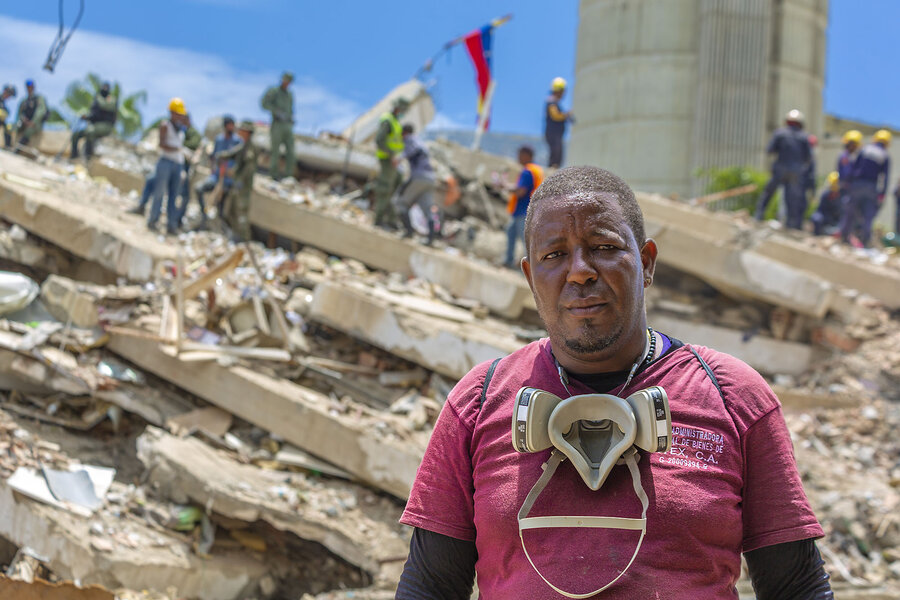
Venezuela’s political landscape faces renewed strain following recent seismic activity, as opposition leaders navigate the dual challenges of disaster response and an ongoing institutional crisis. The emergence of natural disasters in regions already grappling with economic instability and contested governance has forced opposition leader María Corina Machado and her coalition to refine their strategy, as they attempt to address humanitarian needs while maintaining pressure on the government of President Nicolás Maduro.
According to data from the Fundación Venezolana de Investigaciones Sismológicas (FUNVISIS), the country remains in a seismically active zone, requiring constant monitoring of infrastructure that has suffered from years of underinvestment. For the political opposition, these events serve as a barometer for state capacity, highlighting the limitations of the current administration in providing emergency relief and public safety, a point frequently emphasized by opposition figures during their ongoing campaign for democratic transition.
Infrastructure Vulnerability and Public Oversight
The intersection of geological risk and political governance in Venezuela is most visible in the state of critical public infrastructure. Years of economic contraction have left many housing projects, transport networks, and power grids in states of disrepair, according to reports from the United Nations Office of the High Commissioner for Human Rights (OHCHR), which has documented the degradation of social services. When seismic events occur, the vulnerability of these structures becomes a focal point for political debate.

María Corina Machado has utilized these moments of crisis to argue that the current government’s focus remains misaligned with the immediate safety needs of the population. By framing the response to natural disasters as a failure of institutional management, the opposition seeks to demonstrate that a change in leadership is not merely a matter of electoral preference but a necessity for the restoration of basic public safety and infrastructure maintenance. This narrative is central to the opposition’s broader effort to consolidate support among voters who have been directly affected by the country’s decaying physical environment.
The Opposition’s Strategic Response
For the opposition movement led by Machado, the challenge lies in providing a credible alternative to the state’s emergency response mechanisms. Historically, the Maduro government has maintained control over the distribution of aid, often using centralized agencies to manage relief efforts. International observers, including those from the Organization of American States (OAS), have frequently raised concerns regarding the politicization of social assistance in Venezuela, noting that aid is often distributed through government-controlled networks that favor political loyalty.

To counter this, the opposition has increasingly relied on decentralized networks and civil society organizations to document damage and provide support where possible. This approach serves a dual purpose: it mitigates the immediate impact of disasters on the most vulnerable communities and provides the opposition with a platform to showcase its organizational capacity. By engaging directly with affected citizens, the opposition aims to bypass state-controlled channels, thereby undermining the government’s monopoly on public assistance.
Humanitarian Impacts and International Monitoring
The humanitarian situation in Venezuela remains complex, with millions of citizens experiencing restricted access to basic services. The World Bank has noted that the country’s economic environment is characterized by high levels of volatility, which complicates the ability of any entity, whether state or non-state, to mount a sustained recovery operation following a disaster. The lack of transparent data regarding building standards and emergency preparedness protocols further exacerbates the risks posed by seismic events.

International agencies continue to monitor the situation, though access remains constrained by political tensions. The United Nations Office for the Coordination of Humanitarian Affairs (OCHA) maintains a presence in the country to facilitate aid, but their operations are subject to the approvals and cooperation of the central government. For the opposition, the presence of these international bodies provides a necessary, albeit limited, level of accountability that prevents the complete concealment of crises during periods of natural disaster.
Next Steps in the Political Calendar
As the country looks toward future political milestones, the ability of the opposition to maintain momentum during periods of crisis will remain a critical factor. The next significant checkpoint for the political process involves upcoming legislative and electoral assessments, as outlined by the Consejo Nacional Electoral (CNE), which remains the primary body responsible for administering the country’s electoral calendar. Whether the opposition can translate the urgency of disaster response into sustained political support depends on their success in documenting state failures while simultaneously presenting a coherent plan for national reconstruction.

The situation remains fluid, and international observers are expected to release updated assessments on the country’s human rights and humanitarian conditions in the coming months. Readers interested in the latest developments are encouraged to follow official updates from humanitarian organizations and verified reporting from regional correspondents. Please share your thoughts on these developments in the comments section below.