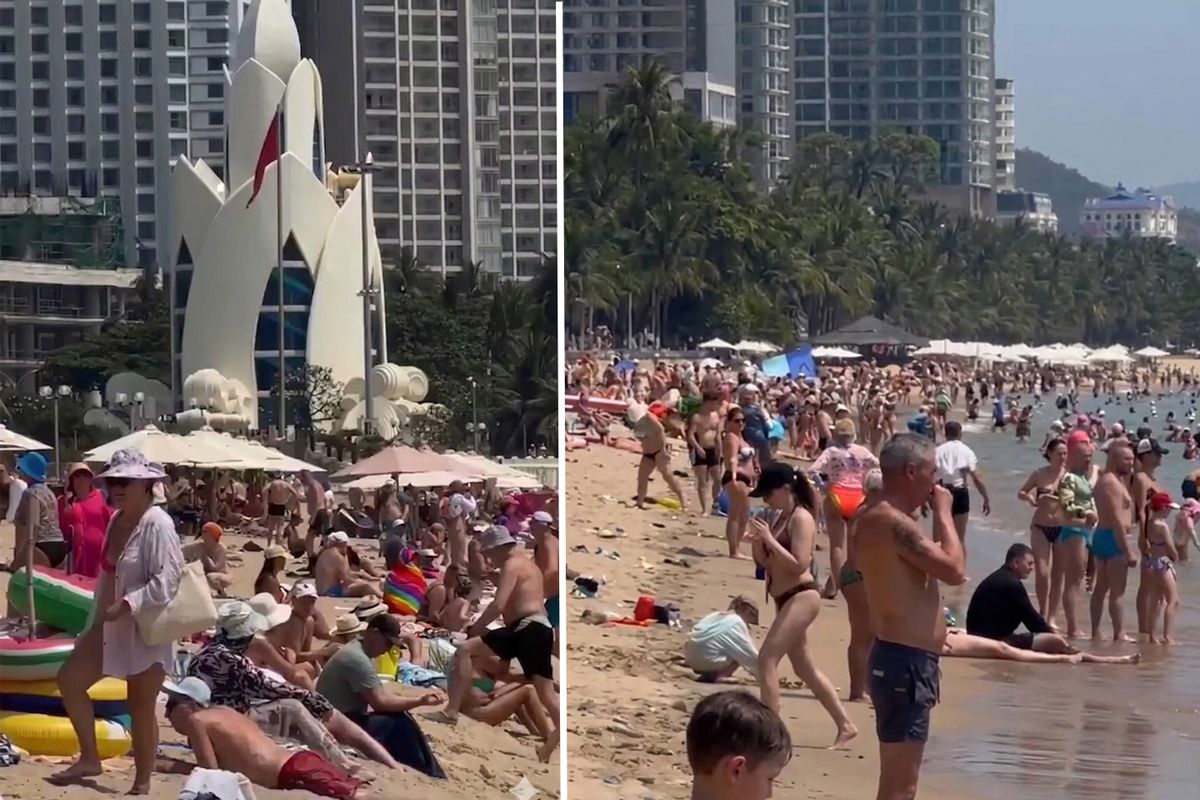
Antalya, long celebrated as a premier destination for Russian tourists seeking sun, sea, and all-inclusive resorts, is now facing growing competition from an unexpected quarter: Vietnam. As travel patterns shift and geopolitical realities reshape tourism flows, an increasing number of Russian travelers are choosing Southeast Asia over the Turkish Riviera, drawn by Vietnam’s affordability, cultural appeal, and improved accessibility.
This shift reflects broader changes in outbound Russian tourism since 2022, when Western sanctions and flight restrictions limited traditional European destinations. While Antalya once absorbed a significant share of displaced demand, recent data indicates that Vietnam is emerging as a compelling alternative, particularly for budget-conscious and experience-seeking travelers. The trend underscores how global tourism maps are being redrawn in real time, with implications for both Turkish hospitality businesses and Vietnam’s growing tourism infrastructure.
According to Turkey’s Ministry of Culture and Tourism, Russian visitor numbers to Antalya declined by approximately 18% in the first eight months of 2023 compared to the same period in 2022, even as overall Russian outbound travel showed signs of recovery. Meanwhile, Vietnam’s General Statistics Office reported a 42% year-on-year increase in Russian arrivals during the same timeframe, with over 320,000 Russians visiting the country between January and August 2023.
These figures suggest a meaningful diversion of tourist flows, driven not only by necessity but too by evolving preferences. Vietnam offers a mix of bustling cities like Hanoi and Ho Chi Minh City, serene landscapes such as Ha Long Bay and Da Lat, and a rich culinary tradition that appeals to adventurous eaters. Crucially, the cost of accommodation, food, and local transport remains significantly lower than in Antalya, making it especially attractive amid global inflation and currency volatility affecting the ruble.
Why Vietnam Is Gaining Ground Among Russian Travelers
Several interconnected factors are driving the shift from Antalya to Vietnam. First, flight connectivity has improved markedly. While direct flights between Russia and Turkey were disrupted in 2022 due to sanctions on Russian airlines and airspace closures, carriers such as Aeroflot, Ural Airlines, and Azur Air have gradually restored limited services. However, many routes remain indirect or subject to last-minute changes, creating uncertainty for travelers.
In contrast, Vietnam has benefited from proactive tourism diplomacy. In early 2023, Vietnam’s National Administration of Tourism launched targeted marketing campaigns in Russia and signed memoranda of understanding with several Russian tour operators to promote package tours. Airlines including Vietnam Airlines and Jetstar Pacific increased charter flights from cities like Moscow, and St. Petersburg to Nha Trang and Da Nang, coastal hubs that mirror Antalya’s beach resort appeal.
Visa policy has also played a role. As of August 2023, Vietnam offers e-visas valid for up to 90 days to citizens of Russia, a significant extension from the previous 30-day limit. This change, confirmed by Vietnam’s Immigration Department, allows Russian tourists to combine beach stays with cultural tours across multiple regions without needing to renew visas mid-trip—a flexibility that enhances Vietnam’s competitiveness against Turkey’s 60-day visa-free regime for Russians.
safety and perception matter. Despite ongoing geopolitical tensions, Vietnam is widely perceived as a neutral, welcoming destination with low crime rates and political stability. Turkish destinations, while still popular, have occasionally faced negative publicity related to inflation-driven price surges, service quality concerns, and occasional diplomatic friction—factors that may influence traveler confidence, especially among repeat visitors seeking value and consistency.
Economic Implications for Antalya’s Tourism Sector
The potential erosion of Russian market share poses a tangible challenge for Antalya’s hospitality industry, which has grown dependent on this demographic. Prior to 2022, Russians accounted for roughly one in four foreign tourists visiting Antalya, according to data from the Turkish Statistical Institute (TurkStat). Their spending power—particularly in luxury hotels, dining, and retail—helped sustain high occupancy rates during peak seasons.
Now, hoteliers in Lara, Belek, and Kemer report mixed trends. While some establishments have seen a rebound in Russian bookings through third-party operators and charter flights, others note a clear shift toward shorter stays and more budget-oriented packages. A survey conducted by the Antalya Hoteliers Association in November 2023 found that 38% of member hotels reported declining average length of stay among Russian guests compared to 2021 levels, with many opting for 5- to 7-day trips instead of the traditional 10- to 14-day stays.
In response, many Antalya-based businesses are diversifying their target markets. Efforts to attract tourists from Germany, the UK, and Scandinavia have intensified, supported by promotional campaigns at international travel fairs such as ITB Berlin. Some resorts are also investing in upgraded amenities and digital services to justify higher price points, betting on quality over volume to maintain profitability.
Still, the long-term outlook remains uncertain. If Vietnam continues to improve its infrastructure—such as expanding international airport capacity in Da Nang and Phu Quoc, and enhancing English-language signage and tourist police presence—it could solidify its position as a go-to destination for Russian travelers seeking both relaxation and novelty.
What This Means for Vietnam’s Tourism Strategy
For Vietnam, the rise in Russian arrivals represents both an opportunity and a test of capacity. The country welcomed over 3.6 million international visitors in the first ten months of 2023, with Russians now ranking among the top five source markets, alongside South Korea, China, the United States, and Japan. This marks a notable shift from pre-pandemic patterns, when European visitors dominated the mix.
To sustain this growth, Vietnamese authorities are focusing on regional dispersal. Rather than concentrating tourists in a few coastal cities, agencies are promoting itineraries that include the central highlands, Mekong Delta, and northern provinces. Initiatives such as the “Vietnam – Timeless Charm” campaign, launched in late 2023, highlight cultural heritage sites like Hoi An and Hue alongside beach destinations, aiming to increase per-visitor spending and reduce pressure on overcrowded zones.
Infrastructure upgrades are also underway. The government approved a $1.2 billion investment plan in early 2024 to upgrade regional airports, including Cam Ranh and Chu Lai, to handle increased international traffic. Efforts to streamline customs procedures and expand multilingual support at major tourist hubs are being coordinated by the Ministry of Culture, Sports, and Tourism.
Challenges remain, however. Concerns about over-tourism in places like Nha Trang and Da Nang have prompted calls for better waste management and stricter enforcement of environmental regulations. In late 2023, local authorities in Nha Trang introduced temporary limits on beachfront construction and increased inspections of tourism-related businesses to ensure compliance with safety and hygiene standards.
The Broader Context: Shifting Patterns in Global Tourism
The Antalya-Vietnam dynamic is emblematic of a larger transformation in global tourism flows. Traditional sun-and-sand destinations in the Mediterranean are confronting new competition from Asia, Latin America, and Africa, where affordability, unique experiences, and favorable exchange rates are drawing travelers away from established hubs.
For Russian tourists specifically, the post-2022 landscape has necessitated adaptation. With direct access to much of Europe constrained, many have turned to countries that maintain open aviation links and welcoming visa policies. Beyond Vietnam, destinations such as the United Arab Emirates, Thailand, and even Morocco have seen increased Russian interest, though Vietnam stands out for its combination of low cost, cultural depth, and improving accessibility.
Analysts at the World Tourism Organization (UNWTO) note that this diversification could lead to more resilient tourism economies in the long run, as destinations reduce reliance on any single market. However, they also caution that sudden shifts can strain infrastructure and local communities if not managed proactively.
As of March 2024, Notice no official bilateral tourism quotas or restrictions between Russia and either Turkey or Vietnam. Travel remains subject to standard entry requirements, flight availability, and macroeconomic conditions—particularly the strength of the ruble relative to the euro and dollar, which continues to influence outbound travel capacity.
Travelers planning trips are advised to consult official sources for the latest updates. The Russian Union of Travel Industry (RUTI) provides monthly outbound travel advisories, while Vietnam’s e-visa portal and Turkey’s Ministry of Culture and Tourism offer real-time entry information. Monitoring airline schedules and travel insurance coverage is also recommended, given the potential for last-minute changes in international routes.
The story of Russian tourists choosing Vietnam over Antalya is not merely about one destination losing ground to another. It reflects a deeper recalibration of how people choose to travel in an era of uncertainty—seeking not just sunshine and sea, but value, authenticity, and a sense of discovery. Whether this shift proves temporary or enduring will depend on how both countries respond: Turkey with innovation and value reinforcement, Vietnam with sustainable growth and quality control.
For now, the beaches of Da Nang and the lantern-lit streets of Hoi An are welcoming a new wave of visitors—one that may well reshape the economics of coastal tourism for years to come.
Stay informed about evolving travel trends and destination shifts by following updates from trusted tourism authorities and industry analysts. Share your thoughts on how changing travel patterns are affecting global destinations in the comments below, and help others navigate this evolving landscape.
Keep reading