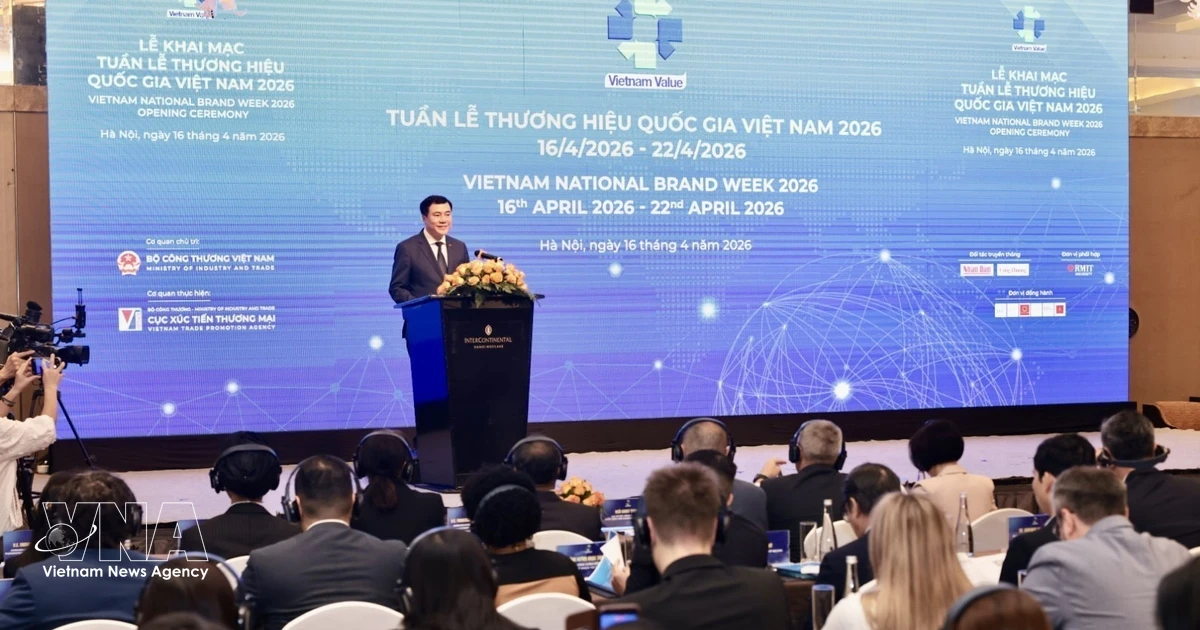
Vietnam is sharply increasing its global economic and cultural presence by reshaping its national brand strategy to prioritize high-value industries, innovation, and international creative diplomacy. According to Hoàng Minh Chiên, deputy director of the Trade Promotion Agency under the Ministry of Industry and Commerce, modern international competition no longer relies strictly on low-cost production or raw volume. Instead, global supply chain restructuring demands a heavier emphasis on corporate trust, market reputation, and robust intellectual property frameworks.
This strategic shift underpins a broader national agenda aimed at transitioning Vietnam from basic original equipment manufacturing toward comprehensive original design manufacturing and own-brand manufacturing. Under Prime Ministerial Decision No. 626/QD-TTg, which approves the program for the 2026–2030 period, the government is utilizing brand equity as a core driver of national competitiveness. The overarching economic objective targets high-income developed nation status by 2045, linking corporate product quality directly with the country’s broader cultural identity.
To support these ambitions, the Ministry of Industry and Commerce issued Circular No. 18/2026/TT-BCT, which establishes rigorous evaluation criteria for national brand recognition. The updated guidelines elevate innovation as a central benchmark while redefining pioneer status to encompass verified leadership in green transitions, digitalization, and environmental, social, and governance practices. Furthermore, companies seeking national brand recognition must now meet mandatory circular economy indicators covering resource efficiency, product recyclability, and eco-friendly design standards.
Expanding Global Trade Through Digital Platforms
To modernize commercial promotion and assist domestic enterprises in reaching broader international markets, trade authorities are partnering with major global e-commerce operators, including Amazon, Alibaba, and TikTok. These collaborations facilitate dedicated Vietnam National Brand Pavilions, virtual trade fairs, and cross-border live-streaming initiatives designed to connect local producers directly with overseas consumers.
According to trade ministry officials, digital marketing tools, search engine optimization, and multilingual data systems are being deployed to ensure consistent messaging across international supply networks. By connecting product brands, corporate identities, and the overarching national brand, the program aims to provide a credible passport for Vietnamese goods navigating complex global trade barriers.
Cultural Diplomacy and International Creative Events
Alongside commercial reforms, cultural diplomacy has emerged as a critical pillar for enhancing Vietnam’s soft power and destination attractiveness. Throughout mid-2026, major domestic festivals and international artistic exchanges have served as active platforms for showcasing national heritage.
Hanoi hosted the Crescendo International Music Festival from July 1 to July 5, 2026, bringing together more than 1,300 domestic contestants alongside over 120 artists and music experts from nine countries and territories. Pham Tuân Long, director of the Service of the culture and sports of Hanoï, noted that the festival strengthens cultural industries while burnishing Hanoi’s designation as a UNESCO Creative City. The event featured classical performances blended with traditional Vietnamese melodies, alongside heritage tours for international delegations.
Concurrently, the 4th Da Nang Asian Film Festival (DANAFF IV), held from June 28 to July 4, showcased dozens of international and domestic cinematic works, including regional premieres. The festival emphasized youth talent development, film market networking, and expert symposia covering artificial intelligence, digital technology, and intellectual property rights within the film industry.
Global Cultural Showcases and Heritage Outreach
Vietnamese cultural promotion extended significantly across international venues during June and August 2026. On June 17, the “Dao hoc” cultural program was hosted at UNESCO headquarters in Paris, France, marking part of the 50th anniversary celebrations of Vietnam-UNESCO relations. Attended by over 200 delegates from more than 100 member states, the exhibition featured traditional áo dài displays, woodblock printing workshops centered on doctoral steles, and culinary demonstrations.
In Japan, the “Colors and Fragrances of Vietnam” arts exchange was held on June 14, highlighting traditional performance arts such as quan ho alternating singing and chèo popular theater to engage both the local public and the overseas Vietnamese diaspora. Similar cultural days were hosted in Hamburg, Germany, on August 2, introducing visitors to traditional calligraphy and regional crafts.
Dr. Truong Thuy Mai, of the Faculty of Cultural Studies at the University of Culture of Hanoï, observed that globalization and heightened international competition for tourism and investment make cultural events highly effective instruments for destination branding. These gatherings create immersive visitor experiences, generate international media coverage, and reinforce the country’s long-term standing on the global stage.
Keep reading
- Ray J and Orlando Brown to Fight in Celebrity Boxing Match on Zeus Network
- Marvel’s New X-Men Movie Cast Finally Announced At D23: Here’s Who Is Playing Jean Grey, Cyclops, Rogue And More
- Toronto Blue Jays Playoff Hopes: Wild Card Race & Strategy (archynewsy.com)
- South African Envoy Warns Canada Peacekeeping Cuts Weaken Middle-Power Strategy (newsdirectory3.com)