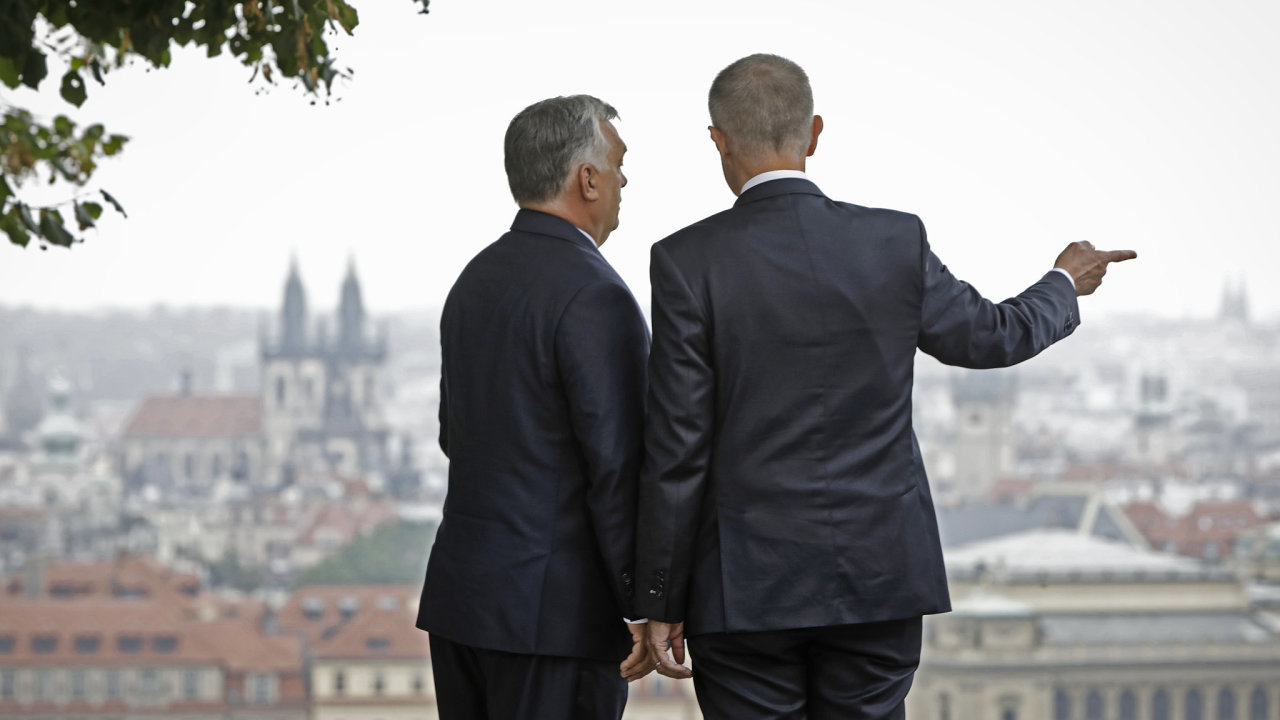
The political landscape of Central Europe shifted violently this week as Viktor Orbán, the long-dominant Prime Minister of Hungary, suffered a crushing defeat in the parliamentary elections. For years, Orbán served as a beacon for national-conservative movements across the region, but his loss marks the end of a sixteen-year era and creates an immediate diplomatic and strategic vacuum for his closest allies.
Among those most affected is Czech Prime Minister Andrej Babiš. The leader of the ANO party had long positioned himself as a kindred spirit to Orbán, frequently citing the Hungarian leader’s approach to the European Union and Russia as a blueprint for successful governance. The Viktor Orbán election loss impact is now being felt not only in Budapest but too in Prague, where Babiš must navigate the sudden disappearance of his most potent regional partner.
The victory of Péter Magyar, leader of the previously opposition Tisza party, represents a seismic shift in Hungarian politics. Magyar’s ascent has forced an immediate pivot from Babiš, who went from publicly championing Orbán’s “stability” just days ago to congratulating the man who dismantled that stability. This rapid transition highlights the pragmatic, often transactional nature of Babiš’s foreign policy, where personal loyalty is secondary to political and economic survival.
A High-Stakes Gamble on Stability
In the final days leading up to the vote, Andrej Babiš left no room for ambiguity regarding his preferences. On April 11, 2026, the Czech Prime Minister took to the social media platform X to offer a ringing endorsement of Viktor Orbán, praising his defense of national interests and his vision for a Europe composed of sovereign member states Blesk.cz.
Babiš’s support was not merely a gesture of friendship; it was a strategic alignment. By mirroring Orbán’s rhetoric on “sovereign nations” and “competitiveness,” Babiš aimed to consolidate his own base of voters in the Czech Republic who view Hungary as a final stronghold of national sovereignty within the European Union Deník.cz.
Supporting @PM_ViktorOrban this Sunday🇭🇺 He has always fought for a stronger Europe, one built on peace, sovereign nations, sovereign member states, competitiveness. He always protected Hungarian citizens and Hungarian national interests. In turbulent times, choosing stability… — Andrej Babiš (@AndrejBabis) 11. Dubna 2026
While Babiš bet on the continuity of the Orbán regime, other Czech political figures were skeptical. Former Prime Minister Petr Fiala of the ODS party had publicly expressed his belief that the sixteen-year reign of Orbán was coming to an end, predicting a loss of allies for the ANO leader Blesk.cz.
The Pragmatic Pivot to Péter Magyar
The aftermath of the election has seen Babiš engage in a swift diplomatic recalibration. Despite his deep personal and political ties to Orbán, Babiš wasted no time in reaching out to the winner. He congratulated Péter Magyar on his victory, stating that Magyar carries “great expectations and hope” for the future of Hungary iDNES.cz.
This pivot is characteristic of Babiš’s political style. While he maintains a public image of ideological consistency, his actions often align with the prevailing center of power. The fact that Robert Fico, another of Orbán’s strong allies, also extended congratulations to Magyar suggests a broader realization among Central European leaders: the Orbán era is over, and the new administration in Budapest must be courted immediately.
Why the Loss Matters Beyond Ideology
For Babiš, the defeat of Viktor Orbán is not simply a matter of losing a political “comrade.” Analysts suggest there is a significant economic undercurrent to this relationship. Babiš, a billionaire businessman as well as a politician, requires stable and cooperative relations with the Hungarian government to protect his various business interests in the region Deník.cz.
The transition from Orbán to Magyar introduces a period of uncertainty. While Orbán’s style of governance was predictable—characterized by a tense relationship with Brussels and a flirtation with Moscow—Magyar’s approach may bring a different set of priorities and regulatory environments. For Babiš, maintaining a “solid relationship with every Hungarian government” is a business necessity that outweighs any personal loyalty to the ousted Prime Minister.
Geopolitical Ripples in Central Europe
The fall of Orbán is more than a national event; it is a geopolitical signal. For years, the “Visegrád” spirit of defiance against the European Commission was spearheaded by Budapest. Orbán’s ability to block EU initiatives and challenge the primacy of EU law provided a shield for other populist leaders in the region.
With Péter Magyar at the helm, the “fifth column of Russia” label that some European leaders had applied to Hungary may begin to fade Deník.cz. This shift could lead to a more integrated Central Europe, but it also leaves leaders like Babiš isolated. Without Orbán to act as the vanguard of sovereignist rhetoric, Babiš may find it harder to justify his own frictions with the EU to his electorate.
The impact of the Viktor Orbán election loss impact will likely be measured by how quickly the new Hungarian government moves to dismantle the structural remnants of the previous regime. If Magyar pursues a rigorous “demontage” of the Orbán system, it could create a domino effect, encouraging similar movements in neighboring states and putting further pressure on the populist coalitions within the Czech Republic.
Summary of the Political Shift
| Feature | Viktor Orbán Era | Péter Magyar Era (Expected) |
|---|---|---|
| EU Relationship | Confrontational/Blocking | Potential for Re-engagement |
| Regional Alliance | Strong populist axis with Babiš/Fico | Pragmatic, individual state interests |
| Russia Policy | Strategic proximity/Neutrality | Uncertain, likely more aligned with EU |
| Domestic Focus | Centralized “Illiberal Democracy” | Reform and systemic change |
What Happens Next?
The immediate focus now turns to the formation of the new Hungarian government and the first official diplomatic meetings between Prime Minister Péter Magyar and his regional neighbors. For Andrej Babiš, the priority will be to secure a working relationship with the Tisza party to ensure that his business ventures remain unaffected by the change in leadership.
Observers will be watching for the first official bilateral meeting between Prague and Budapest to see if the warmth Babiš showed in his congratulatory message translates into a functional partnership. The era of the “strongman alliance” in Central Europe has effectively ended, replaced by a new, untested dynamic that will determine the region’s influence within the European Union for the next decade.
We will continue to monitor the official appointments of the new Hungarian cabinet and any subsequent diplomatic summits scheduled for the coming weeks. Stay tuned for updates on how this power shift alters the balance of the Visegrád Group.
Do you suppose the fall of Viktor Orbán will lead to a broader shift away from populism in Central Europe, or is this a temporary correction? Share your thoughts in the comments below.
Keep reading