
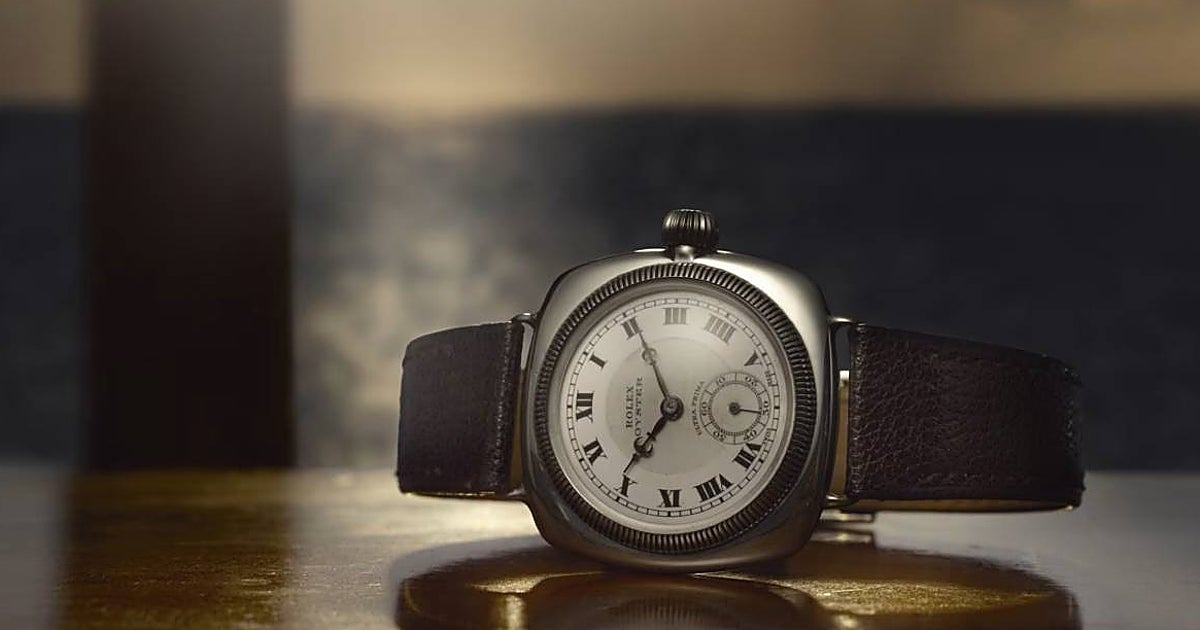
In an era defined by the rapid obsolescence of silicon and the relentless ticking of digital notifications, a surprising counter-trend has taken hold of the global luxury market. While the tech world continues to iterate on the smartwatch, a growing echelon of collectors and fashion enthusiasts is looking backward—specifically, more than a century into the past. Luxury watches that are over 100 years old are experiencing a significant resurgence, transitioning from dusty museum displays and family heirlooms into coveted symbols of modern status and sustainable style.
This shift represents more than a mere nostalgia trip; It’s a manifestation of the “quiet luxury” movement, where the loudest statement is made by the most understated, authentic and historically significant piece. For the modern wearer, a timepiece from the early 20th century offers something a contemporary luxury watch cannot: a tangible connection to a vanished world of artisanal craftsmanship and a defiance of the “planned obsolescence” that characterizes the digital age.
As Editor of Tech at World Today Journal, I have spent years documenting the ascent of AI and the evolution of wearables. Yet, the current fascination with centenarian horology reveals a profound psychological pivot. We are witnessing a desire for “analog permanence.” When a watch has survived a century of geopolitical upheaval and technological revolution while still keeping time, it ceases to be a tool and becomes a testament to endurance.
The Pivot to Provenance: Why Antique Timepieces are Trending
The return to vintage luxury watches is driven by a convergence of aesthetic preference, investment strategy, and a cultural shift toward circular consumption. Unlike the “hype” market of the last decade, which focused on modern steel sports watches, the current trend favors the elegance of the Belle Époque and the Art Deco periods. These pieces, often featuring precious metals, intricate hand-engraving, and enamel dials, offer a level of detail that is prohibitively expensive to replicate in modern mass-production.
Central to this revival is the concept of provenance. In the luxury world, the story behind the object is often as valuable as the object itself. A watch from 1920 carries the ghost of its previous owners and the spirit of the era in which it was forged. This narrative appeal is particularly strong among Gen Z and Millennial collectors, who increasingly view luxury through the lens of curation rather than mere acquisition.
the sustainability movement has permeated the high-end market. Buying a 100-year-old watch is the ultimate form of circular fashion. By preserving and wearing an existing masterpiece, collectors avoid the environmental cost of mining new precious metals and the industrial footprint of modern manufacturing. This “eco-conscious luxury” aligns with a broader global trend toward reducing waste and valuing longevity over novelty.
The Titans of Time: Brands That Define the Century Mark
Not every watch from a century ago holds value, but a few legendary houses have maintained a standard of excellence that makes their antique pieces highly sought after. The most prominent among these are the “Holy Trinity” of Swiss watchmaking, whose archives provide the necessary documentation to verify the authenticity of these centenarian pieces.
Patek Philippe remains the gold standard for antique collectors. Founded in 1839, the brand’s early 20th-century pieces are prized for their understated elegance and mechanical precision. Patek Philippe’s commitment to maintaining its official archives allows collectors to trace the exact date of sale and the original owner of a watch, providing a level of security and historical verification that is essential for high-value investments.
Vacheron Constantin, established in 1755, is the oldest continuously operating watch manufacturer in the world. Their pieces from the early 1900s often showcase a daring creativity in complications and case design. Because Vacheron Constantin focused heavily on bespoke orders for royalty and aristocracy during this period, their 100-year-old watches are often unique works of art rather than standardized products.
Breguet is another pillar of this trend. Known for inventing the tourbillon, Breguet’s antique watches are celebrated for their “Breguet hands” and guilloché dials. The brand’s history, which dates back to 1775, is deeply intertwined with the Enlightenment, making their pieces appealing to those who value the intersection of science, art, and history. Detailed records of their historical contributions can be found via the Breguet official heritage pages.
The Investment Logic: Portable Wealth in a Volatile Market
From a financial perspective, antique luxury watches are increasingly viewed as “portable wealth.” In times of economic instability or currency fluctuation, tangible assets with intrinsic value—such as gold and rare mechanical movements—tend to act as a hedge. Unlike modern luxury watches, which can suffer from sudden price drops when a specific model goes out of style, 100-year-old pieces have already survived the test of time.
The market for these pieces is primarily driven by auction houses such as Sotheby’s and Christie’s, where “investment-grade” timepieces are vetted by experts. The value of an antique watch is determined by a combination of rarity, condition, and the prestige of the maker. A rare complication from 1910, for instance, is a finite resource; no more will ever be produced, creating a natural scarcity that supports long-term value appreciation.
However, the investment landscape is not without risk. The secondary market for luxury watches experienced a significant correction following the pandemic-era boom. While modern “hype” watches saw sharp price declines, the ultra-rare antique sector remained relatively stable. This stability is attributed to the fact that antique collectors are typically high-net-worth individuals whose buying habits are less influenced by social media trends and more by long-term asset preservation.
From Pocket to Wrist: The Great Horological Transition
To understand the appeal of watches from the early 20th century, one must understand the technical transition occurring at that time. For centuries, the pocket watch was the standard for gentlemen. The shift toward the wristwatch—the “trench watch”—was accelerated by the necessities of World War I, where soldiers needed to check the time quickly without fumbling with a pocket watch during combat.
This era produced some of the most fascinating designs in horology. Early wristwatches often featured oversized crowns and leather straps that were rudimentary compared to today’s standards, but they represented a revolutionary change in human behavior. Collectors today prize these transition pieces because they capture the exact moment when timekeeping became an integrated part of the wearer’s attire.
The mechanical movements of this era were also a marvel of human ingenuity. Without the aid of computer-aided design (CAD) or CNC machining, every gear and spring was hand-finished. The “soul” of these watches lies in this imperfection—the subtle marks of a master watchmaker’s tool that give each piece a unique personality.
The Collector’s Guide: Navigating the Antique Market
Entering the world of centenarian luxury watches requires a blend of passion and extreme caution. The market is fraught with “franken-watches”—timepieces assembled from parts of different watches to look like a rare model—and forged provenance papers.
For those looking to acquire a piece of history, the following criteria are non-negotiable:
- Provenance and Documentation: Always prioritize pieces with a documented history. An extract from the manufacturer’s archives is the most reliable way to confirm that the movement matches the case and the date of production.
- Condition vs. Restoration: In the antique world, “original” is almost always better than “perfect.” A dial with a natural patina (aging) is far more valuable than one that has been repainted or refurbished. Over-restoration can strip a watch of its historical value and its financial worth.
- Movement Integrity: Ensure the movement has been serviced by a specialist. Antique watches require specific oils and parts that are no longer in production; using modern, generic parts can damage the delicate mechanism.
- Expert Authentication: Never purchase a high-value antique watch without a third-party appraisal. Specialist horologists can identify period-correct screws, hands, and dials that an untrained eye would miss.
The Intersection of Tech and Tradition
While it may seem contradictory for a technology editor to champion 100-year-old machinery, there is a profound synergy between the two. The most advanced software today is designed to be intuitive and invisible; similarly, a perfectly calibrated mechanical watch is a masterpiece of invisible engineering. The “tech” of 1920—the hairspring, the escapement, the gear train—is a physical manifestation of the same logic that governs our digital world: the quest for precision and efficiency.
the rise of blockchain technology is beginning to impact the antique watch market. Some collectors and auction houses are experimenting with “digital passports” for physical watches. By creating a non-fungible record of a watch’s ownership and service history on a blockchain, the industry is attempting to solve the age-old problem of provenance and forgery, merging 19th-century craftsmanship with 21st-century security.
This marriage of the ancient and the cutting-edge is precisely why these watches are returning to fashion. They offer a grounding influence in a world of ephemeral digital experiences. Wearing a watch that has ticked for 110 years is a reminder that quality, when executed with mastery, can outlast the very civilization that created it.
What Happens Next in the World of Horology?
The trend toward antique luxury watches is expected to deepen as the market continues to move away from “fast luxury” and toward “legacy luxury.” We can expect to see more collaborations between heritage brands and modern designers who aim to reinterpret early 20th-century aesthetics for a contemporary audience.
The next major checkpoint for the industry will be the upcoming cycle of spring and autumn auctions at major houses, where the sale prices of pre-1930s pieces will serve as a barometer for the strength of this trend. The annual Watches & Wonders event in Geneva continues to be the primary venue where brands showcase how they are integrating their archival designs into new collections, further fueling interest in the original antique versions.
Whether you are a seasoned collector, a tech enthusiast looking for an analog anchor, or someone simply drawn to the elegance of a bygone era, the return of the centenarian watch is a signal that we are rediscovering the value of things that last. In a world of updates and upgrades, there is something profoundly radical about a machine that never needs a software patch.
Do you believe the allure of antique luxury is a lasting shift or a passing trend? Share your thoughts in the comments below or share this article with a fellow enthusiast.