
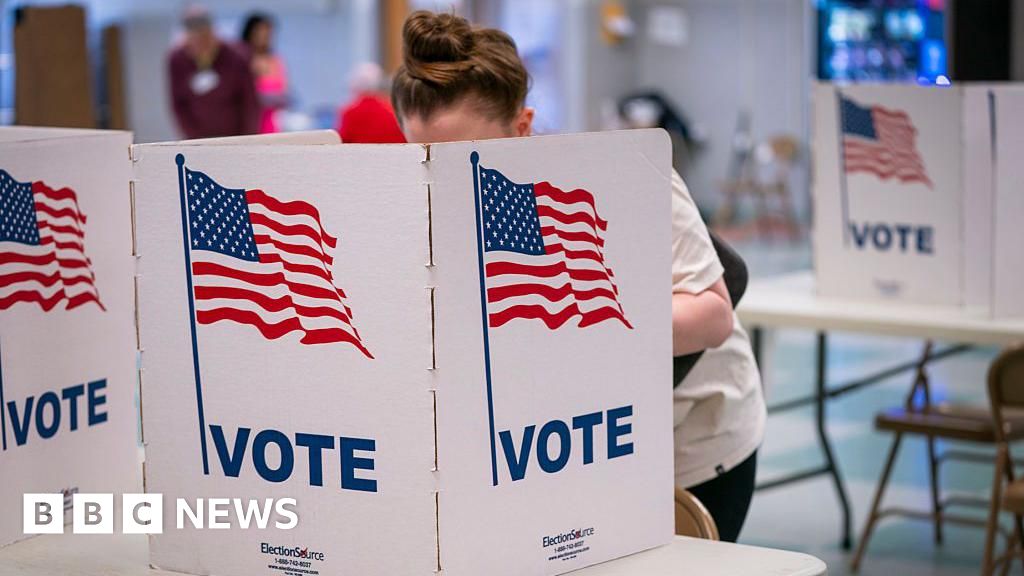
Virginia voters have approved a Democratic-backed congressional redistricting plan that could reshape the state’s representation in the U.S. House of Representatives ahead of the 2026 midterm elections. The ballot measure, passed with a narrow margin, authorizes the Democratic-controlled legislature to implement a new congressional map through the end of the decade, bypassing the state’s bipartisan redistricting commission.
With 97% of the vote reported, the “yes” vote held a 3-percentage-point lead, according to NBC News projections. The approval marks a significant development in the ongoing national redistricting battle, as Democrats seek to counter Republican-led map changes in states like Texas, Missouri, and North Carolina. Currently, Virginia is represented by six Democrats and five Republicans in the House; the new map is designed to leave only one solidly Republican district out of the state’s 11 congressional seats.
The referendum was framed as a constitutional amendment to allow the legislature to redraw district lines without commission approval. Democrats argue the change is necessary to respond to Republican gerrymandering efforts elsewhere, whereas critics contend it undermines bipartisan safeguards intended to prevent partisan mapmaking.
Virginia’s vote adds to a growing trend of states using ballot initiatives to influence congressional mapping. Earlier in 2026, California voters approved a similar Democratic-led redistricting effort, giving the party control over mapdrawing in two key states. These developments are part of a mid-decade redistricting arms race that began after the 2020 census, when former President Donald Trump urged Republican-led states to alter district lines to advantage GOP candidates.
The outcome in Virginia could shift the balance of power in the closely divided House. With Republicans currently holding a slim majority, gaining even a few seats in Virginia could prove pivotal in determining control of the chamber after the 2026 elections. Political analysts note that the state’s 11 congressional districts offer a relatively high-impact opportunity for redistricting gains compared to smaller delegations.
State officials confirmed that the new map will be drafted by the Democratic-led General Assembly and is expected to capture effect for the 2026 election cycle. The legislature has not yet released a draft of the proposed districts, but legislative leaders have indicated the goal is to create competitive districts that favor Democratic candidates in suburban and urban areas while concentrating Republican voters into fewer districts.
Redistricting experts warn that such partisan mapmaking, regardless of which party controls the process, can lead to legal challenges under the U.S. Constitution or the Voting Rights Act. However, Virginia’s current political landscape — with Democrats holding the governorship and both legislative chambers — reduces the immediate likelihood of a gubernatorial veto or bipartisan opposition blocking the map’s implementation.
The vote also highlights the increasing role of off-year and special elections in shaping national political dynamics. Though the referendum occurred outside the regular election cycle, its consequences will be felt during the 2026 midterms, when all 435 House seats are up for election. Both parties have invested heavily in state-level redistricting fights, recognizing that map boundaries can influence electoral outcomes for a decade.
Looking ahead, the next major checkpoint in the redistricting process will be the release of the draft congressional map by the Virginia General Assembly, expected later in 2026. Once published, the map will be subject to public review and potential legal scrutiny before final approval. For ongoing updates, readers can consult the Virginia Division of Legislative Services website, which provides access to bill texts, committee schedules, and official redistricting documents.
As the national debate over fair representation and partisan gerrymandering continues, Virginia’s decision underscores how state-level actions can have far-reaching implications for federal politics. The outcome may influence similar efforts in other states where Democrats seek to regain control of redistricting processes ahead of future census cycles.
What are your thoughts on the role of redistricting in shaping electoral outcomes? Share your perspective in the comments below and help foster a informed discussion on this critical issue.