The Quantum Realm’s Subtle Influence: How ‘Non-Existent’ Photons Impact Superconductivity
The world of quantum mechanics continues to challenge our intuitive understanding of reality. Recent research, building on decades of theoretical physics, demonstrates a surprising interaction: virtual photons – particles that don’t technically “exist” in the traditional sense – can demonstrably influence the behavior of superconductors. This isn’t about unlocking room-temperature superconductivity, a long-sought goal in materials science, but rather about using these materials as a unique testing ground for the fundamental principles governing the universe at its smallest scales. The findings, while potentially hindering superconductivity in specific experimental setups, offer a novel pathway to probe the intricacies of quantum field theory and could ultimately refine our understanding of these remarkable materials.
Superconductivity, the ability of certain materials to conduct electricity with zero resistance, has long fascinated scientists. While some superconductors require extremely low temperatures to function, the core principle remains the same: electrons flow without losing energy. Although, the underlying mechanisms driving superconductivity are still not fully understood, particularly in newer, more complex materials. This new research leverages the sensitivity of superconductors to explore the often-counterintuitive world of quantum fluctuations, specifically those involving virtual particles. The implications extend beyond materials science, touching upon our fundamental understanding of the vacuum of space itself.
Delving into the Realm of Virtual Photons
At the heart of this research lies the concept of quantum field theory. This framework posits that even seemingly empty space isn’t truly void, but rather filled with underlying fields that govern the interactions of quantum objects. Particles, like photons (the fundamental units of light), are considered excitations of these fields. While we can readily detect and measure real photons – those emitted by lasers, for example – quantum field theory also allows for the existence of virtual photons. These aren’t directly observable, but they act as force carriers, mediating interactions between particles. Think of them as temporary fluctuations in the quantum field, constantly popping into and out of existence.
The presence of a strong electromagnetic field can significantly increase the density of these virtual photons, even in the absence of any real photons. This represents where the new research takes an intriguing turn. Researchers have discovered a way to manipulate these virtual photons and, in doing so, affect the properties of a superconductor. Specifically, they’ve found that increasing the influence of these virtual photons can actually *degrade* the superconducting state, reducing its efficiency. This seemingly counterintuitive result provides a unique opportunity to study the interplay between quantum fluctuations and macroscopic quantum phenomena like superconductivity.
Boron Nitride: A Unique Platform for Quantum Exploration
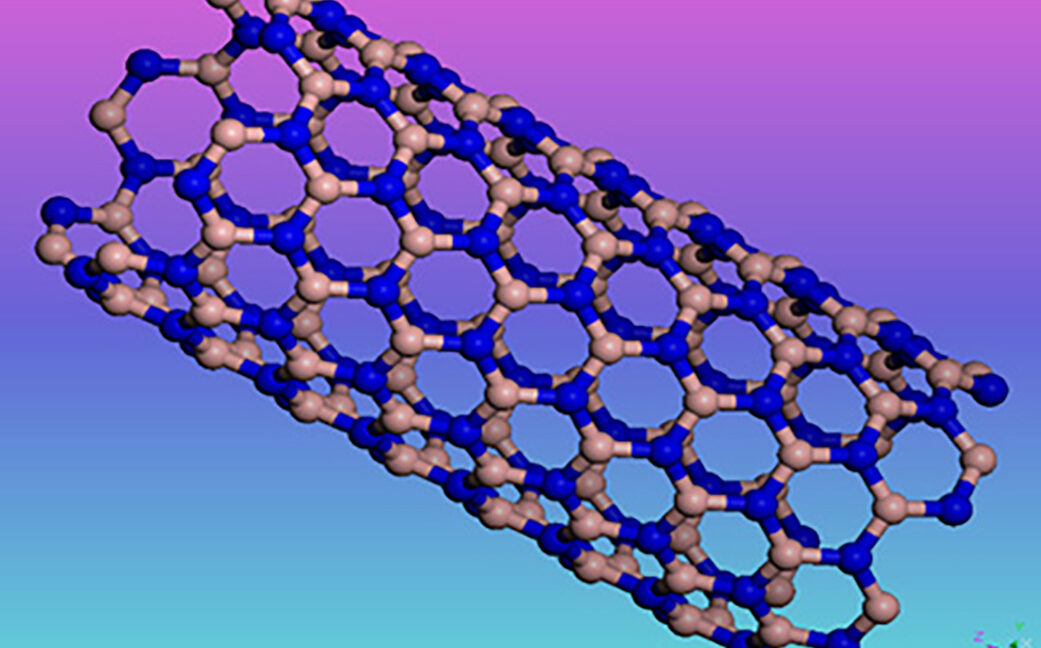
The experiments centered around boron nitride, a material structurally similar to graphene. Like graphene, boron nitride is composed of hexagonal rings of boron and nitrogen atoms arranged in sheets. These sheets, when stacked, create a bulk material with unique optical properties. Light interacting with boron nitride can behave in different ways depending on its orientation. When traveling perpendicular to the sheets, it’s absorbed or scattered. However, when traveling parallel to the sheets, it can propagate through the spaces between the atoms. This characteristic is crucial to the experiment, allowing researchers to control the interaction between light and the material.
The specific configuration of boron nitride used in the study allowed researchers to effectively “tune” the environment surrounding the superconductor, influencing the density of virtual photons. By manipulating the electromagnetic field within the material, they were able to observe the impact of these virtual photons on the superconducting properties. The researchers didn’t specify the type of superconductor used in their experiments, but the principle applies to a range of materials exhibiting this quantum phenomenon. The ability to control and study these interactions opens up new avenues for investigating the fundamental limits of superconductivity and exploring the potential for novel quantum technologies.
Implications for Quantum Computing and Beyond
While the immediate effect of these virtual photons is to hinder superconductivity in this specific experimental setup, the broader implications are far-reaching. Understanding how quantum fluctuations impact macroscopic quantum phenomena is crucial for advancing the field of quantum computing. Recent breakthroughs in materials science, including the potential discovery of a triplet superconductor at the Norwegian University of Science and Technology (NTNU), as reported on February 21, 2026, highlight the ongoing quest for materials that can transmit both electricity and electron spin with zero resistance. Such materials are considered a “holy grail” for quantum computing, promising dramatically improved stability and energy efficiency.
Professor Jacob Linder of NTNU’s Department of Physics, working at QuSpin, emphasized the significance of triplet superconductors, stating they are a key target for physicists in solid-state physics. The ability to control and manipulate quantum fluctuations, as demonstrated in the virtual photon research, could be instrumental in realizing the potential of these advanced materials. The findings contribute to a growing body of research exploring the interplay between superconductivity and other quantum phenomena, such as the behavior of anyons – exotic quasiparticles that could revolutionize quantum information processing.
The research also touches upon fundamental questions about the nature of the vacuum itself. If virtual particles can exert a measurable influence on macroscopic systems, it suggests that the vacuum is far from empty, but rather a dynamic and complex environment teeming with quantum activity. This understanding could have profound implications for our understanding of cosmology and the origins of the universe.
Looking Ahead: Refining Our Understanding of Quantum Systems
The research on virtual photons and superconductivity is still in its early stages. While the initial findings demonstrate a clear influence, the precise mechanisms underlying this interaction require further investigation. Future research will likely focus on exploring different materials, manipulating the electromagnetic environment with greater precision, and developing theoretical models that can accurately predict the behavior of these complex quantum systems. The ultimate goal is to harness the power of quantum fluctuations to create new materials and technologies with unprecedented capabilities.
The next steps in this research will likely involve refining the experimental setup to minimize the detrimental effects of virtual photons on superconductivity. Researchers may also explore ways to utilize these fluctuations to enhance other quantum phenomena, potentially leading to breakthroughs in quantum sensing and communication. Continued investigation into the fundamental properties of virtual particles and their interactions with matter promises to unlock new insights into the quantum realm and pave the way for a new era of technological innovation.
Key Takeaways:
- Virtual photons, though not directly observable, can influence the behavior of superconductors.
- The research utilizes boron nitride as a platform to manipulate the electromagnetic environment and study these interactions.
- Understanding these quantum fluctuations is crucial for advancing quantum computing and materials science.
- The findings contribute to a deeper understanding of the quantum vacuum and its role in fundamental physics.
This research represents a significant step forward in our understanding of the intricate relationship between quantum mechanics and macroscopic phenomena. As scientists continue to probe the mysteries of the quantum world, we can expect further surprises and breakthroughs that will reshape our understanding of the universe and drive technological innovation. Share your thoughts on this fascinating research in the comments below!
Related reading