
For too long, pulmonary care has been defined by a frustrating paradox: we possess the imaging technology to see critical pathologies with stunning clarity, yet the systems required to act on those findings remain dangerously fragmented. Patients often navigate a disjointed path between emergency departments, radiology suites, and specialist clinics, creating what clinicians call a “coordination gap” where life-saving interventions are delayed not by a lack of medical knowledge, but by a failure of communication.
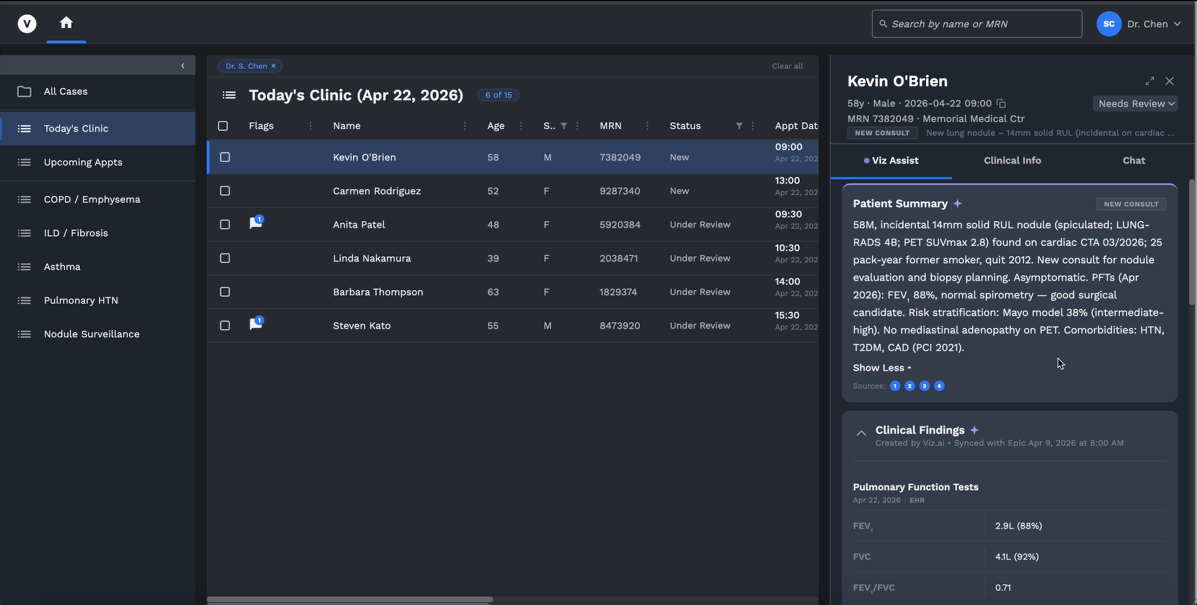
Addressing this systemic fragility, Viz.ai has launched the Viz Pulmonary Suite, an integrated AI-powered platform designed to synchronize the management of both acute and chronic pulmonary conditions. By embedding AI-driven workflows directly into existing Electronic Health Record (EHR) systems, the suite aims to eliminate the administrative friction that frequently leads to missed diagnoses and preventable readmissions.
As a physician and journalist, I have seen how the “silent” nature of pulmonary issues—such as incidental pulmonary embolisms or slowly growing lung nodules—can lead to catastrophic outcomes when follow-up fails. The transition toward a “clinician-in-the-loop” AI model represents a significant shift from AI as a mere diagnostic tool to AI as a care coordination engine, ensuring that a critical finding on a scan actually results in a clinical action.
The Viz Pulmonary Suite specifically targets three of the most challenging areas of respiratory medicine: Pulmonary Embolism (PE), lung nodule management, and Chronic Obstructive Pulmonary Disease (COPD). By unifying these under one intelligence layer, the platform seeks to close the “recognition gap” that currently plagues pulmonary diagnostics.
Closing the Gap in Acute Pulmonary Embolism Care
Pulmonary embolism—a blockage in one of the pulmonary arteries in the lungs—is a high-stakes medical emergency. When a patient presents with high-risk PE, the window for intervention is narrow. The danger is compounded by “incidental” findings, where a PE is discovered on a scan performed for an entirely different reason. Statistics indicate that up to 79% of incidental pulmonary emboli are missed on initial imaging, and of those missed cases, approximately 67% are clinically significant, requiring immediate attention.
The Viz PE component of the suite is designed to automate the detection of suspected pulmonary embolism and right heart strain, alerting the appropriate specialists in real-time. The clinical impact of this acceleration is profound. In a single-center study, the implementation of the integrated Viz PE tool reduced the time to treatment from 1.75 days to 0.56 days, while simultaneously lowering in-hospital mortality among high-risk patients Viz.ai Pulmonary Embolism Solutions.
This reduction in time-to-treatment is not merely a metric of efficiency; it is a metric of survival. By bypassing the traditional manual notification chain—where a radiologist must find a phone number, call a physician, and wait for a callback—the AI ensures that the “moment of care” happens the instant the image is processed.
The “Recognition Gap” in Lung Nodule Management
While PE is an acute crisis, lung nodules represent a chronic, lingering risk. The challenge with lung nodules is longitudinal tracking. A small nodule may be benign, but its growth over six months or a year is what determines the diagnosis of malignancy. However, the current healthcare infrastructure is poorly equipped for this long-term vigilance.
Data reveals a staggering “recognition gap” in this area: up to 71% of clinically significant lung nodules go without the appropriate follow-up. This often occurs because the nodule is noted in a radiology report, but the primary care physician or the patient is never formally notified to schedule a follow-up scan according to established guidelines, such as those set by the Fleischner Society.
The Viz Pulmonary Suite introduces specialized tools to ensure these patients do not fall through the cracks. By surfacing these findings and automating the coordination of follow-up appointments, the platform transforms a static radiology report into an active clinical task. This ensures that the 71% of patients currently missing critical follow-ups are instead moved into a structured surveillance pathway.
Reducing the “Revolving Door” of COPD Readmissions
Chronic Obstructive Pulmonary Disease (COPD) presents a different systemic challenge: the cycle of acute exacerbation and readmission. For many patients, a hospital visit for a COPD flare-up is not the end of the crisis but the start of a precarious recovery period. Currently, nearly half of COPD patients hospitalized for acute exacerbations are readmitted within 30 days.
These readmissions are often the result of poor transition care—patients leaving the hospital without a clear plan for medication adjustment, pulmonary rehabilitation, or specialist follow-up. The Viz Pulmonary Suite addresses this by providing context-aware patient summaries and automated guideline surfacing. This allows clinical teams to identify high-risk patients earlier and implement intervention strategies before the patient reaches the point of readmission.
Dr. Tim Showalter, Chief Medical Officer of Viz.ai, has noted that the breakdown in pulmonary care typically occurs not because of a lack of available treatments, but because patients are lost between “moments of care.” By bridging these gaps, the suite aims to stabilize the patient’s trajectory from the acute hospital setting back into the community.
Solving Health System Leakage Through Integration
Beyond the direct clinical outcomes, the Viz Pulmonary Suite addresses a critical operational failure known as “health system leakage.” Leakage occurs when a patient is referred to a specialist or a follow-up service, but that referral is never completed, or the patient seeks care outside the network because the internal coordination failed. In many networks, between 55% and 65% of in-network referrals are lost to this leakage.

This is not just a financial loss for the hospital; it is a care failure for the patient. When a referral for a lung nodule follow-up is “leaked,” the patient effectively disappears from the system, increasing the likelihood that a treatable cancer will progress to an advanced stage.
The suite combats this by embedding workflows directly into the Electronic Health Record (EHR). Instead of relying on a separate portal or a manual referral slip, the AI-enabled workflow keeps the patient within the care continuum. Dr. Lakshman Swamy, Chief Pulmonologist at Monogram Health, emphasized that these connected workflows allow clinical teams to identify potential patients earlier and act more efficiently across the entire care continuum.
The “Clinician-in-the-Loop” Model: Why It Matters
A recurring concern with medical AI is the fear of “black box” medicine, where an algorithm makes a decision without human oversight. Viz.ai employs a “clinician-in-the-loop” model, which is a critical distinction for patient safety and professional accountability.
In this model, the AI does not replace the radiologist or the pulmonologist; rather, it acts as a high-fidelity triage system. The AI identifies the abnormality and surfaces the data, but the final diagnostic and treatment decisions remain exclusively with the physician. This approach reduces the administrative burden—the “scut work” of hunting for images and paging doctors—while preserving the essential human judgment required for complex pulmonary cases.
Key Takeaways for Healthcare Providers and Patients
- For Clinicians: The suite reduces the manual burden of tracking incidental findings and coordinates follow-up for lung nodules and COPD, reducing the risk of oversight.
- For Hospital Administrators: The platform targets “health system leakage,” potentially recovering a significant portion of the 55%–65% of lost referrals.
- For Patients: AI-driven alerts can significantly reduce the time to treatment for pulmonary embolisms and ensure that critical lung nodules are monitored longitudinally.
- For the Healthcare System: By reducing 30-day COPD readmissions, the suite helps lower the overall cost of care and improves patient quality of life.
Looking Ahead: The Future of AI-Driven Respiratory Care
The launch of the Viz Pulmonary Suite is a step toward a more proactive, rather than reactive, model of respiratory medicine. The integration of AI into the EHR suggests a future where “incidental findings” are no longer incidental—they are triggers for immediate, coordinated action.
As these tools are adopted across more health systems, the next critical checkpoint will be the accumulation of multi-center data to validate these early single-center successes. The medical community will be looking for evidence that the reduction in time-to-treatment for PE and the decrease in COPD readmissions can be replicated across diverse patient populations and different EHR environments.
For those interested in the implementation of AI in pulmonary workflows, official updates and clinical validation data are typically released through the company’s clinical portal and peer-reviewed medical journals.
Do you believe AI-driven coordination will solve the “recognition gap” in pulmonary care, or do you see further systemic hurdles? Share your thoughts in the comments below.