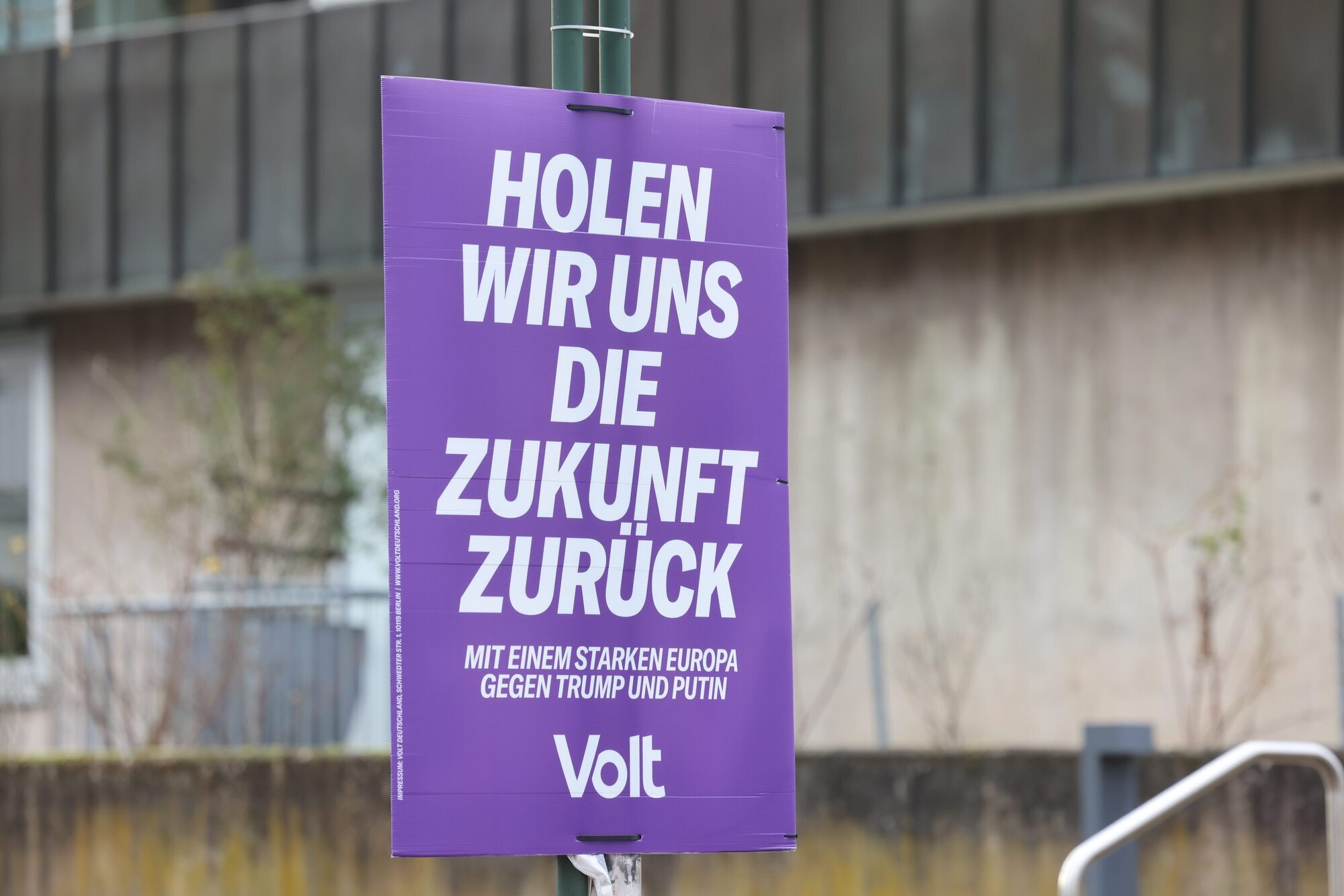
Waiblingen, Germany – The upcoming Landtagswahl (state election) in Baden-Württemberg on March 8, 2026, is sparking debate not just about policy platforms, but also about the very structure of the electoral system. While many voters are weighing the merits of established parties, a proposal from the relatively new political force, Volt Deutschland, to introduce “Ersatzstimmen” – or substitute votes – has ignited a discussion about representation and voter choice. This debate highlights a broader tension between supporting smaller parties with innovative ideas and maintaining the stability of established political structures.
The core of the controversy lies in Volt’s suggestion to modify the German electoral law to allow voters to designate a secondary choice in case their preferred candidate fails to secure a seat. Currently, Germany utilizes a mixed-member proportional representation system, but the proposed change would introduce an element of ranked-choice voting, potentially giving smaller parties a greater chance of gaining representation. This proposal stems from Volt’s perceived “success” in the Waiblingen constituency and elsewhere, where they garnered attention but ultimately fell short of winning direct mandates.
Understanding the Waiblingen Constituency and the 2026 Election
The Landtagswahlkreis Waiblingen, or Waiblingen electoral district, is one of three constituencies within the Rems-Murr-Kreis in Baden-Württemberg. According to Wikipedia, the district encompasses the communities of Fellbach, Korb, Leutenbach, Schwaikheim, Waiblingen, and Winnenden. With 106,277 registered voters as of the March 8, 2026 election, Waiblingen is a significant political area within the state. The 2026 election marks a change in the voting process; for the first time, voters will cast both a first vote (Erststimme) for a direct candidate and a second vote (Zweitstimme) for a party list, a shift from the previous system allowing only one vote per voter.
Recent polling data from the Waiblingen constituency, as reported by Wikipedia, indicates a shifting political landscape. While the Christian Democratic Union (CDU) currently holds the seat with Siegfried Lorek securing 35.0% of the vote in 2021, the Green Party has gained considerable ground, achieving 32.5% in the same election. The Alternative for Germany (AfD) holds 16.4%, followed by the Free Democratic Party (FDP) at 5.5%, the Social Democratic Party (SPD) also at 5.5%, and smaller parties like the Die Linke and others accounting for the remaining percentage of votes. The latest projections for the 2026 election show the Greens gaining 2.6 percentage points, the CDU increasing by 5.1 percentage points, the AfD rising by 8.2 percentage points, while the SPD is projected to lose 5.4 percentage points, the FDP losing 7.8 percentage points, and other parties experiencing smaller shifts.
Volt Deutschland and the Proposal for “Ersatzstimmen”
Volt Deutschland, a pan-European political movement, advocates for a more integrated and sustainable Europe. Their website details their candidates for the 2026 Landtagswahl, emphasizing a focus on issues like sustainability, digitalization, and social justice. The party’s proposal for “Ersatzstimmen” is presented as a means to address perceived shortcomings in the current electoral system, arguing that it can lead to more proportional representation and reduce wasted votes.
The concept of “Ersatzstimmen” is not entirely novel. Similar systems, such as preferential voting or ranked-choice voting, are used in various countries around the world, including Australia, and Ireland. Proponents argue that these systems allow voters to express a more nuanced preference and can lead to outcomes that better reflect the overall will of the electorate. However, critics raise concerns about the potential for increased complexity and the possibility of strategic voting, where voters may not rank candidates according to their true preferences but rather to maximize the chances of a particular outcome.
The Debate Over Electoral Reform
The debate surrounding Volt’s proposal touches upon fundamental questions about the purpose of elections and the principles of representation. Those who favor the current system argue that it provides stability and clarity, allowing voters to choose directly between candidates and parties. They contend that introducing “Ersatzstimmen” could create confusion and undermine the accountability of elected officials. Some argue that smaller parties should focus on building broader support rather than seeking to manipulate the electoral system to their advantage.
Conversely, supporters of electoral reform argue that the current system often leads to disproportionate outcomes, where parties with a significant share of the vote are underrepresented in the legislature. They believe that “Ersatzstimmen” could help to address this issue, giving smaller parties a fairer chance of gaining representation and ensuring that a wider range of voices are heard. This argument resonates particularly with voters who feel that their preferred candidates or parties are consistently overlooked by the established political order.
The Broader Context of German Electoral Politics
Germany’s electoral system has undergone several changes throughout its history. The current mixed-member proportional representation system was introduced in 1949 and has been modified several times since then. The system is designed to balance the principles of direct representation and proportionality, ensuring that both local constituencies and the overall distribution of votes are taken into account. The recent change to allow for both a first and second vote in the 2026 election is a significant adjustment, aiming to provide voters with more agency and clarity in their choices.
The rise of smaller parties like Volt Deutschland reflects a growing dissatisfaction with the traditional political establishment in Germany. Voters are increasingly drawn to parties that offer alternative perspectives and challenge the status quo. However, these smaller parties often face significant hurdles in gaining representation, due to the electoral system and the dominance of the larger parties. The debate over “Ersatzstimmen” is therefore part of a broader conversation about the future of German democracy and the need to ensure that all voices are heard.
Challenges for Smaller Parties in Germany
Smaller parties in Germany face a number of challenges, including limited financial resources, lack of media coverage, and difficulty attracting experienced candidates. They also struggle to overcome the perception that they are not viable alternatives to the established parties. The 5% threshold for representation in the Bundestag (federal parliament) and Landtage (state parliaments) further exacerbates these challenges, requiring parties to secure a significant share of the vote to gain any representation at all.
Volt Deutschland, despite its innovative ideas and growing support, faces these same challenges. The party is working to build a strong organizational base and raise its profile among voters. Its proposal for “Ersatzstimmen” is part of a broader strategy to overcome the obstacles facing smaller parties and create a more level playing field in German politics.
Looking Ahead: The Future of Electoral Reform in Baden-Württemberg
The debate over “Ersatzstimmen” is likely to continue in the lead-up to the Landtagswahl in Baden-Württemberg. Whether Volt Deutschland’s proposal will gain traction remains to be seen. However, the discussion itself highlights the need for ongoing dialogue about the effectiveness and fairness of the electoral system. The outcome of the election could have significant implications for the future of electoral reform in the state and potentially across Germany.
As voters prepare to head to the polls on March 8, 2026, they will be faced with a choice not only between candidates and parties but also between different visions for the future of German democracy. The question of whether to embrace innovative electoral reforms or maintain the status quo will be a key factor in shaping the political landscape of Baden-Württemberg for years to come. The next step will be to observe the election results and analyze the impact of the new dual-voting system on voter turnout and party representation.
What are your thoughts on electoral reform? Share your opinions in the comments below.