
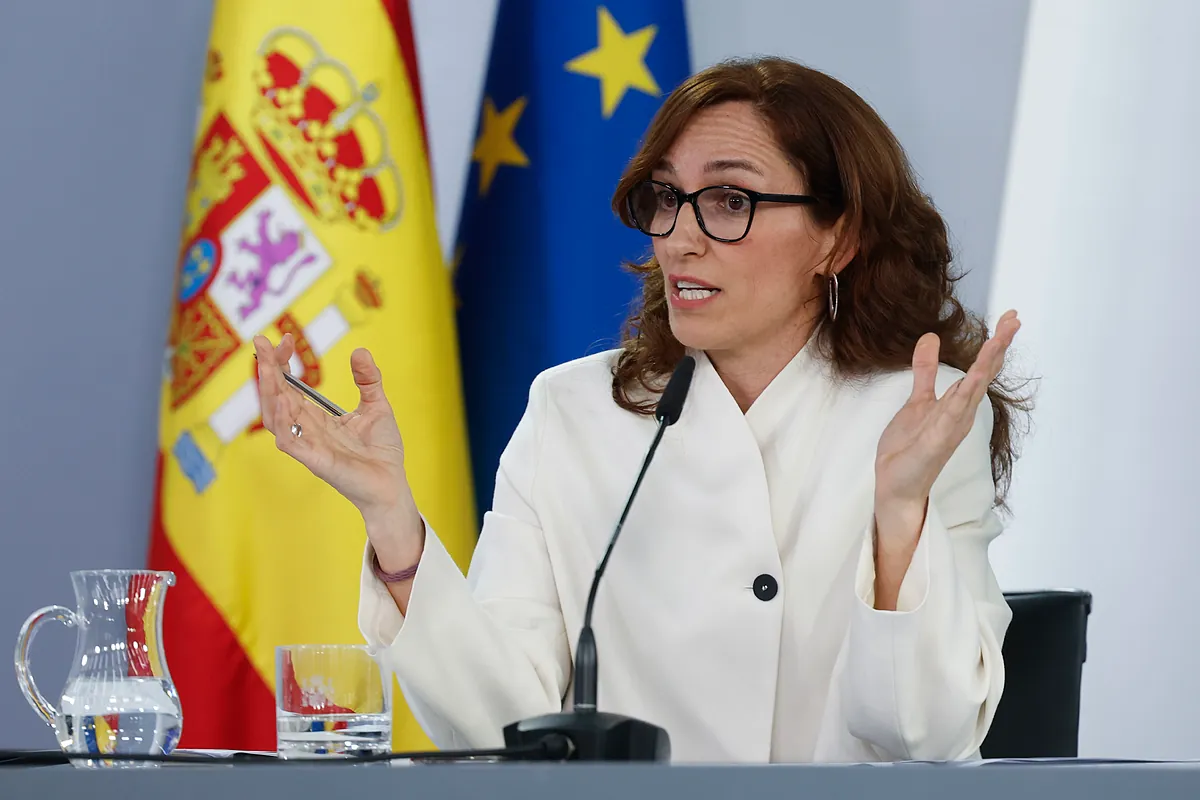
In a move that underscores the enduring tension between individual liberties and collective biosafety, Spain’s Minister of Health, Mónica García, has signaled that while the government prefers voluntary compliance, it will not hesitate to employ legal force to ensure passenger quarantines. The Minister’s recent statements suggest a strategy of “common sense” first, but one backed by the full weight of Spanish administrative and health law.
The core of the current health strategy involves requesting the consent of passengers returning from high-risk areas to undergo isolation or quarantine. However, García has explicitly warned that the Ministry of Health possesses the “necessary instruments” to execute these measures even in the absence of individual agreement. This approach aims to prevent the introduction and spread of communicable diseases without resorting to immediate coercion, though the threat of mandatory enforcement remains a primary deterrent.
This development comes as Spain continues to refine its health surveillance protocols for international arrivals. By appealing to the civic responsibility of travelers, the government hopes to maintain a high rate of compliance while avoiding the legal and logistical complexities of forced isolation. Yet, the clarity with which the Minister has mentioned the state’s power to override consent indicates a low tolerance for non-compliance in the face of significant public health threats.
For global travelers and Spanish citizens abroad, this shift highlights a critical intersection of health policy and legal mandate. The “voluntary” nature of these requests is not a suggestion of optionality, but rather a preferred administrative path designed to streamline public health responses before legal mechanisms are triggered.
The Balance of Consent and Coercion in Public Health
Minister Mónica García’s insistence on appealing to “common sense” reflects a psychological approach to public health management. By framing isolation as a voluntary act of social responsibility, the Spanish Ministry of Health seeks to minimize public friction and legal challenges that typically accompany mandatory lockdowns or forced quarantines.
However, the “voluntary” label is nuanced. In the context of Spanish health administration, requesting consent is often the first step in a tiered enforcement process. If a passenger refuses to cooperate with isolation protocols despite being identified as a risk, the state transitions from a request-based model to a mandate-based model. The “necessary instruments” García referenced are not new tools, but rather the existing legal framework that allows the state to prioritize the health of the population over the movement of the individual.
This strategy is designed to create a “soft” entry into quarantine. Passengers are informed of the risk, asked to comply for the greater fine, and warned that the alternative is a legal order. This approach reduces the immediate need for police intervention at airports and ports of entry, provided that travelers recognize the inevitability of the measure.
The Legal Framework: Spain’s ‘Necessary Instruments’
The legal authority to impose mandatory health measures in Spain is primarily rooted in the Ley Orgánica 3/1986 de Medidas Especiales en Materia de Salud Pública. This law provides the government with the power to take “special measures” to protect public health, which can include the forced isolation of individuals who are suspected of carrying a communicable disease that poses a threat to the community.
Under this legislation, health authorities can order the isolation of a person without their consent if it is determined that their movement poses an immediate risk to the public. These measures are typically temporary and subject to judicial review, but they can be implemented rapidly by health officials in coordination with security forces. The law essentially grants the state “police power” in health emergencies, allowing it to restrict movement to prevent an epidemic.

When Minister García mentions the “instruments necessary” to execute quarantines, she is referring to this specific statutory power. The process generally follows a strict sequence:
- Identification: The passenger is identified as coming from a high-risk zone or showing symptoms.
- Request: The passenger is asked to voluntarily isolate and provide consent for monitoring.
- Mandate: If consent is refused, a formal administrative order for isolation is issued based on the 1986 Organic Law.
- Enforcement: Security forces (such as the Guardia Civil or Policía Nacional) ensure the individual remains in the designated isolation area.
The use of these powers is not unlimited; they must be proportionate to the risk and necessary to achieve the goal of protecting public health. However, the threshold for “necessity” is often interpreted broadly during active outbreaks of highly contagious pathogens.
International Context and Health Surveillance
Spain’s approach aligns with broader international health regulations, including the International Health Regulations (IHR 2005) established by the World Health Organization. The IHR provides a framework for countries to implement health measures at borders to prevent the international spread of disease while minimizing interference with international traffic and trade.

Many European Union member states have adopted similar “hybrid” models of quarantine. The trend has shifted away from blanket lockdowns toward targeted, risk-based surveillance. By focusing on passengers from specific regions or those with specific clinical markers, Spain can apply its “instruments of coercion” only where the risk is highest, rather than imposing burdensome restrictions on all travelers.
This targeted approach is essential for maintaining the functionality of international travel hubs. If every passenger were subject to mandatory, non-consensual quarantine, the economic and logistical impact on Spain’s tourism and trade sectors would be catastrophic. The appeal to “common sense” is as much an economic strategy as it is a health one.
Impact on Travelers: What to Expect
For those traveling to or through Spain, the current policy means that health screenings at ports of entry are likely to be more rigorous. Passengers may be asked to fill out health declarations or undergo temperature checks. If identified as a potential risk, the interaction will likely begin as a request for cooperation.
Key considerations for affected passengers include:
- The Nature of the Request: A request for voluntary isolation is a formal health directive. While it begins with a request for consent, refusal does not necessarily end the process; it merely changes the method of implementation from voluntary to mandatory.
- Rights of the Individual: Under Spanish law, individuals subject to mandatory health measures still retain the right to legal counsel and the right to challenge the order in court. However, the challenge typically happens after the isolation has begun to ensure the immediate risk is mitigated.
- Logistical Support: In many cases of voluntary isolation, the state provides guidance on where to isolate and how to access health services, though the cost of accommodation often remains the responsibility of the traveler unless otherwise specified by current emergency decrees.
The primary goal of the Ministry of Health is to ensure that no “blind spots” exist in the surveillance net. By making it clear that mandatory quarantine is an option, the government effectively nudges passengers toward the voluntary path, which is faster, less adversarial, and more efficient for the healthcare system.
Why ‘Common Sense’ Matters in Public Health
The phrase “apelamos al sentido común” (we appeal to common sense) is a strategic choice of words. In public health, “common sense” refers to the understanding that the risk to the collective outweighs the temporary inconvenience of the individual. When a population accepts this premise, the state can manage outbreaks with far fewer resources and less social unrest.

However, the reliance on common sense can be fragile. In an era of increasing skepticism toward institutional mandates, the Ministry of Health recognizes that some individuals may view voluntary requests as optional or unnecessary. What we have is precisely why the mention of “necessary instruments” is included in the discourse. It serves as a reminder that the state’s duty to protect the population is a non-negotiable legal obligation that supersedes individual preference during a health crisis.
This dual-track approach—combining a soft appeal with a hard legal warning—is designed to maximize the “capture rate” of potentially infected individuals. If 90% of passengers comply voluntarily, the state can focus its limited enforcement resources on the remaining 10% who refuse to cooperate.
Summary of the Current Policy Stance
| Feature | Voluntary Path | Mandatory Path |
|---|---|---|
| Trigger | Passenger consent to isolation | Refusal of consent / High risk |
| Legal Basis | Administrative agreement | Ley Orgánica 3/1986 |
| Enforcement | Self-reported / Health monitoring | Security force supervision |
| Experience | Cooperative and streamlined | Coercive and legalistic |
As Spain navigates the complexities of modern global health threats, the Ministry of Health’s strategy reflects a pragmatic realization: while the state has the power to compel, it is always more effective to convince. By keeping the “instruments of coercion” in the background but clearly visible, Mónica García is attempting to secure public safety without sacrificing the spirit of civic cooperation.
The next confirmed checkpoint for these policies will be the upcoming quarterly review of health surveillance protocols by the Spanish Ministry of Health, where updated lists of high-risk zones and specific passenger requirements are expected to be released. Travelers are encouraged to monitor official government advisories before departure to ensure compliance with current health mandates.
Do you believe voluntary health measures are sufficient to prevent pandemics, or is a mandatory approach necessary from the start? Share your thoughts in the comments below or share this article to keep other travelers informed.