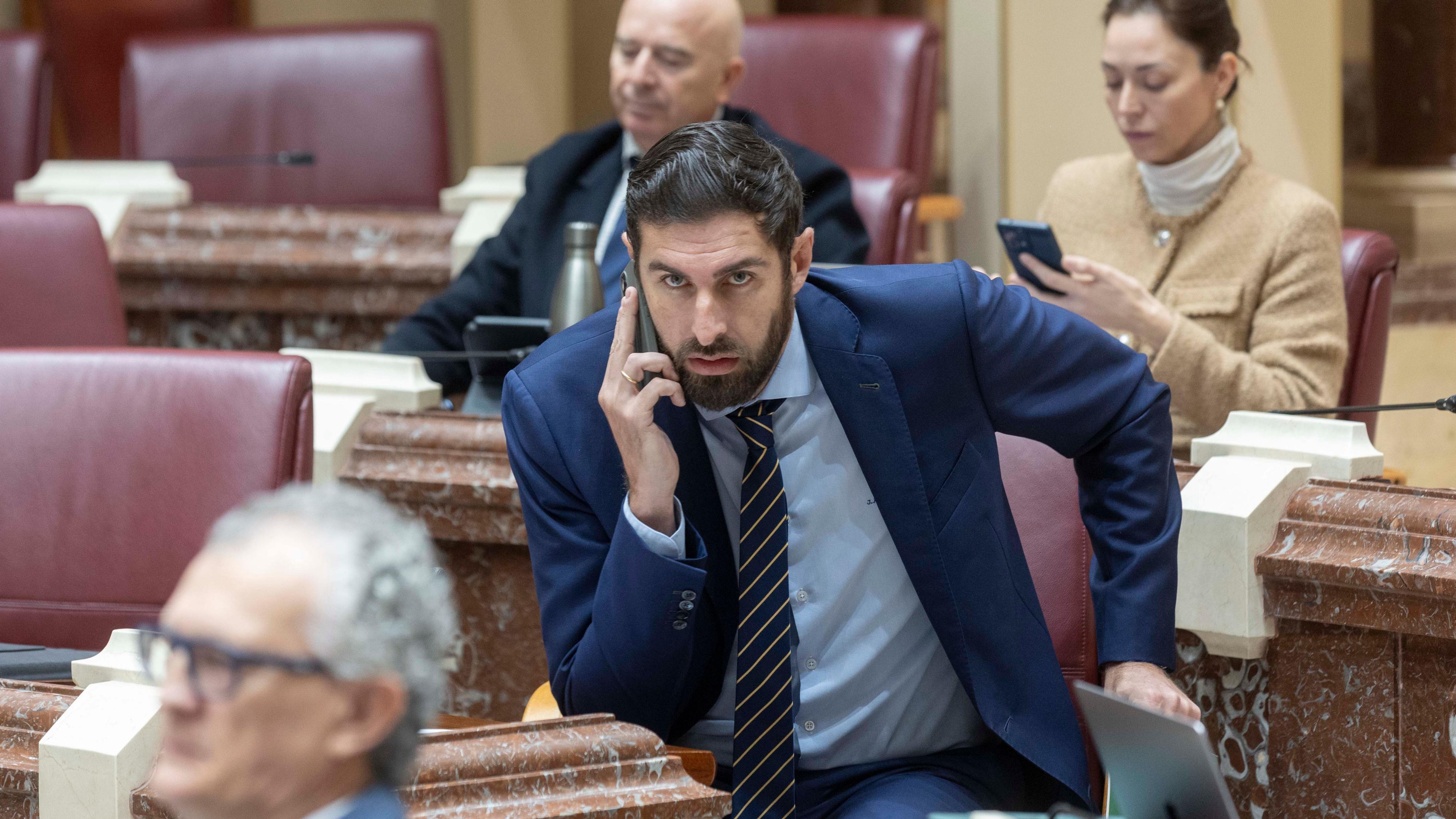
Murcia, Spain – A political storm is brewing within the Spanish far-right party Vox, centered around allegations of influence peddling and a power struggle in the Murcia region. José Ángel Antelo, formerly the provincial president of Vox in Murcia and a member of the regional assembly, has been ousted from his leadership positions following accusations that he attempted to leverage his influence to benefit his wife’s business interests. The unfolding situation has exposed deep divisions within the party and raised questions about transparency and ethical conduct. This former basketball player turned politician is now at the center of a controversy that threatens to destabilize Vox’s presence in a key regional stronghold.
The allegations, first reported by Spanish media outlets, center on claims that Antelo intervened with the Cartagena City Council to facilitate the urbanization of land owned by AISU Home S.L., a company in which his wife and Susana Peláez, a Vox spokesperson in Los Alcázares, hold a 50% stake each. The land in question is reportedly susceptible to flooding and lacked proper legal authorization for development. Vox’s national leadership acted swiftly, forcing Antelo’s resignation as provincial president last week, citing a breach of party statutes and a conflict of interest. The core of the dispute revolves around accusations that Antelo misused his position to secure a potentially lucrative deal for his family, a claim he vehemently denies.
Internal Strife and Accusations of Orchestration
The situation escalated rapidly after Antelo’s removal. He was subsequently expelled from the Vox parliamentary group in Murcia, stripped of his spokesperson role, and demanded to relinquish his seat in the regional assembly. Antelo responded by alleging that his digital signature had been fraudulently used to remove him from his position, a claim that Vox has dismissed as false. This accusation adds another layer of complexity to the already fraught situation, suggesting a deliberate effort to discredit and remove him from power. The timing of these events coincides with the mass resignation of the entire five-member Provincial Executive Committee (CEP) of Vox in Murcia, a move reportedly intended to allow the national leadership to intervene and resolve a “grave crisis of internal cohesion.”
Critics within the party suggest that the entire operation was orchestrated by Santiago Abascal, the national leader of Vox, as part of a broader effort to consolidate control and eliminate dissenting voices. While these claims remain unconfirmed, they highlight the internal power dynamics at play within the party. The crisis in Murcia underscores the challenges Vox faces in maintaining unity and discipline as it seeks to expand its influence across Spain. The party currently governs in coalition with the PP (People’s Party) in seven municipalities within the Murcia region, and this internal turmoil could potentially jeopardize those alliances.
Antelo’s Response and Legal Threats
José Ángel Antelo has strongly refuted the allegations against him, asserting that his wife is an independent businesswoman and that he had no involvement in her business dealings. In a statement posted on social media, he stated, “Evidently, I have not intervened nor do I have the capacity to intervene to favor her possible businesses. I require the national leadership of VOX to rectify or they will have to accredit their accusations before the courts.” He has demanded that Vox provide evidence to support their claims or face legal action. This defiant stance suggests that Antelo is prepared to fight to clear his name and defend his reputation. The legal ramifications of this dispute could be significant, potentially leading to a protracted and public battle between Antelo and the national leadership of Vox.
The accusations against Antelo approach at a sensitive time for Vox, which has been steadily gaining ground in Spanish politics in recent years. The party has capitalized on growing discontent with traditional political parties and has positioned itself as a staunch defender of Spanish national identity and conservative values. While, scandals involving party officials could damage Vox’s credibility and undermine its efforts to appeal to a broader electorate. The party’s response to this crisis will be closely watched by both its supporters and its opponents.
A History of Political and Athletic Achievement
Before entering politics, José Ángel Antelo enjoyed a professional basketball career, playing for several Spanish clubs including UCAM Murcia. According to his Wikipedia profile, he was born on May 7, 1987, in Noia, Spain, and represented Spain at the youth level, winning a gold medal at the 2004 European Under-18 Championship. He transitioned to politics in 2019, joining Vox and quickly rising through the ranks to become the provincial president of the party in Murcia. His background as a professional athlete and his relatively quick ascent in the political sphere have made him a prominent figure in the region.
Vox’s Response and Future Steps
The national leadership of Vox has maintained a firm stance on the matter, asserting that it acted decisively to address the alleged misconduct. The party has accused Antelo of interfering in municipal politics, a violation of Vox’s internal regulations. According to reports from Cadena SER, Vox officials stated that Antelo was “openly confrontational with Murcia, Cartagena and Lorca,” indicating a broader pattern of disruptive behavior. The party plans to appoint a management team to oversee the regional organization in Murcia until a recent president is elected. This interim leadership will be tasked with restoring stability and addressing the internal divisions that have plagued the party in recent weeks.
The appointment of a new leader in Murcia is expected to be a crucial step in resolving the crisis. However, the underlying issues of internal power struggles and ideological differences may persist. The situation highlights the challenges faced by Vox as it seeks to consolidate its position as a major political force in Spain. The party’s ability to navigate these challenges will be critical to its long-term success. The case also raises broader questions about transparency and accountability in Spanish politics, and the need for robust mechanisms to prevent conflicts of interest.
As of today, March 5, 2026, the Mesa of the Regional Assembly of Murcia has not yet convened to formally address Antelo’s expulsion from the parliamentary group. RTVE reports that this meeting is crucial for finalizing the process of removing him from his position as a deputy. The national leadership of Vox is scheduled to meet on March 20th to select a temporary governing body for the party’s regional organization in Murcia. This upcoming meeting will be a key moment in determining the future direction of Vox in the region and will likely shape the political landscape of Murcia in the months to come.
The unfolding events in Murcia represent a significant test for Vox and its leadership. The party’s response to these allegations will be closely scrutinized by the public and will have implications for its credibility and future prospects. The situation underscores the importance of ethical conduct and transparency in politics, and the need for political parties to hold their members accountable for their actions. The coming weeks will be critical in determining the long-term impact of this scandal on Vox and the political landscape of Murcia.
What are your thoughts on the allegations against José Ángel Antelo? Share your opinions and insights in the comments below. Don’t forget to share this article with your network to keep the conversation going.
Related reading