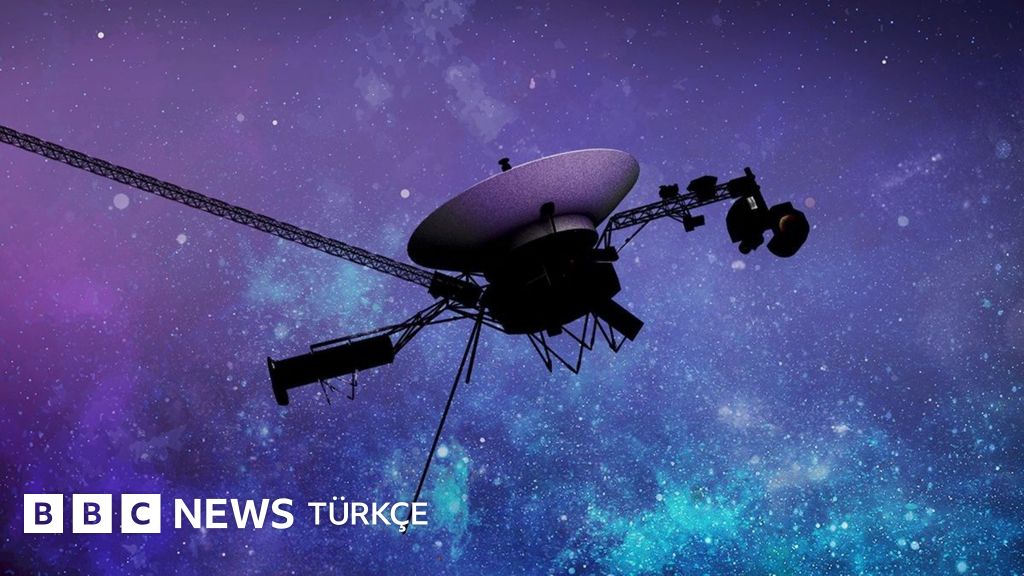
NASA’s Voyager 1 and Voyager 2 spacecraft remain the most distant human-made objects in existence, fundamentally reshaping scientific understanding of the outer solar system and interstellar space. Launched in 1977, the twin probes have traveled for over four decades, providing the first close-up images of Jupiter, Saturn, Uranus, and Neptune, and currently continue to transmit data from beyond the heliopause. According to NASA’s Jet Propulsion Laboratory (JPL), both spacecraft are operational, despite being billions of miles from Earth.
The mission was originally designed for a primary four-year lifespan to explore the Jovian and Saturnian systems. However, the endurance of the Voyager probes has allowed them to conduct an unprecedented survey of the outer planets. By utilizing a rare alignment of the planets that occurs only once every 176 years, engineers were able to use gravity-assist maneuvers to propel the spacecraft from one planet to the next. This trajectory confirmed the existence of active volcanism on Jupiter’s moon Io and revealed the complex structure of Saturn’s rings, as documented by NASA’s historical archives.
Scientific Discoveries in the Outer Solar System
The primary contribution of the Voyager mission was the transformation of the outer planets from distant, obscure points of light into geologically and atmospherically complex worlds. Voyager 1 provided the first evidence of active volcanoes on Io, a discovery that fundamentally altered planetary science by proving that tidal heating, rather than just solar radiation, could drive geological activity on moons. Voyager 2 remains the only spacecraft to have visited Uranus and Neptune, capturing data on their magnetic fields and atmospheric compositions that have not been superseded by subsequent missions.

These discoveries were facilitated by the sophisticated instrumentation onboard, including imaging science subsystems and infrared spectrometers. The data transmitted back to Earth provided a baseline for understanding the formation of the solar system. As of 2024, the probes continue to measure cosmic rays and magnetic field fluctuations, offering scientists insights into the nature of the interstellar medium—the region of space between stars. The NASA Science Mission Directorate reports that Voyager 1 passed into interstellar space in August 2012, followed by Voyager 2 in November 2018.
Engineering Challenges and Continued Operations
Operating hardware launched in the late 1970s requires constant adaptation to dwindling power supplies and aging components. The spacecraft are powered by Radioisotope Thermoelectric Generators (RTGs), which convert the heat from the decay of plutonium-238 into electricity. As the radioactive material decays, the available power decreases, forcing mission controllers at the Deep Space Network to systematically turn off non-essential instruments.

In recent years, the engineering team has successfully implemented remote software patches to mitigate hardware degradation. A notable incident occurred in 2023 and 2024 when Voyager 1 experienced a technical fault in its Flight Data System (FDS). Engineers at JPL were able to diagnose the issue remotely, identifying a corrupt memory chip, and successfully migrated the affected code to a different section of the computer’s memory. This repair, completed in April 2024, restored the transmission of usable engineering and scientific data, as reported by NASA JPL’s official mission updates. This level of remote maintenance is unprecedented for spacecraft operating at such extreme distances.
The Voyager Golden Record
Beyond their scientific instruments, both Voyager spacecraft carry a Golden Record, a 12-inch gold-plated copper disk intended as a message from humanity to potential extraterrestrial civilizations. The record includes sounds and images selected to portray the diversity of life and culture on Earth, including greetings in 55 languages, music from various eras and cultures, and natural sounds such as surf, wind, and animals. The project was led by a committee chaired by Carl Sagan of Cornell University. The contents of the record are intended to serve as a time capsule, representing the state of human knowledge and existence at the time of the launch in 1977.

Future Mission Trajectory
The future of the Voyager mission is dictated by the finite lifespan of the RTGs. NASA estimates that the spacecraft will lack sufficient power to operate any scientific instruments by approximately 2025 or shortly thereafter. Once the power levels fall below the threshold required for instrument operation, the spacecraft will continue to drift through the Milky Way galaxy, potentially for billions of years.
The next major milestone for the mission involves the continued monitoring of the interstellar medium until the final science instrument is powered down. As the spacecraft move further into the galaxy, they will continue to provide the only direct measurements of the environment outside the influence of the sun. The NASA Voyager mission page serves as the primary portal for updates regarding the health of the spacecraft and the latest findings from the interstellar mission. Readers interested in the ongoing status of the probes can follow the official mission logs provided by the Deep Space Network.
Comments and questions regarding the mission’s ongoing status or the legacy of the Voyager program are welcome in the section below.