
The human desire to fly has long been the domain of mythology and comic books, from the wings of Icarus to the genetic gifts of the X-Men. However, recent developments in immersive technology are shifting this fantasy into the realm of neuroscience. A groundbreaking study has revealed that the human brain is far more adaptable than previously imagined, capable of incorporating non-human appendages—specifically virtual wings—into its own internal map of the body.
As a physician, I have spent over a decade observing how the brain recovers from injury and adapts to new stimuli. The concept of neuroplasticity—the brain’s ability to reorganize itself by forming new neural connections—is a cornerstone of modern medicine. But the latest research coming out of China suggests that virtual reality brain plasticity can be leveraged to expand our physical self-perception in ways that were once thought impossible. By training individuals to fly in a simulated environment, researchers have demonstrated that the mind can begin to treat digital tools as biological extensions of the self.
The study, published on May 7 in the journal Cell Reports, provides a fascinating glimpse into how our sensory systems can be “tricked” or trained to accept new forms of movement. For those of us in the medical community, this is not merely a curiosity of gaming or simulation; This proves a profound insight into how we might one day integrate advanced prosthetics or limb enhancements into the human experience.
The Mechanics of Virtual Flight: How the Brain Was Trained
The research was driven by a combination of scientific curiosity and a personal dream of flight. Yanchao Bi, a cognitive neuroscientist at Peking University in Beijing, collaborated with Kunlin Wei, head of the university’s Motor Control Lab, to explore whether humans could learn the complex mechanics of avian flight and how such a process would alter brain function.
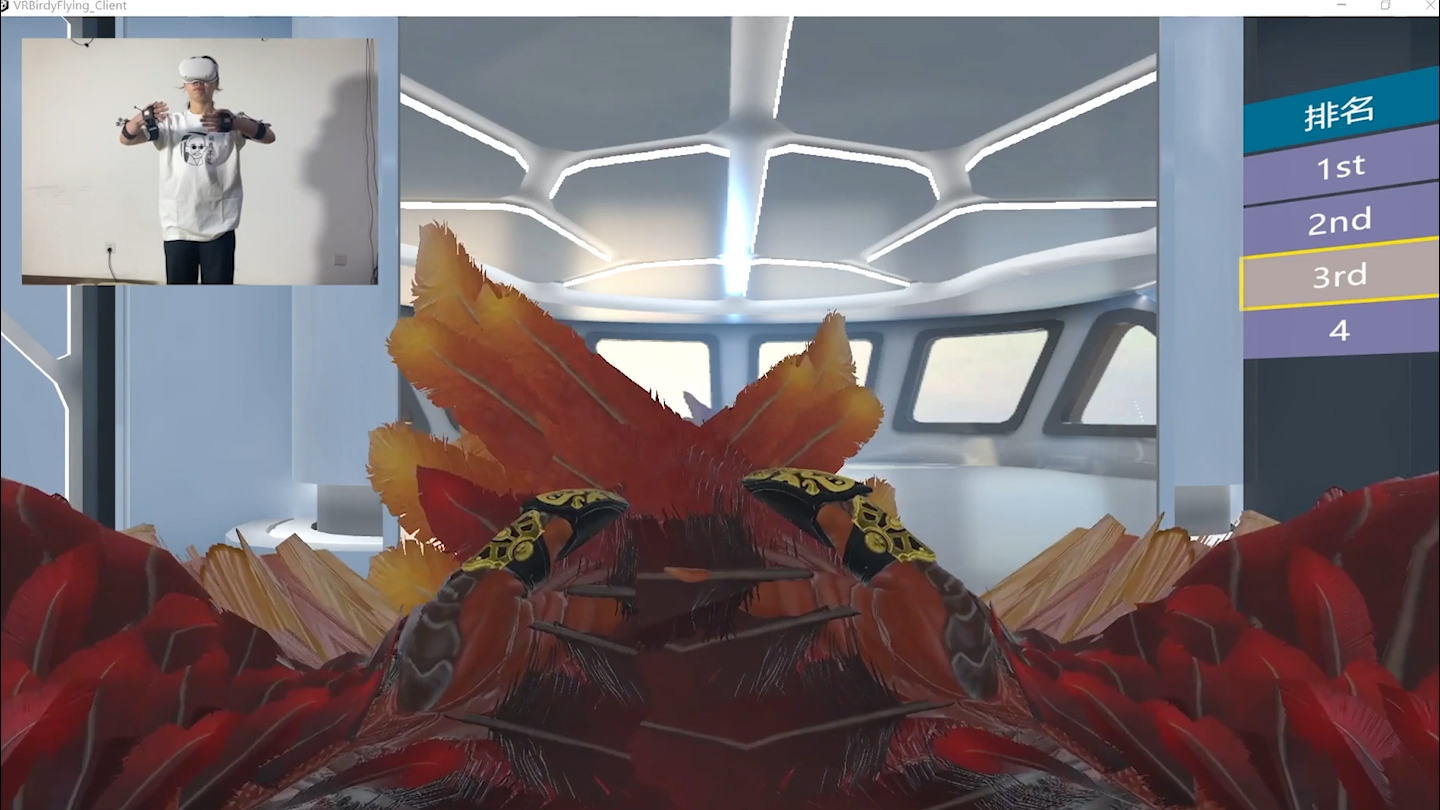
To test this, neuroscientist Yiyang Cai developed a rigorous, weeklong training program based on the actual physics and mechanics of how birds fly. The experiment involved 25 participants who were equipped with high-end VR headsets and sophisticated motion-tracking gear. The goal was to create a seamless loop between the user’s physical movements and their visual representation in the virtual world.

Participants were placed in a virtual environment where they looked into a mirror and saw themselves as birdlike figures. These avatars featured large, rust-colored, feathered wings. The synchronization was precise: when a participant rotated their wrists or flapped their arms, the virtual wings mirrored those movements exactly. This immediate visual feedback is critical for what we call “sensorimotor adaptation,” where the brain begins to associate a specific motor command (moving the arm) with a specific visual result (the wing flapping).
Rewiring the Mind: From Tool to Body Part
The core discovery of the study lies in how the brain’s perception shifted over the course of the training. Initially, the participants viewed the wings as tools—external objects they were controlling. However, as the training progressed, the neural response changed. The brain began to process the virtual wings not as external equipment, but as actual body parts.

This phenomenon is related to the “rubber hand illusion,” a well-known psychological effect where a person feels a sense of ownership over a fake hand if it is stroked in sync with their own hidden hand. In this case, the researchers scaled this effect up to an entirely new limb. By consistently linking the visual movement of the wings with the physical sensation of arm movement, the participants’ brains essentially “rewrote” their body schema to include the wings.
The implications of this are significant. It suggests that our internal map of our physical self is not a fixed blueprint established in childhood, but a dynamic, living document that can be edited in adulthood. The brain’s willingness to incorporate something as “unhuman” as a wing demonstrates a level of plasticity that could have wide-ranging applications in healthcare and human augmentation.
Beyond the Simulation: Implications for Medical Innovation
While the idea of virtual wings may seem whimsical, the medical applications of this research are substantial. If the brain can be trained to accept a virtual wing as a part of the body, it stands to reason that it can be trained to more effectively integrate physical enhancements. This has direct relevance to the field of prosthetics and rehabilitative medicine.
Jane Aspell, a cognitive neuroscientist at Anglia Ruskin University in Cambridge, England, noted that the study highlights the remarkable plasticity of the human brain. According to Aspell, if the brain can incorporate a wing, it may also be capable of incorporating various other types of limb enhancements. This could lead to a future where patients with limb loss do not just “use” a prosthetic, but truly “feel” it as a natural part of their body, reducing the cognitive load required to operate the device and improving the quality of life for the user.
this research opens doors for treating neurological disorders. For patients suffering from phantom limb pain or those recovering from strokes, VR-driven plasticity could be used to “re-map” the brain, helping it find new pathways for movement or silencing the pain signals associated with missing limbs by providing a new, functional virtual representation.
Understanding the Science of Neuroplasticity
To understand why this study is so important, it is helpful to look at how the brain handles “proprioception”—the sense of the relative position of one’s own parts of the body. Proprioception is managed by a complex network of sensors in our muscles and joints, which send signals to the brain to tell it where our limbs are without us having to look at them.
In the Peking University study, the researchers essentially created a “synthetic proprioception.” By providing a consistent visual cue (the wings in the mirror) that matched the physical movement, they bypassed the traditional biological sensors and convinced the brain that the wings were providing the necessary feedback. This process of “sensorimotor learning” is the same process we use when we learn to drive a car or play an instrument, where the vehicle or the instrument eventually feels like an extension of our own body.
The fact that this occurred with a non-human limb—a wing—suggests that the brain’s capacity for adaptation is not limited by biological similarity. It is limited only by the consistency and quality of the feedback loop.
Key Takeaways from the Research
- Sample Size: 25 participants underwent a weeklong training program.
- The Method: VR headsets and motion-tracking linked arm movements to virtual rust-colored wings.
- The Result: The brain began treating the virtual wings as biological body parts rather than external tools.
- The Core Finding: Demonstrates high levels of adult neuroplasticity and the ability to expand the human body schema.
- Medical Potential: Could revolutionize the integration of prosthetic limbs and the treatment of neurological deficits.
What Happens Next in the Study of Virtual Embodiment?
The success of the “virtual wings” experiment marks a starting point for a broader investigation into human augmentation. The next phase of this research will likely focus on the longevity of these brain changes. Researchers will want to know if the “wing-sense” persists after the VR headset is removed, or if the brain eventually reverts to its original map once the visual stimulus is gone.

there is the question of whether this plasticity can be transferred to physical devices. If a person is trained in VR to use a set of robotic wings or a complex prosthetic arm, will the transition to the physical hardware be faster and more intuitive than traditional training methods? The evidence suggests the answer is yes.
As we move further into the 21st century, the line between our biological selves and our technological tools is blurring. From smartphones that act as external memories to VR that expands our physical boundaries, we are entering an era of “hybrid” existence. This research confirms that our brains are not just passive observers of this change; they are active participants, ready to adapt and evolve to meet the demands of a new, digital reality.
For those interested in following the progress of these studies, the primary data and further peer reviews can be found through the Cell Reports archives. As more data becomes available regarding the long-term effects of virtual embodiment, we can expect a shift in how we approach both physical therapy and the design of assistive technologies.
The journey from dreaming of flight to biologically simulating it is a testament to human ingenuity and the incredible flexibility of the human mind. While we may not be sprouting real wings anytime soon, the ability to reshape our brains through technology brings us one step closer to overcoming our physical limitations.
World Today Journal will continue to monitor updates on neuroplasticity and medical innovation. We invite our readers to share their thoughts in the comments: Do you believe the integration of digital “limbs” is the future of human health, or does it cross a boundary of biological identity?