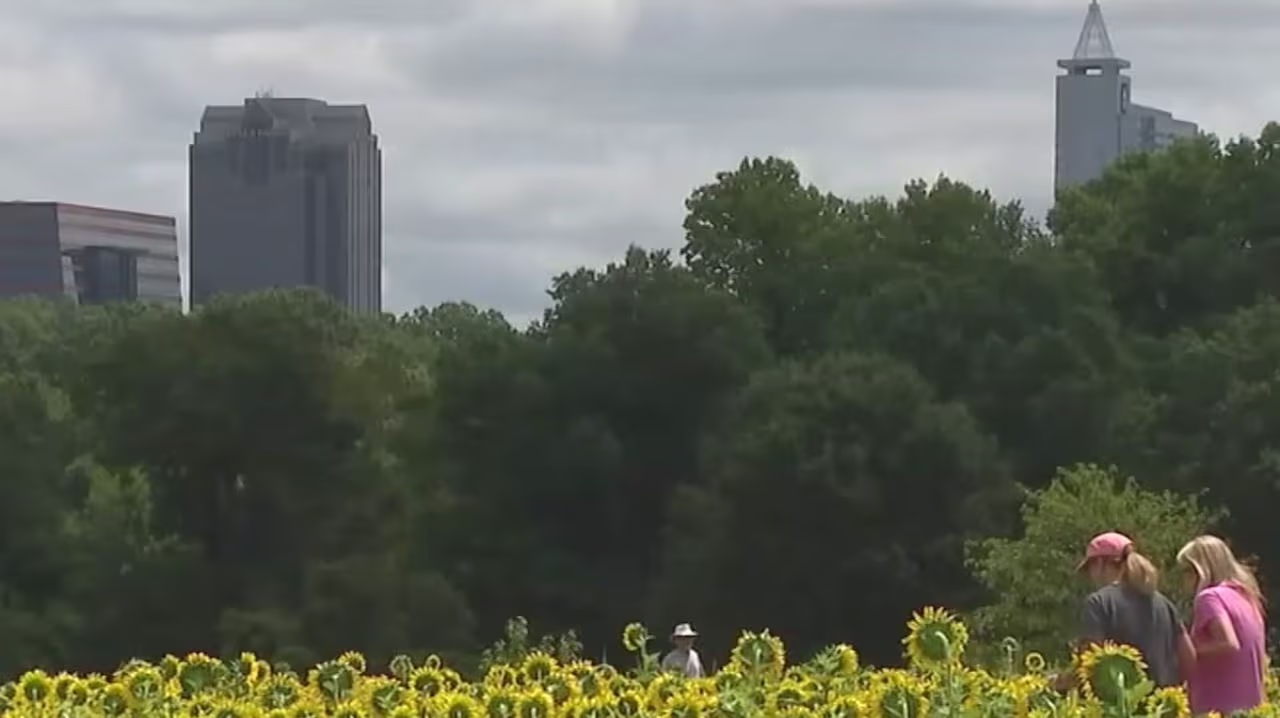
As one of the fastest-growing regions in the United States, Wake County is facing a defining challenge: how to accommodate a massive influx of new residents while simultaneously safeguarding the natural resources that make the area desirable. To address this tension, local officials have reinforced a strategic framework designed to balance rapid urban expansion with environmental stewardship and climate resilience.
The county’s “Growth, Land Use and Environment” focus area serves as the cornerstone of this effort. By prioritizing thoughtful planning and the preservation of vital ecosystems, the strategy seeks to move away from uncoordinated sprawl and toward a model of sustainable, high-density development that supports both the economy and the environment.
Central to this vision is a commitment to directing the vast majority of new development toward established municipal centers. This approach is not merely about managing where houses are built, but about ensuring that growth is supported by the necessary infrastructure—such as public transit, water, and sewer systems—to prevent the environmental and logistical strain often associated with rapid population increases.
Directing Growth: The 97% Municipal Strategy
A primary pillar of the Wake County strategic plan is a specific, time-bound target for land use. Between 2024 and 2029, the county aims to direct 97% of all growth and development toward cities and towns that already provide essential municipal services, transportation networks, and utilities. Wake County’s strategic planning documents outline this goal as a method to foster more efficient and sustainable community development.
This strategy is designed to combat the negative impacts of urban sprawl. By concentrating development in areas with existing infrastructure, the county can more effectively manage the following:
- Public Transit and Mobility: Concentrating growth near urban centers allows for more robust public transportation options, which helps alleviate traffic congestion and reduces the carbon footprint associated with long commutes.
- Infrastructure Efficiency: Utilizing existing water and sewer infrastructure is more cost-effective and environmentally sound than extending massive, new utility lines into undeveloped areas.
- Resource Management: High-density development in municipal zones allows for better management of public amenities, including schools, libraries, and public safety facilities.
The rationale behind this focus is clear: as the county’s population grows toward and beyond the one-million mark, the ability of local governments to shape community character through coordinated land use planning becomes increasingly critical. By focusing resources on urban centers, the county can preserve the outlying areas that provide essential ecosystem services.
Preserving the Landscape: The 1,000-Acre Conservation Goal
While the focus on municipal growth handles the “built” environment, a parallel effort is underway to protect the “natural” environment. A key objective within the county’s strategic goals is the protection of 1,000 acres of green space by 2029. This target encompasses a diverse range of landscapes, including open spaces, public parks, greenways, farmland, and forests.
This conservation effort is vital for maintaining the region’s biodiversity and providing residents with accessible, inclusive recreation spaces. Beyond the social benefits, these green spaces play a fundamental role in environmental stability, including:
- Flood Mitigation: Natural landscapes and forests act as sponges, absorbing rainwater and reducing the risk of flooding in developed areas.
- Climate Regulation: Increasing tree canopy and preserving forests help mitigate the “urban heat island” effect, keeping communities cooler as global temperatures rise.
- Water Quality: Green spaces serve as natural filters, helping to protect the local watersheds and ensure access to clean water for the growing population.
By setting a specific acreage goal, the county provides a measurable benchmark for its environmental progress, ensuring that conservation remains a priority even amidst intense development pressure.
Infrastructure and the Path to Clean Energy
The transition to a more sustainable future also requires a modern approach to utility management. The Wake County plan emphasizes the strategic development of water and sewer infrastructure as a foundation for both public health and environmental sustainability. This includes not only managing current demand but also preparing for the long-term implications of climate change on water availability and quality.

the county is increasingly focused on advancing clean energy solutions. As part of its broader environmental commitment, the strategic plan seeks to integrate sustainable energy practices into the community’s growth model. This involves a multi-faceted approach that includes:
- Thoughtful Planning: Ensuring that new developments are designed with energy efficiency and renewable energy potential in mind.
- Sustainability Integration: Linking land use decisions with the county’s ability to provide clean, reliable, and efficient energy services.
- Climate Adaptation: Preparing infrastructure to withstand the shifting environmental patterns brought about by global climate changes.
By treating infrastructure as a tool for sustainability rather than just a utility, Wake County is attempting to build a resilient foundation that can support a modern, high-growth economy without compromising the ecological health of the region.
Summary of Strategic Environmental Goals (2024–2029)
| Strategic Goal Area | Target/Action | Timeline |
|---|---|---|
| Urban Development | Direct 97% of growth to municipalities with existing services/utilities | 2024–2029 |
| Green Space | Protect 1,000 acres of parks, forests, and farmland | By 2029 |
| Infrastructure | Enhance water, sewer, and clean energy solutions | Ongoing |
As the county continues to execute these plans, the focus remains on the intersection of human needs and environmental limits. The success of these initiatives will depend on the continued coordination between Wake County and its various municipal partners to ensure that growth is not just fast, but smart.
Next Steps: Progress on these strategic goals is monitored through regular performance indicators. Residents and stakeholders can look for updates regarding land use implementation and conservation milestones in upcoming county budget and strategic plan progress reports.
What are your thoughts on balancing rapid urban growth with environmental protection? Share your views in the comments below and share this article with your community.