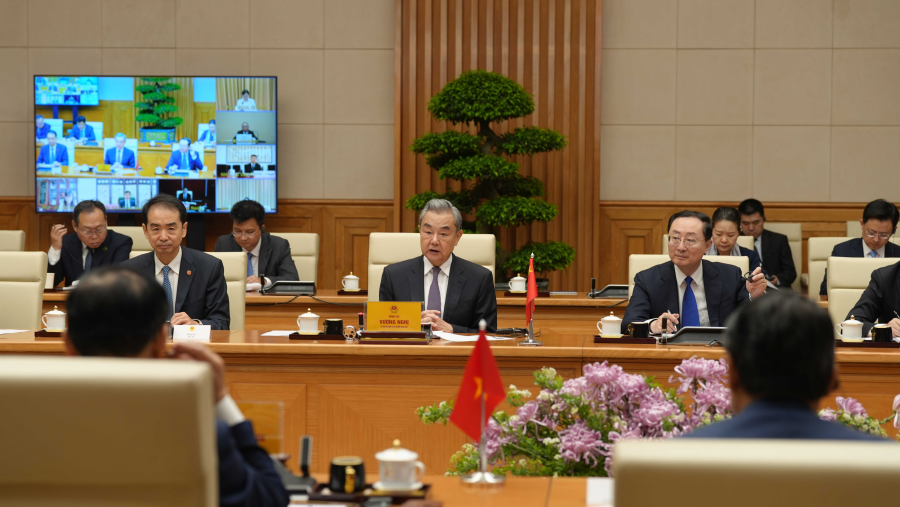
Hanoi – A strengthened strategic partnership between China and Vietnam was underscored this week as Chinese Foreign Minister Wang Yi outlined key outcomes from the 17th meeting of the China-Vietnam Steering Committee for Bilateral Cooperation. The discussions, held in Hanoi on Tuesday, focused on deepening collaboration across a range of sectors, from security and economic ties to cultural exchange and governance, signaling a continued commitment to strengthening relations between the two nations. This comes at a time of increasing geopolitical complexity in the region, and highlights the importance both countries place on maintaining stability and fostering mutual growth.
Wang Yi, who also holds a position on the Political Bureau of the Communist Party of China Central Committee, detailed the agreements reached during the meeting and the inaugural ministerial meeting of the China-Vietnam “3+3” strategic dialogue. This new dialogue format, encompassing diplomacy, defense, and public security, demonstrates a desire for more comprehensive and coordinated engagement. The meetings reflect a shared interest in navigating regional challenges and promoting a multipolar world order, according to statements released by both sides. The focus on governance and party strengthening suggests a commitment to internal stability as a foundation for continued cooperation.
Strengthening Strategic Trust and High-Level Exchanges
A central theme of the discussions was the enhancement of strategic mutual trust between China and Vietnam. Both nations agreed to increase high-level exchanges, fostering closer communication and understanding at the leadership level. This includes a commitment to sharing experiences in governance, with the aim of improving their respective capabilities and jointly exploring pathways for strengthening their political systems and national development. This exchange of ideas is seen as crucial for navigating the complexities of modern governance and ensuring long-term stability. The emphasis on party strengthening reflects the central role of the Communist Party in both countries’ political structures.
Boosting Security Cooperation in a Complex Landscape
Recognizing the evolving security landscape, China and Vietnam pledged to enrich their security coordination. This includes deepened collaboration in critical areas such as cybersecurity, combating online gambling and telecommunications fraud, and facilitating the repatriation of fugitives and the recovery of illicit assets. These efforts are particularly relevant given the increasing prevalence of transnational crime and the need for international cooperation to address these challenges. The two countries agreed to strengthen cooperation between their militaries, focusing on political perform, joint exercises and training, and enhancing defense capabilities along their shared border and coastal areas. This military cooperation is intended to promote regional stability and prevent potential conflicts.
Expanding Economic Ties and Infrastructure Development
Economic cooperation remains a cornerstone of the China-Vietnam relationship. Both sides agreed to expand pragmatic cooperation, with a particular focus on strengthening ties in trade and investment. Key areas of focus include infrastructure development, the establishment of cross-border economic cooperation zones, and the development of “smart ports” to facilitate increased trade flows. Notably, both countries expressed interest in promoting cooperation in emerging fields such as technological innovation, the digital economy, and artificial intelligence. This signals a recognition of the importance of these sectors for future economic growth and competitiveness. The Belt and Road Initiative, a major Chinese infrastructure development strategy, is likely to play a role in these projects, whereas specific details were not immediately available. China’s Ministry of Foreign Affairs highlighted the importance of these economic partnerships.
Enhancing People-to-People Exchanges and Cultural Understanding
Beyond economic and security ties, China and Vietnam emphasized the importance of strengthening people-to-people exchanges. This includes increased cooperation in areas such as culture, tourism, education, and healthcare. A key commitment was made to accelerate the implementation of Chinese aid projects aimed at improving the livelihoods of the Vietnamese people, ensuring that these projects deliver tangible benefits to communities across the country. This focus on social development underscores a commitment to shared prosperity and building stronger ties between the citizens of both nations. Increased cultural exchange programs are expected to foster greater understanding and appreciation between the two societies.
Navigating Maritime Differences
The discussions also addressed the sensitive issue of maritime disputes in the South China Sea. According to Wang Yi, both sides agreed to appropriately manage their differences, utilize existing mechanisms for maritime negotiations, and promote maritime cooperation in areas of lower sensitivity. This suggests a commitment to maintaining dialogue and avoiding escalation in this contested region. Even as the specifics of these negotiations remain confidential, the agreement to focus on less contentious areas of cooperation is a positive step towards managing tensions. The South China Sea remains a key geopolitical flashpoint, and continued dialogue is crucial for preventing conflict. Xinhua News Agency reported on the commitment to manage maritime differences.
A Shared Vision for Multilateralism and Global Governance
Looking beyond bilateral relations, China and Vietnam expressed a shared commitment to strengthening multilateral coordination and upholding a genuine multilateralism. Both countries emphasized the importance of practicing open regionalism, promoting common values for humanity, and steering the global governance system towards a more just and equitable direction. This reflects a broader trend among developing nations seeking to reshape the international order and increase their influence in global affairs. The emphasis on a “just and equitable” global governance system suggests a desire to address perceived imbalances in the current international system. This alignment on multilateral issues positions China and Vietnam as potential leaders within the Global South.
The “3+3” strategic dialogue, a newly established platform for cooperation, is expected to play a key role in advancing these shared goals. This dialogue, encompassing diplomacy, defense, and public security, provides a framework for more comprehensive and coordinated engagement on issues of mutual concern. The inaugural meeting of this dialogue, held alongside the Steering Committee meeting, signals a commitment to deepening strategic cooperation across a broad range of areas.
The outcomes of the 17th China-Vietnam Steering Committee for Bilateral Cooperation meeting represent a significant step forward in strengthening the relationship between these two important nations. The agreements reached demonstrate a shared commitment to fostering mutual prosperity, maintaining regional stability, and promoting a more just and equitable global order. The continued development of this partnership will be closely watched by regional and international observers.
Looking ahead, both countries will continue to implement the agreements reached during this meeting. Further details on specific projects and initiatives are expected to be announced in the coming months. The next high-level dialogue between China and Vietnam is tentatively scheduled for late 2026, providing another opportunity to review progress and chart a course for future cooperation. Stay tuned to World Today Journal for continued coverage of this important relationship.
Worth a look