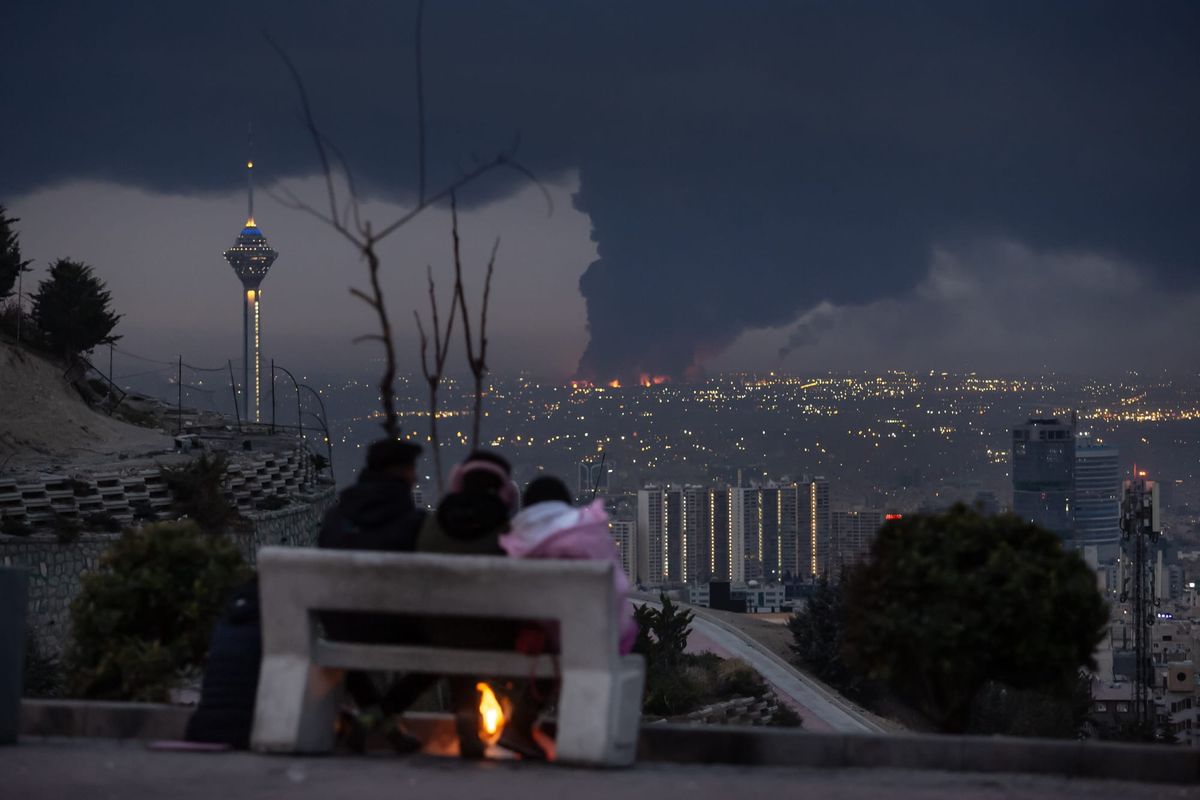
The conflict between the United States, Israel, and Iran that began in February 2026 has triggered widespread humanitarian consequences and reshaped regional security dynamics across the Middle East and beyond. What began as airstrikes on February 28, 2026, quickly escalated into a broader confrontation with significant displacement, infrastructure damage, and geopolitical ripple effects affecting countries from Lebanon to Afghanistan. According to United Nations estimates cited in multiple humanitarian assessments, over three million people have been displaced inside Iran alone, while more than one million have been displaced in Lebanon. The war has also drawn in neighboring states through cross-border tensions, economic disruptions, and shifting alliances, prompting renewed scrutiny of long-standing U.S. And Israeli policies toward Iran.
This conflict did not emerge in isolation. Analysts point to over two decades of strategic pressure, including sanctions, military posturing, and intelligence assessments, as laying the groundwork for the current hostilities. A bipartisan consensus in Washington has long viewed Iran as a primary regional threat, a perspective reinforced after the 2003 U.S. Invasion of Iraq and further shaped by Israeli concerns over Iran’s nuclear program. Despite diplomatic efforts such as the 2015 Joint Comprehensive Plan of Action (JCPOA), which temporarily limited Iran’s nuclear activities in exchange for sanctions relief, the agreement’s collapse following the U.S. Withdrawal in 2018 removed a key constraint on escalation. Since then, repeated warnings from Israeli leadership about perceived nuclear threats—despite assessments from the International Atomic Energy Agency and U.S. Intelligence agencies finding no evidence of an active weapons program—have kept the issue at the forefront of regional security debates.
The human toll has been severe. Reports from humanitarian organizations indicate that attacks have targeted not only military sites but also civilian infrastructure, including power grids, water desalination plants, hospitals, and residential areas. In March 2026, strikes on oil storage facilities near Tehran disrupted electricity and fuel supplies for millions, while attacks on water treatment systems in Iran and Bahrain raised concerns about access to clean water. In Lebanon, Israeli strikes have damaged dozens of healthcare facilities, prompting the World Health Organization to report widespread closures of clinics and hospitals due to safety concerns. The United Nations has documented cases of displaced families sheltering in overcrowded conditions with limited access to food, water, and medical care, particularly in southern Lebanon and western Iran.
Beyond immediate humanitarian concerns, the war has exposed vulnerabilities in regional security architectures. Gulf states, many of which host U.S. Military bases, found themselves inadequately consulted or warned before the escalation began. Oman, which had served as a mediator between Washington and Tehran in the weeks prior to the conflict, urged restraint, but its efforts were unable to prevent the outbreak of hostilities. Analysts note that the war has prompted renewed debate among Gulf governments about overreliance on external security guarantees and the need for greater regional cooperation to address shared threats. The conflict has also strained diplomatic ties, with Israel accused of misrepresenting actions by Qatar and the United Arab Emirates in its domestic media to suggest their involvement in the war, despite official denials from both states.
The war’s influence has extended beyond the immediate theater. In Afghanistan, where Iran hosts over six million Afghan refugees and migrants, the conflict has disrupted cross-border movement and trade routes. Afghan workers in Iran, many of whom live without legal status, have reported increased scrutiny and deportation risks since the fighting began, with Iranian authorities accusing some of ties to Israeli intelligence—a claim denied by Afghan officials. Meanwhile, Afghanistan’s own internal conflict with Pakistan intensified in March 2026, with cross-border clashes reported along the Durand Line, further complicating regional stability. Observers note that the simultaneous crises have disrupted key trade and infrastructure projects, including a proposed $6 billion railway linking Uzbekistan, Afghanistan, and Pakistan, which now faces delays due to insecurity along the corridor.
Within Iran, the conflict has strengthened the role of the Islamic Revolutionary Guard Corps (IRGC), which has long played a dual role as a military and political force. Despite facing setbacks in conventional military engagements, the IRGC has retained influence through its control of economic networks, its role in circumventing sanctions, and its deep ties to the country’s leadership structure. Analysts observe that the war has reinforced the IRGC’s narrative of external threat, potentially consolidating its domestic authority even as it faces criticism for prioritizing military resilience over economic relief for civilians facing shortages and displacement.
The conflict has also reignited debates about the role of ideology in shaping foreign policy. In the United States, segments of the evangelical community have framed the war through religious narratives, with some leaders describing it as part of a divine plan. However, recent surveys indicate a shift among younger evangelicals, whose support for Israel has declined amid growing criticism of military actions in Gaza and Lebanon. While traditional Christian Zionism remains influential among older demographics, newer generations are increasingly aligning their views on Israel with broader political affiliations rather than theological interpretations. This evolving landscape has prompted reassessment of how religious advocacy influences U.S. Policy decisions in the Middle East.
In Lebanon, the war has intensified existing political fragility. The country, still recovering from a devastating 2024 conflict and an ongoing economic crisis, has seen renewed violence along its southern border. Hezbollah’s decision to launch rockets into Israel in March 2026—framed as a response to the killing of Iran’s Supreme Leader—drew both support and criticism domestically, with some viewing it as a necessary act of solidarity and others warning it would provoke further Israeli retaliation. The Lebanese army, which lacks the capacity to resist Israeli advances due to underfunding and reliance on foreign aid, has largely remained on the sidelines, leaving civilians exposed to aerial bombardment and ground incursions. Humanitarian groups have reported widespread displacement, with over one million people forced from their homes, many seeking shelter in informal settlements with inadequate sanitation and limited access to basic services.
Environmental consequences have also emerged as a growing concern. Strikes on oil facilities have released plumes of smoke and particulate matter, with residents in Tehran describing “black rain” containing potentially carcinogenic hydrocarbons. Experts warn that damage to refineries and storage sites could lead to long-term soil and water contamination, particularly if hazardous materials seep into groundwater systems. Similarly, attacks on water infrastructure raise risks of sanitation breakdowns and disease outbreaks in densely populated areas, compounding the challenges faced by displaced populations.
As of mid-March 2026, no formal ceasefire has been established, and diplomatic channels remain strained. The United Nations has called for an immediate halt to hostilities and urged all parties to allow unhindered access for humanitarian aid. However, verification of casualty figures and infrastructure damage remains difficult due to restricted access and conflicting reports from belligerent and independent sources. Journalists and human rights monitors continue to face significant barriers to reporting from affected zones, with many relying on satellite imagery and remote sensing to assess damage.
The evolving situation underscores the interconnected nature of regional security, where actions in one country can rapidly trigger consequences across borders. For policymakers and analysts, the conflict serves as a stark reminder of the limits of military solutions in addressing complex political and ideological disputes. As the international community monitors developments, attention is turning toward the conditions necessary for de-escalation, including renewed diplomatic engagement, accountability for potential violations of international law, and sustained support for civilian populations caught in the crossfire.
Stay informed about this evolving situation by following updates from trusted international organizations and humanitarian agencies working on the ground. Share this article to help others understand the broader implications of the conflict beyond the headlines.
Keep reading