
The ongoing tension between the White House and Capitol Hill over the use of military force has reached a new flashpoint. President Donald Trump has recently challenged the legitimacy of the War Powers Resolution, claiming that the 1973 law is unconstitutional and asserting that previous presidents routinely flouted its requirements to conduct overseas operations. These claims emerge amidst a series of high-stakes military actions, including the capture of Venezuelan leader Nicolás Maduro in January 2026 and operations in Iran, which have reignited a long-standing constitutional debate over who holds the ultimate authority to wage war.
At the heart of the dispute is the War Powers Resolution of 1973, a law designed to check the executive branch’s power by requiring the president to notify Congress within 48 hours of committing armed forces to hostilities and to terminate such use within 60 days unless Congress grants an authorization or declares war. While President Trump argues that the law is an invalid encroachment on executive authority, a historical analysis of presidential behavior suggests a mixed record of compliance, where some leaders sought formal authorization while others relied on broad interpretations of “limited” conflict to bypass legislative oversight.
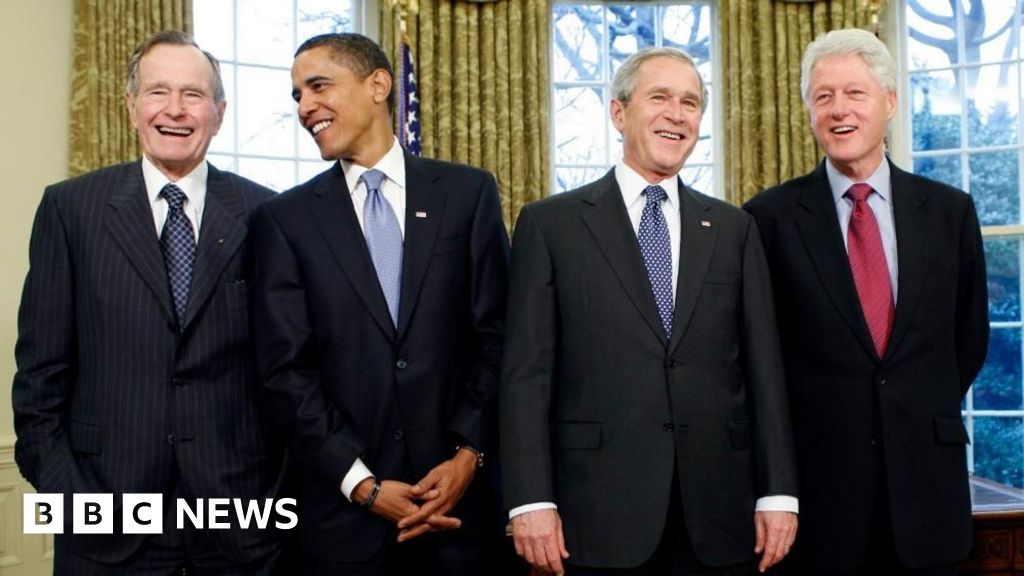
The historical record reveals a distinct divide in how presidents have approached the War Powers Resolution. Ronald Reagan and both George H.W. Bush and George W. Bush generally sought formal authorizations or congressional approvals for major conflicts. For example, the 1991 Gulf War saw a clear congressional authorization for the use of force, establishing a precedent of legislative concurrence for large-scale interventions. These administrations typically operated under the framework that significant military engagements required a mandate from the people’s representatives.
The Shift Toward Executive Unilateralism
However, the trend shifted significantly during the administrations of Bill Clinton and Barack Obama, where the requirement for formal authorization was often avoided through legal maneuvers and the classification of military actions as “limited” or “counter-terrorism” operations. During the Clinton administration, the 1999 bombing campaign in Yugoslavia was conducted without a formal declaration of war or specific legislative authorization, leading to intense debate over the legality of the action under the War Powers Resolution.
Barack Obama’s tenure further expanded this trend. The 2011 military intervention in Libya and the extensive use of drone strikes across multiple countries were often justified under the 2001 Authorization for Use of Military Force (AUMF), which was originally passed in response to the September 11 attacks. Critics and legal scholars argue that the Obama administration “ducked” the specific reporting and time-limit requirements of the War Powers Resolution by framing these actions as extensions of the global war on terror rather than new hostilities.
This pattern of executive expansion created the landscape into which Donald Trump stepped. By claiming that the law is unconstitutional, Trump is not merely following a precedent of avoidance but is attempting to dismantle the legal constraint entirely. His unilateral decision to use U.S. Military forces to capture Nicolás Maduro on January 9, 2026, served as a direct challenge to the resolution’s intent, as it occurred without prior congressional authorization or a formal declaration of war.
Comparing Presidential Approaches to War Powers
The following table outlines the general patterns of compliance and authorization strategies used by various U.S. Presidents regarding the War Powers Resolution.
| President | General Approach | Key Example/Action |
|---|---|---|
| Ronald Reagan / Both Bushes | Sought formal authorizations for major conflicts. | 1991 Gulf War Authorization |
| Bill Clinton | Utilized “limited” action frameworks to bypass formal votes. | 1999 Yugoslavia Bombing |
| Barack Obama | Expanded existing AUMFs to cover new geographic regions. | 2011 Libya Intervention |
| Donald Trump | Challenges the law’s constitutionality; pursues unilateral action. | 2026 Capture of Nicolás Maduro |
The Legal and Political Stakes
The claim that the War Powers Resolution is unconstitutional is a bold legal gamble. To date, no U.S. Court has issued a ruling that formally strikes down the act. The resolution was passed as a joint resolution, meaning it carries the force of law and the Supreme Court has historically been reluctant to dive into the “political question” of war powers, often deferring to the executive in matters of national security.
However, the political stakes are immense. If the executive branch successfully ignores the War Powers Resolution without consequence, the balance of power shifts decisively toward the presidency. Lawmakers argue that this erodes the democratic check on military aggression, potentially allowing a president to engage in prolonged conflicts without the consent of the governed. Conversely, proponents of a stronger executive argue that the speed of modern warfare—characterized by cyber-attacks and rapid-response special operations—makes the 1973 reporting requirements obsolete and dangerously slow.

The impact of this shift is felt most acutely in the international community. The capture of Maduro in Caracas has been viewed by some as a restoration of “decisive action,” while others, including various international bodies, see it as a violation of sovereignty conducted without the legal transparency required by U.S. Law. The lack of a clear, consistent standard for war-making authority creates unpredictability in U.S. Foreign policy, as the “rules of engagement” are now largely determined by the personal interpretation of the sitting president.
Who is Affected by the Erosion of War Powers?
- The U.S. Congress: Loses its constitutional role as the body that “declares war,” reducing its influence to a reactive role rather than a proactive one.
- U.S. Military Personnel: Operate under authorizations that may be legally contested, potentially complicating the legal framework for rules of engagement.
- Global Allies and Adversaries: Must navigate a foreign policy where the U.S. May engage in military action based on executive decree rather than legislative consensus.
- The American Public: Faces a reduction in transparency regarding when and why the nation enters into hostilities.
What Happens Next?
The battle over war powers is moving from the realm of political rhetoric to the halls of government. Several Democratic members of Congress have attempted to introduce measures to limit presidential authority in the Middle East and Latin America, though these have faced significant hurdles in a GOP-controlled House. The Senate previously voted down a measure intended to constrain the administration’s actions in the U.S.-Israeli conflict, signaling a deep partisan divide on whether the president should be reigned in or given more latitude.
The next critical checkpoint will be the upcoming House debate on military authority limits, where lawmakers will decide whether to formally challenge the administration’s unilateral actions or tacitly accept the new status quo of executive dominance. Legal challenges to the capture of Maduro may too reach the courts, potentially forcing a judicial ruling on the constitutionality of the War Powers Resolution for the first time in decades.
World Today Journal encourages readers to share their views on the balance of power between the presidency and Congress in the comments below.