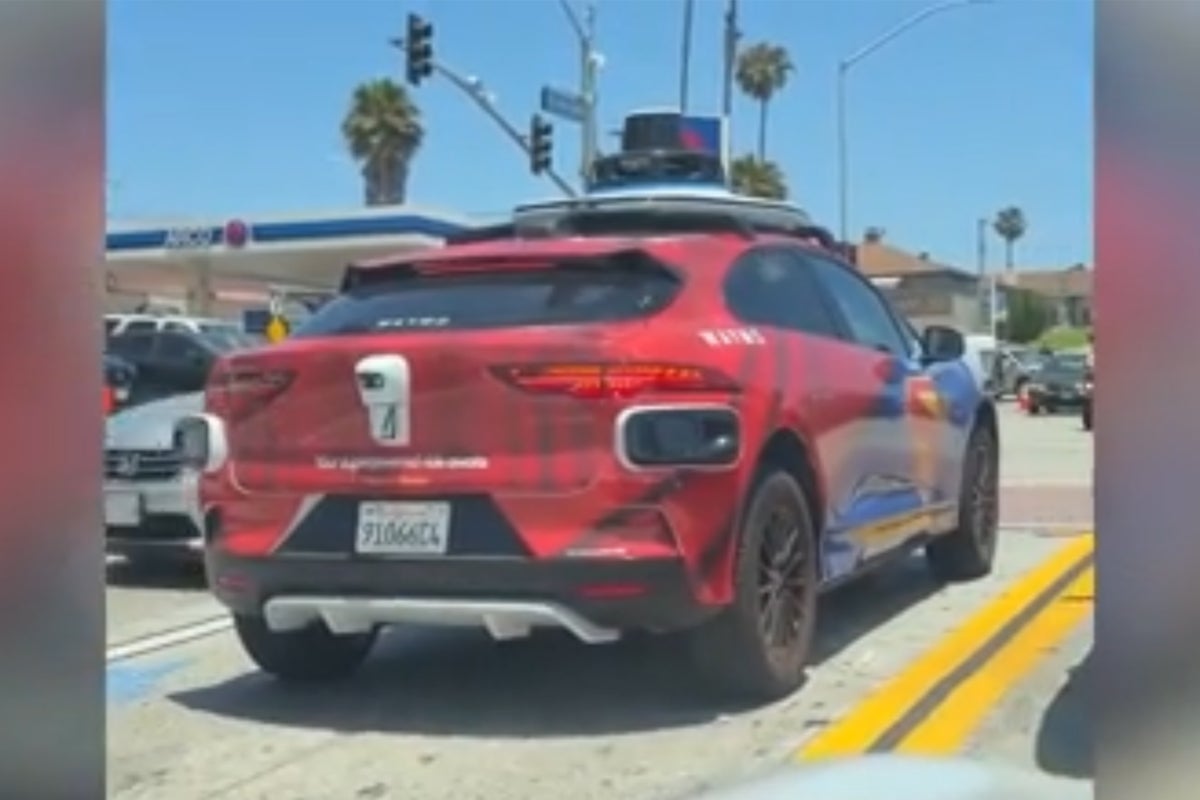
A Waymo autonomous vehicle was recorded maneuvering into oncoming traffic in Inglewood, California, amid heavy congestion linked to recent World Cup-related events. The incident, which occurred as the company navigates increased federal scrutiny over its driverless technology, highlights ongoing challenges regarding the performance of automated driving systems in complex, high-density urban environments. According to the National Highway Traffic Safety Administration (NHTSA), Waymo recently initiated a voluntary recall of its software following reports of collisions and behavioral anomalies.
The incident in Inglewood drew immediate attention on social media platforms, where observers shared footage of the vehicle crossing double yellow lines into the lane of opposing traffic while attempting to navigate around gridlock. Waymo, a subsidiary of Alphabet Inc., confirmed it is reviewing the specific circumstances surrounding the vehicle’s pathing decisions. This event follows a broader February 2024 recall involving 444 vehicles, which the company implemented to update its automated driving system software after two separate collisions involving towed trucks occurred in Phoenix, Arizona.
Regulatory Oversight and Safety Recalls
The path toward widespread adoption of autonomous taxis remains constrained by rigorous federal oversight. In February 2024, the NHTSA confirmed that Waymo issued a recall for its fifth-generation automated driving system (ADS) software. The NHTSA stated that the recall was necessary to address concerns that the software might not consistently predict the movement of irregularly positioned vehicles or respond appropriately to road obstructions. This action was prompted by reports of the software failing to properly account for the unpredictable nature of vehicles being towed or objects extending into traffic lanes.
Waymo’s current fleet operations remain under the watch of both state and federal regulators. In California, the Department of Motor Vehicles (DMV) maintains authority over the permits required for driverless testing and deployment. The company has consistently maintained that its technology is safer than human drivers, citing internal safety performance data. However, the recent Inglewood incident has reignited public debate regarding whether current machine-learning models are sufficiently robust to handle the high-variance conditions often seen during major public gatherings.
Operational Challenges in High-Congestion Environments
Operating in high-density traffic, particularly during events that draw large crowds, presents unique difficulties for autonomous systems. These environments often involve erratic human driving behavior, temporary road closures, and non-standard traffic patterns that deviate from the training data typically used to calibrate self-driving algorithms. Industry experts note that while autonomous vehicles excel at predictable, rule-based driving, they often struggle with the “social” aspects of driving—such as interpreting gestures from traffic officers or navigating around vehicles that are parked illegally or blocking lanes.

The Inglewood incident is not an isolated case of autonomous vehicles encountering difficulties in Southern California. Since the expansion of robotaxi services, various local agencies have documented instances where vehicles stopped in active traffic lanes or failed to yield correctly. Waymo continues to refine its software through over-the-air updates, a process the company describes as essential for the continuous improvement of its safety standards. For residents and commuters, the Waymo Safety Portal provides documentation on how the company’s technology detects and responds to various road hazards.
What Happens Next for Autonomous Taxi Fleets
The next major milestone for the industry involves the submission of additional safety performance reports to the NHTSA as part of the ongoing monitoring process. The agency continues to collect data on incidents involving automated driving systems to determine if further regulatory mandates are required. For the public, the company has established channels for reporting concerns directly through its mobile application and customer support infrastructure.
As the company works to resolve the software behaviors that led to recent recalls, focus remains on the transition from testing to large-scale commercial deployment. Observers expect that future updates will prioritize improved object detection and more conservative pathing logic when the system encounters ambiguous road markings or heavy congestion. Readers interested in the latest safety filings can monitor the NHTSA recall database for official updates regarding Waymo’s fleet compliance. We encourage readers to share their experiences or observations of autonomous technology in their own cities in the comments section below.
Worth a look