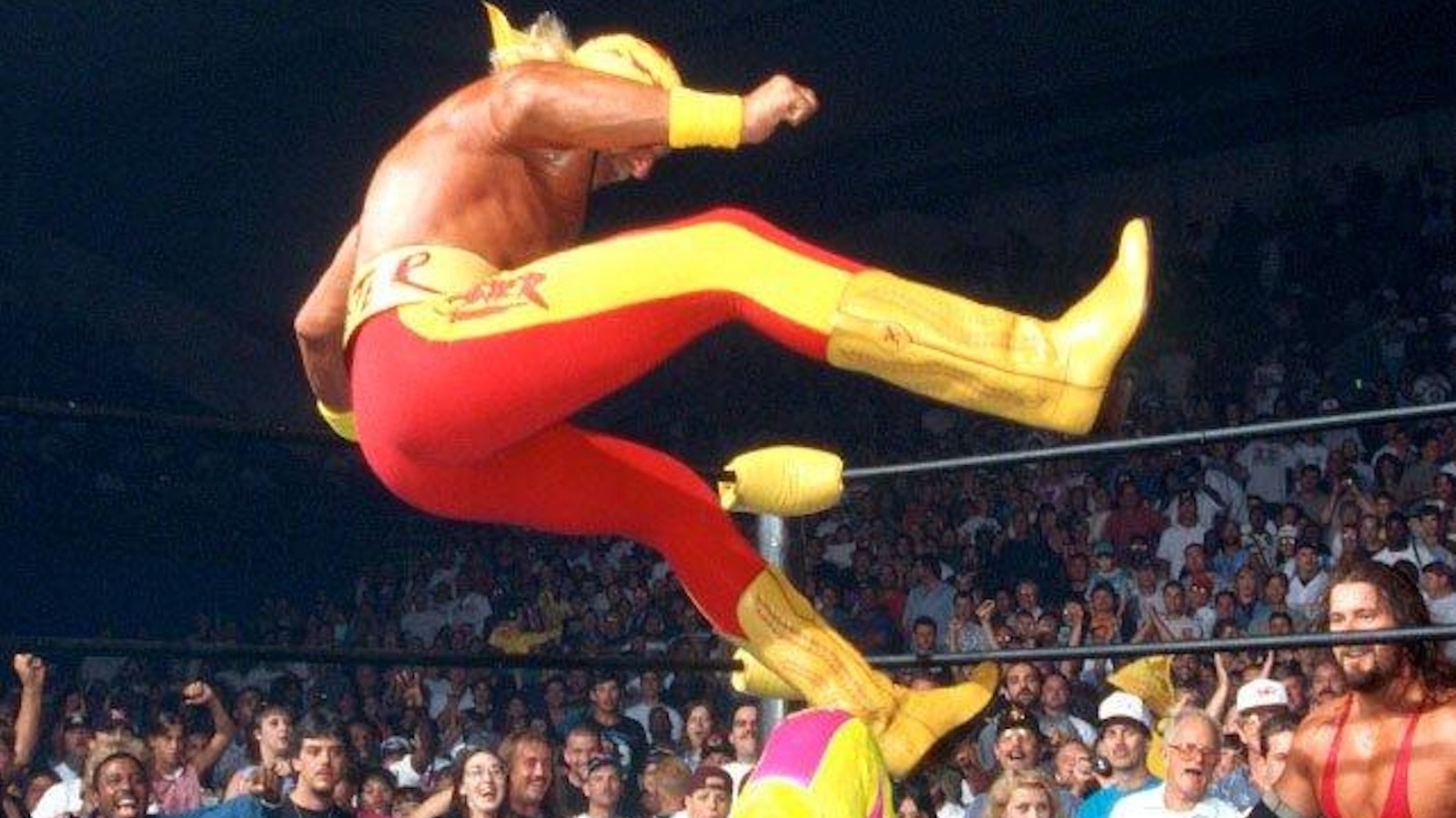
WCW Bash at the Beach 1996, held on July 7, 1996, at the Ocean Center in Daytona Beach, Florida, remains one of the most significant events in professional wrestling history. The pay-per-view broadcast is best remembered for the shocking conclusion to the main event, which signaled a major shift in the industry’s landscape and the rise of the New World Order (nWo). According to official records from World Championship Wrestling, the event drew a crowd of 8,300 fans to the venue in Daytona Beach.
The broadcast, which featured a six-man tag team match pitting The Outsiders (Kevin Nash and Scott Hall) and a mystery partner against Randy Savage, Sting, and Lex Luger, serves as a primary case study for how a single narrative pivot can alter the trajectory of a global sports-entertainment brand. As we look back at this event, it is essential to distinguish between the masterful execution of its climax and the uneven quality of the undercard that preceded it.
The Impact of the Heel Turn
The defining moment of the evening occurred when Hulk Hogan, long established as the quintessential heroic figure in American professional wrestling, intervened in the main event. Hogan, rather than aiding his WCW peers, delivered multiple leg drops to Randy Savage, effectively aligning himself with Kevin Nash and Scott Hall. This betrayal is widely cited by wrestling historians as the catalyst for the “Monday Night Wars,” a period of intense television ratings competition between WCW and the World Wrestling Federation (WWF).
The decision to turn Hogan into an antagonist—a “heel”—was a calculated risk that fundamentally changed the audience’s engagement with the product. By abandoning his “Hulkamania” persona, Hogan allowed for the creation of the nWo, a faction that dominated WCW programming for years. According to reports from the time, the fallout included fans throwing debris into the ring, a visceral reaction that confirmed the success of the creative gamble to subvert long-standing expectations.
Three Aspects That Resonated with Fans
While the event is synonymous with the Hogan turn, several elements of the card are often cited by critics and fans as highlights of the 1996 era:

- The Mystery Partner Reveal: The intrigue surrounding the identity of the third man for The Outsiders kept viewers engaged throughout the three-hour broadcast. The anticipation of the reveal, which was heavily promoted in the weeks leading up to the event, remains a gold standard for long-term storytelling in the industry.
- The Intensity of the Main Event: Despite the unconventional nature of the match, the physical intensity displayed by Savage, Sting, and Luger provided a necessary backdrop for the eventual climax. The work rate within the six-man structure successfully masked the lack of a third partner for the majority of the bout.
- The Post-Match Promo: Following the turn, Hogan’s interview with “Mean” Gene Okerlund inside the ring solidified the new direction. Hogan’s delivery, specifically his dismissal of the fans who had supported him for over a decade, provided the emotional weight necessary to cement his status as the primary villain of the organization.
Three Elements That Drew Criticism
Not every aspect of Bash at the Beach 1996 was met with critical acclaim. The undercard reflected the inconsistency often associated with mid-90s WCW production:
- The Quality of the Undercard: Several matches, including those featuring lower-card talent, failed to maintain the momentum established by the main event. Critics noted that the filler matches often lacked the technical precision or narrative stakes required to keep a pay-per-view audience fully invested.
- The “Hostile Takeover” Angle Execution: While the nWo formation was successful, some segments involving the Outsiders’ “takeover” of the venue were criticized for feeling disjointed. The production team struggled at times to balance the realistic, “shoot-style” aesthetic they were attempting to cultivate with the traditional scripted requirements of a televised event.
- Technical Limitations: As reported by wrestling industry analysts at the time, the broadcast suffered from occasional pacing issues. The transition between segments often felt abrupt, a common critique of WCW pay-per-views during that specific fiscal year, as the company moved toward a more aggressive, multi-layered storytelling model.
Legacy and Historical Context
Thirty years later, the event serves as a reminder of the volatility inherent in sports entertainment. The success of the nWo angle led to a massive increase in WCW’s market share, with the company eventually overtaking the WWF in the Nielsen ratings for 83 consecutive weeks, according to data archived by the Wrestling Observer Newsletter. This era of dominance, however, eventually gave way to internal management issues and the eventual acquisition of WCW by the WWF in 2001.

For modern fans, Bash at the Beach 1996 remains a required viewing experience to understand the evolution of character development in professional wrestling. It proved that even the most established icons could be repurposed to drive engagement if the narrative justification is sufficiently compelling. The event remains available for viewing through various digital archives, including the WWE Network, which maintains the rights to the WCW library.
The next major milestone in this historical arc involves the ongoing documentation of the “Monday Night Wars” era by modern sports historians and the continued analysis of how these events influenced current industry production standards. Readers interested in the technical breakdown of the match statistics or the financial trajectory of WCW during the 1996 calendar year are encouraged to consult official historical databases. Please share your own memories of the 1996 wrestling landscape in the comments section below.