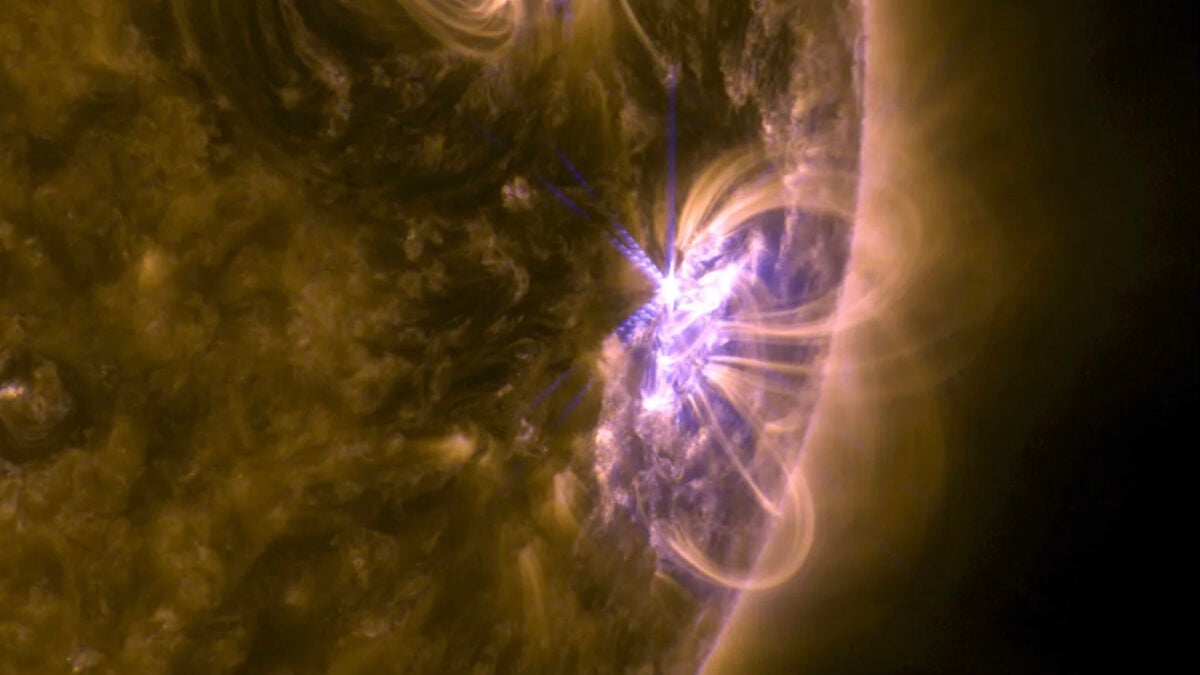
New research from NASA Goddard Space Flight Center indicates that historical records of extreme solar weather may be significantly inaccurate, suggesting that “one-in-a-thousand-year” solar storms could occur more frequently than previously estimated. By identifying persistent errors in how historical geomagnetic data was measured and processed, scientists are re-evaluating the potential risks these events pose to modern global infrastructure, including power grids, satellite communications, and aviation navigation systems.
The study, published in the journal Space Weather, highlights how legacy instrumentation and inconsistent data collection methods have historically skewed our understanding of solar storm intensity. According to the American Geophysical Union, geomagnetic storms are triggered by solar flares and coronal mass ejections (CMEs) that interact with the Earth’s magnetic field. When these particles strike the magnetosphere, they can induce electrical currents in long-distance conductors, such as high-voltage power lines, potentially leading to widespread outages.
The Problem with Historical Solar Data
For decades, researchers have relied on the Disturbance Storm Time (Dst) index—a measure of geomagnetic activity—to gauge the severity of space weather events. However, the NASA-led team found that the way these measurements were calibrated during the mid-20th century failed to account for variations in local magnetic conditions at different observatories. This oversight led to the “erroneous measurements” that current researchers are now working to correct.
By re-analyzing raw data from historic geomagnetic observatories, the team discovered that several major events, including those that occurred during the solar cycles of the 1950s and 1970s, were likely more severe than the official records suggest. The NASA Heliophysics Division emphasizes that accurately documenting these past extremes is not merely an academic exercise; it is the foundation for creating predictive models that help utility companies and space agencies prepare for future solar events.
Why Extreme Geomagnetic Storms Matter
The primary concern regarding an extreme solar storm—often referred to as a “Carrington-class” event—is the potential for long-term, large-scale disruption of critical infrastructure. Modern society is significantly more dependent on interconnected electrical and digital systems than it was during the last major solar disturbances of the 19th and early 20th centuries. A severe storm could induce geomagnetically induced currents (GICs) that overwhelm transformers, leading to grid instability or failure.

According to the National Oceanic and Atmospheric Administration (NOAA) Space Weather Prediction Center, the impact of such a storm on aviation is equally critical. During intense geomagnetic activity, ionospheric disturbances can degrade high-frequency (HF) radio communications and GPS signals, affecting transoceanic flights and precision navigation systems. The recent NASA findings suggest that the probability of encountering such an event within a given decade may be higher than the commonly cited “once-per-millennium” statistic.
Improving Future Preparedness
As the scientific community reconciles these historical records, the focus is shifting toward improving the resilience of modern technology. The White House Office of Science and Technology Policy has previously issued mandates aimed at strengthening national preparedness for space weather, emphasizing the need for better detection, monitoring, and mitigation strategies. This includes hardening power grid assets against current surges and developing more robust satellite shielding.
The correction of historical data sets provides a more accurate baseline for risk assessment. By understanding the true upper limit of solar storm severity, engineers can better calculate the tolerances required for critical hardware. This shift in understanding ensures that infrastructure investment is based on the actual physical phenomena observed in the solar-terrestrial environment rather than on incomplete historical datasets.
Next Steps in Solar Research
The scientific community continues to monitor the Sun as it approaches the peak of its current 11-year cycle. The NOAA Solar Cycle Progression dashboard provides real-time updates on solar activity, including sunspot counts and flare predictions. Researchers are now integrating the corrected historical data into machine learning models to improve the accuracy of short-term space weather forecasting.
The next major milestone in this field involves the continued deployment of advanced heliophysics observatories, such as the Parker Solar Probe, which provides unprecedented data on the solar corona. As these datasets grow, the ability to distinguish between moderate solar weather and truly extreme events will improve, providing the necessary lead time for operators to protect sensitive systems. We invite readers to share their thoughts on the implications of these findings for our digital-first economy in the comments section below.